They don’t spare the rod in Perth

spanking

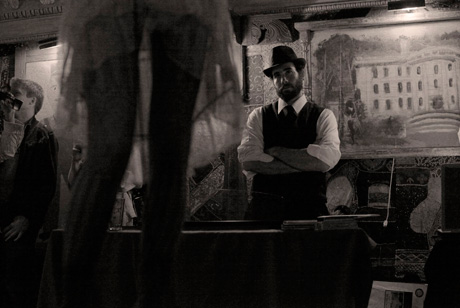
And doesn’t he look happy about it

Today Dodgy Perth answers that difficult question: Is it okay to hit 17 year old girls? In the 1920s The Mirror used to run an advice column. Readers would send in their problems and the following week other readers would offer their opinions.

Today, we offer a problem and advice from 1928:

Up to what age should a father spank his daughter?

I have a daughter who is nearly 18, and lately I have had to speak to her several times regarding the late hours she keeps but she takes no notice.

I am now seriously considering asking her father to apply the slipper but I am afraid he would refuse on the grounds that she is now too old to be spanked.

There does not seem to be any other way to enforce parental authority. What should I do?

Yours etc, ‘Mother of Five,’ (East Perth).

The answers were consistent.

‘Mother of Five’ has a perfect right to ask her husband to spank her seventeen-year-old daughter if she won’t do what she is told and refuses to correct her bad habits.

Spanking isn’t a matter of age; it’s a matter of common sense and girls should be spanked until they have sufficient common sense to be able to get along without the strap.

Yours, ‘Twenty-one,’ (Subiaco).

Another mother wrote:

I take the opportunity of giving the lady a little advice on this most important subject, which as far as spanking children is concerned, is as old as the hills.

If the girl of nearly 18 years old did not do as I told her and she treated me with so much contempt I would not go to her father to perform the operation of spanking her.

I should take the pleasure of getting a cane about 18 inches long and put her across my knee, and use it to such an extent that it would sting and hurt, and give her something to remember.

Don’t think she is too old to punish at 18, don’t hesitate about it, and you will get the respect all the sooner from your daughter.

Yours etc., ‘Another Mother.’

Anyway. So now you know.

Sex and the city

riviera

Contemporary picture of a den of iniquity

Over the last couple of days, Facebook and Twitter have been full of mourning for long demolished blocks of flats in central Perth. Even councillors at the City of Perth having been bewailing the loss of such buildings as the Riviera Flats.

For our part, we are happy to let people wallow in nostalgia and believe that blocks of flats were a good thing.

No. Wait. This is Dodgy Perth.

In 1929, as flats became more common in Perth, it was becoming clear that nothing good was going to come of this new way of living.

The media had discovered that some of these apartments were being rented by young single men. To understand why this was controversial you need look at the alternatives.

If the young man lived at home, his parents would be there to stop any hanky-panky shenanigans happening in his bed.

The only other option, before flats, was to live in a boarding house. The communal nature of the building, and because they were ruled over by a middle-aged matron, definitely meant no sexy time in a boarding house.

But flats were different. They were your own space, and you (and others) could come and go as you pleased without being observed. No wonder they terrified both the older generation and the media.

The young man who rented a flat could invite his girlfriend over for a ‘quiet drink’, or throw a party. And these were not the kind of parties that would be sanctioned in their parents’ homes.

Inevitably, the newspapers went all “won’t somebody think of the girls?” No decent girl, they said, would be used to drinking. So as soon as she had a few in a private flat, she would instantly become the victim of her predatory host.

Well. Maybe. But probably not.

Why can’t the law stop young men renting flats? was the cry. Private flats for young men were only going to cause trouble.

So, to those who are unhappy that blocks of Art Deco flats were demolished, Dodgy Perth asks you this simple question: Won’t somebody think of the girls?

You can cheque out any time you like

Brothel-460Cashed-up miner gets drunk. Spends too much money on booze and hookers. Regrets it the next day. End of story.

Bet you’ve never heard that one before. Except this didn’t happen during the most recent mining boom, but in 1903.

Augustine Eyre was the miner in question, and one evening he hailed a cab from outside the Palace Hotel where he was staying and asked to be taken to ‘Monte Carlo’. To understand this strange request, a little background on Perth drinking culture.

There were no legal late-night drinking joints. And no licensed nightclubs. So a man wanting a drink after closing time needed to visit a ‘house’. These were (in theory) private residences, in practice speakeasies-cum-brothels.

The two most infamous (and longstanding) in 1903 were Monte Carlo in Murray Street and Shakespeare Villa in Dyer Street, West Perth. These houses were mostly tolerated by the police, although subject to the occasional raid.

Anyway, Augustine asked to be taken to Monte Carlo. For reasons which are unclear, but which may involve a backhander from the owner to the cabbie, he was dropped at Shakespeare Villa instead.

The miner knocked back a few drinks and then caught the train back into town, where the Palace Hotel bar was still open, so he had a few more. Out he walked, hailed another cab, and requested again to be taken to Monte Carlo.

The driver dropped him at Shakespeare Villa.

Perhaps realising this was as good a place as any, Augustine started hard, hard drinking and carousing. For several days. Yes, days. They knew how to have a good time in 1903.

At the end of his stay, presumably with a very sore head, Augustine wrote out a cheque to his very hospitable hostess, Annie Wilson, for £150. This was to cover the cost of accommodation, food, drinks, and—ahem—the company of a number of young ladies.

It was not until a few days later that Augustine realised that, while completed pissed, he’d handed several cheques over to Annie, totalling nearly £400.

Completely regretting this, he went to the police to demand they get him a refund.

The consequence was that Annie was charged with running a house of ill repute, and fined a measly £10. The judge said that Augustine was a fool and, as far as we know, he never saw his money again.

We named a kiosk after her?

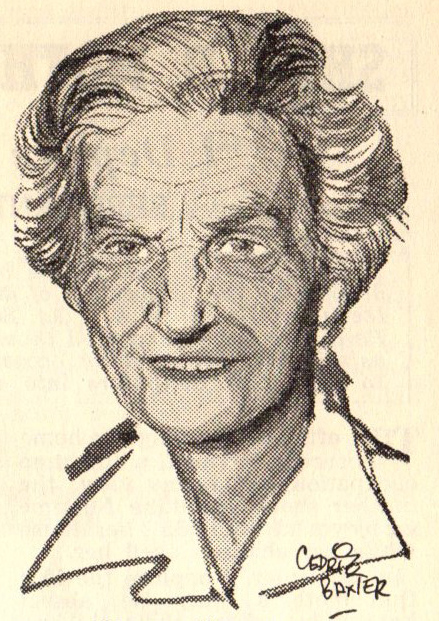
img20141216_13265957She was the first female councillor at the City of Perth. She was awarded an OBE. Had a kiosk on the Esplanade named after her which they recently knocked down and rebuilt at taxpayers expense. And, oh yes, there is a pathetic little park on the corner of St George’s Terrace and Mount Street bearing her name.

What a wonderful lady Florence Hummerston must have been to have all these accolades. After all, look at the gentle love beaming from Cedric Baxter’s portrait.

Such a woman deserves respect. Let’s listen to Auntie Flo’s opinions on women with jobs. I’m sure they will be heart-warming, just like an afternoon spent at her park.

Today we find so many mothers setting their children aside and going out to work because they believe it is more interesting and because it satisfies their egotistical desire for admission to society.

Okay. So FloHum isn’t exactly Germaine Greer. But let’s read on, maybe she’ll soften up a bit.

The price of this, the loss of love and respect of their children is no concern.
They know they are neglected. They pretend to love the mother because they are afraid.

Right. Yes. Fine. Anyway, Councillor Hummerston, do continue.

The argument that a mother can properly care for her children, her husband and her home and undertake a job which requires her daily absence from the home is unsound.

Oh do tell us why.

There is no time to cut lunches so the children go off with a few pence to spend at the tuck shop and the children’s lunch is usually chips, sweets and a bottle of fizz, as they call it.

Oh FloHum, you are so hip and down with the young folk. No wonder they all love you.

And what happens to children of those evil homes where the mother (perish the thought!) has a job?

With revenge they rejoice in their ‘day of reckoning’ and set out on a crime spree.
They are the delinquents, the problem we hear so much about.

So, if you were at school in the late 1950s or early 1960s, had a working mother and ever partook in a bottle of ‘fizz’ (as we believe the hipsters say), take a good look in the mirror.

FloHum did not approve of you, and there was no hope for your future.

It’s a bust! Strippers, cops and His Maj

Legendary American striptease artiste, Sally Rand

Legendary American striptease artiste, Sally Rand

Today Dodgy Perth answers the question on everyone’s lips. Who was the first stripper in Perth? However, the answer to ‘when’ and ‘where’ is much easier than ‘who’. The name of our brave pioneer has been lost to history.

In January 1940 His Majesty’s announced that Perth audiences would see their first ever American-style striptease. The producer, Jack Lester, promised it would be “an artistic contribution” to the programme, and not at all indecent.

On the night it was announced the quantity of clothing removed would be in direct proportion to the level of applause. The crowd, unsurprisingly, went wild.

First off came one glove, then a second glove, a dress, and—we shudder to even say the word—a brassiere. Then the scantily-clad miss disappeared in a subdued light and a storm of applause.

Perhaps ticket sales were not what Jack Lester had hoped. Following nights saw several girls stripped to the waist. And then Jack pulled off his greatest publicity coup. For the first time ever, Perth audiences saw someone go the whole way.

A dainty brunette, she gradually discarded her clothing piece by piece until the last, most important, item dropped at her petite feet and she pirouetted nude.

When the audience recovered from the shock, the reaction was deafening. They clapped and whistled our local girl until the last of her birthday suit disappeared from the stage.

The news spread and next night His Maj was packed. Among the audience were four cops standing at the back, ready to spring into action.

As the stripper appeared on stage, the crowd was in a frenzy. But the presence of the law meant her act ended with both tights and brassiere firmly in place.

Cries of “’Fraud!” rang out, but the presence of the police meant that there was to be no repeat of the previous evening. It was said that Perth had seen its last striptease.

And we firmly state that we assume this is true, and would have no clue if there are strippers in town today.

A bridge too far

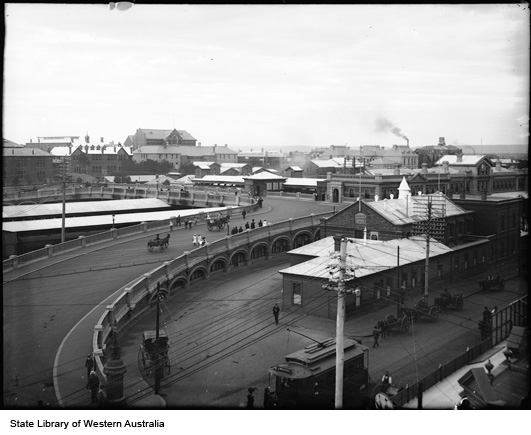
Anyone who has lived in Perth for more than a week knows the story of the Horseshoe Bridge. How the Railways Department came up with a brilliant solution to the problem of restricted space, making it (according to the Heritage ‘Style’ Council) an “outstanding example of a major urban railway overbridge of its time”.

Well, this is Dodgy Perth, so prepare to have all your illusions shattered. Our comments on the above story are no, no, and God no.

Firstly, it is not innovative. Nor did anyone claim it to be at the time. It was not called The Horseshoe Bridge in 1904, just described as a horseshoe bridge.

Why this particular design? Because wherever they were going to put a bridge, the tight-arse Railway Department didn’t want to hand over cash to landowners on Wellington or Roe Streets. They wanted a bridge that would only use land the Government already owned.

There never was restricted space. Just an attempt to save money.

Speaking of hard cash. Robert Howard, a draughtsman working for the Public Works Department knocked up plans for a horseshoe bridge and then offered to sell them to the Government for £1,000. They told him to bugger off, since he was an employee. So Robert quit the PWD and then sold the plans to the Government for £1,000 anyway. (The cheeky sod actually went to court later to obtain even more money from them!)

The estimated cost of the bridge was £25,000. It was delayed for a couple of years because no one could build it for that amount. When finished, the thing cost £40,000. It would have been much, much cheaper to buy some land from private owners and put up a regular bridge.

Everyone hated the new crossing. And we mean everyone. A footbridge over the railway was pulled down, forcing people to walk the long way round over the new erection. The newspapers were full of outrage. The City of Perth kept complaining to the Government that 22,000 people had to walk over the bridge every day, meaning an 3,600 extra miles daily, or 1,140,000 miles a year.

So, all up… the Railways Department created their own restriction, bought their plan off an employee who drew it on Government time, failed to budget the project correctly, and seriously annoyed everyone who worked in the CBD.

And that, friends, is what the Style Council likes to call an ‘innovate design solution’. Dodgy Perth has a different opinion.

A wagyl’s revenge

Matt Benson-Parry, Wagyl & Dewi (2007)

Matt Benson-Parry, Wagyl & Dewi (2007)

The last time Dodgy Perth was in Claremont was to see a band at the Claremont Hotel. But next time we’ll be making a short pilgrimage to see a verified home of a wagyl.

Some white folk have an impression that wagyls (there were many of them—not to be confused with The Wagyl) were well-meaning creative spirits who just happened to look like big snakes. Not even close.

Wagyls were extremely dangerous and their presence alone at a place could make it winnaitch (taboo). And such was the case at Karbomunup Hill in Claremont, roughly where Osborne and Bindaring Parades meet.

Once on this hill, according to legend, some children broke an important food law, and the wagyl living there became so boogur (angry) it came out of the hill and swallowed all the men, women and children of the place. All except one woman, who was gobbelguttuk (pregnant).

A peculiar shaped stone on or near the shore at Claremont was supposed to have actually been the gobbelguttuk woman. The stone and the hill were ever after winnaitch. Just to go there was to risk death.

In 1894, when the Osborne Hotel was built on Karbomunup Hill, the owner announced a corroboree as one of the opening-day attractions. Naturally, no local Aborigine would take part, so some North West folk were recruited instead.

A much retold story says that two of the North Westerners fell down while dancing, and although taken to the white man’s hospital they soon died. Locals said that had been wagyl bom—wagyl struck.

Definitely worth a trip out to Claremont to see if the wagyl is still active.

Racist gets whats coming

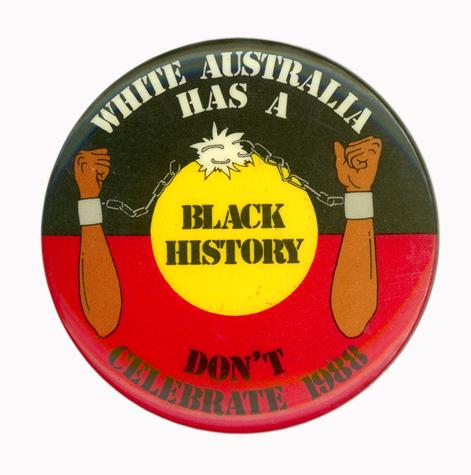
1988 badgeWhen ‘J. T.’ of East Perth wrote a pro-segregation letter to the newspaper in 1943, they probably expected to get some support for their position.

After all, J. T. had noticed the waiting seat for trolley bus passengers in Wellington Street was frequently occupied by “natives or half-castes” and bus passengers had to stand.

“What right,” fumed J. T., “have these natives to occupy a seat that should be reserved for white people?”

Given how generally racist Perth sometimes looks in the past, Dodgy Perth found it refreshing to read the next edition of the Mirror.

K. R. Whitby of Geraldton kicked off by noting that the country belongs to Aboriginal people, not white folk, and demanded “fair play” for everyone.

A Darlington resident told J. T. that he was the trespasser on Wellington Street, since white people stole the country from the Aborigines. So no one could complain about where the rightful owners chose to sit.

And W. Pearce of Fremantle stuck the knife in by pointing out that J. T. would have refused a seat to Christ, since he would have been a “coloured man” in J. T.’s eyes.

Sometimes it’s too easy to judge the past from the point of view of the present. We need to remember that some people in the past were racist bigots, and some as PC as you can get.

A modest proposal to deal with the deficit

EQJust over a century ago Western Australia’s deficit meant the State was building up huge debts.

Sound familiar?

The blame, as it turned out, was to be laid squarely at the door of a government committed to large-scale projects without actually costing them properly or having the money to pay for them in cash.

Sound familiar?

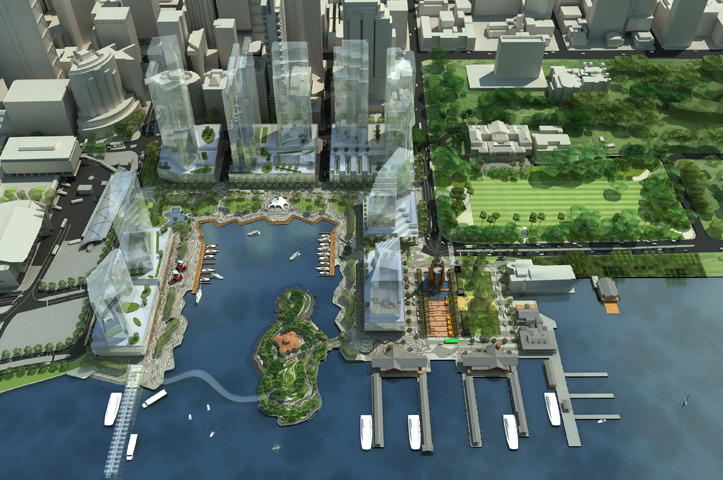
There was a huge waste of money down by the waterfront. Not Elizabeth Quay this time, but formal gardens with beautiful grass and flowers. Just where it was likely that a quay or a wharf would be needed.

Even though faced with a budget shortage, the Government still went ahead with major building projects like a new stadium at Burswood. No, sorry, our mistake. Not a stadium, but an Art Gallery, so the leisured few could stroll around it on a Sunday afternoon.

No one could deny that investing in a public library or a technical school were essential. And given the mining industry, perhaps even a geological museum could be justified.

But not an art gallery, not a zoo, and certainly not an observatory. None of these could be defended until Western Australia had a population much larger than it had in 1909.

It was simple. Western Australia’s financial troubles were wholly of its own creation.

Sound familiar?

Why WA’s museum loved cats

Noolbengers looking unbearably cute

Noolbengers looking unbearably cute

Colin Barnett may not like cats. He even passed a ridiculous piece of legislation forcing cats to be on some kind of sex offender register.

But we’ll tell you who does like cats. The West Australian Museum. That’s who.

Why? we hear you ask. Because they added to the Museum’s collection of native wildlife, and that institution had no money to spend on assembling one.

In 1939, a cat belonging to Mr W. Skeet, of Forrestdale caught a live noolbenger. (Don’t worry, we had to look it up on Wikipedia too. Turns out it’s a honey possum, which is half the size of a mouse.)

Mr Skeet did what any good citizen would do, and posted it to the WA Museum. The cute little critter was put in a cage with another noolbenger, which had been caught by a Shenton Park cat a couple of weeks earlier.

The Museum’s curator, Ludwig Glauert, loved cats. He encouraged people to send in anything they caught. Other than mice. Apparently mice were boring.

You see, cats are “instinctive collectors”, who don’t (so we are told) eat West Australian native marsupials, they just like bringing them home to play with.

The top unpaid animal collector in WA was an unnamed black and white cat owned by Miss May Tree, of Newlands near Donnybrook. (Dodgy Perth can’t help thinking that Miss May Tree sounds like a great name for a black and white cat.)

For years, in the course of its “unscientific researches,” Miss Tree’s cat donated ring-tailed possums, wambengers, dunnarts, noolbengers, quendas, and even bats.

Without this hard work, the WA Museum wouldn’t have had much of a collection said Ludwig.

Especially since many of these animals were nocturnal. And curators can’t go out at night. Apparently.

So let’s hear it for WA’s unsung hero of scientific research. The humble pussy.

h/t Christen Bell