Trouble on the Sabbath

Now open on Sundays

Now open Sundays

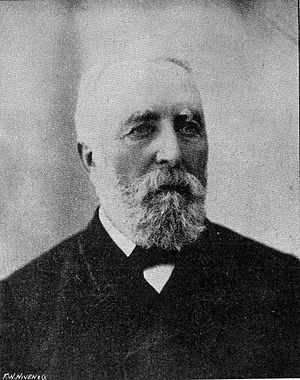
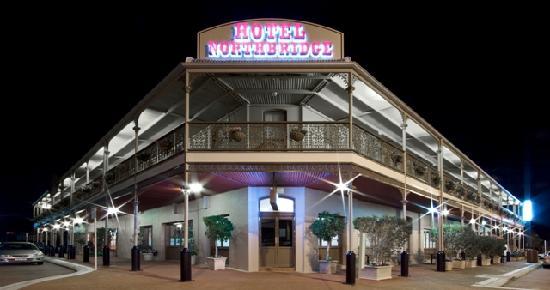
How Thomas ‘General’ Jackson found time to design the Royal Standard Hotel (now Hotel Northbridge) is baffling, since he had at least nine children in his household, the result of two marriages.

He studied in England under Edward Barry, designer of the Royal Opera House, Covent Garden. Although responsible for many buildings, when the General died in 1929, the obituaries were more interested in his role in founding bowls in WA, and his skill as a player, than any of his architectural achievements.

Landlords often ended up in court by selling booze on a Sunday. You could only sell beer to a bona-fide traveller on the Sabbath. A famous ruling said a bona-fide traveller was:

A man who drinks to travel, not a man who travels to drink.

In 1903, George Hiscox, licensee of the Royal Standard Hotel, was charged with Sunday trading. Fortunately he had a brilliant defence lawyer, Edward Hare.

Constable Brodie swore he visited the hotel at 10pm one Sunday, and found three men drinking in the front bar. Brodie knew that one of them, Flynn, lived on Bulwer Street.

Mr Hare asked if it might not have been pints of ginger beer in front of the patrons.  Brodie had to admit he had neither tasted nor smelt the contents.

“It was brown liquor,” insisted the constable. “I can tell ginger-ale from beer. And I am sure it was beer, because it is Flynn’s usual drink.”

“Never mind about that,” said the sly lawyer, for all anyone knew “Flynn may have been to the Salvation Army that morning, and renounced beer for ever.”

The bench decided to dismiss the case, without calling upon the defence.

School’s out forever

Dodgy Perth's favourite small bar

Dodgy Perth’s favourite small bar

You’d imagine turning a school into a pub would be controversial, but the PICA Bar is too cool for anyone to object. When the government became liable for education, they needed a central Boys’ and Girls’ School, so the Public Works Department built them one in 1897.

The school had 500 boys on the ground floor and 500 girls upstairs. When it closed in 1958, Perth Technical College moved in. Its heir—TAFE—left the building in 1988 and Perth Institute of Contemporary Arts (PICA), complete with trendy bar, took over.

But back to the building’s school days. There is one historical universal: somebody will always worry about what is happening to our young girls. In 1910, people fretted that girls were growing up with only a basic knowledge of cooking and cleaning.

For those marrying farmers, training in practical household duties was considered essential. For those who would marry men who worked in the city, they needed to be proficient enough they could do without servants.

Perth Central School was useless if all it did was provide a ‘bookish’ education. Miss M. Jordan was appointed to the Central Girls’ School to acquaint her pupils with the duties associated with being a wife. A ‘housewifery cottage’ was built in the schoolyard, where the youth could learn to wash, iron, fold and put away.

Here, they also cooked, laid the table in the appropriate fashion—complete with flowers in the middle—as well as scrubbing the floor, blackening the grates, and brightening the silver.

There was concern that the cottage was so well equipped, the poor darlings would struggle in a real household, but these anxieties were dismissed, and the girls kept learning how to be drudges.

Wolfe’s problem with ladies

At least there's one famous Belgian thing

At least there’s one famous Belgian thing

Next time you are in the Belgian Beer Café, don’t forget to ask them about their policy on serving people in the sex industry. Because it was this that got Robert Wolfe into trouble.

But first, a little background. The Belgian Beer Café was originally called the City Hotel, and there has been a pub on the site since 1879. But Robert Wolfe had the original City Hotel demolished and a new one built in 1898.

The architect was Henry Trigg, whose grandfather (also Henry) is remembered in Trigg Beach and the suburb. Unfortunately, Henry Jr. made the mistake of taking younger brother Edmund into the firm. Trigg descendants claim Edmund was the black sheep of the family who embezzled the firm’s finances, finally driving Henry bankrupt.

In 1899 the City Hotel was situated in the rough part of town. King Street was largely slum housing, several of which functioned as cheap brothels. This was a problem for Wolfe because his bar was the closest for the women of low repute. It was a real problem, because it was illegal to serve prostitutes.

A complaint was made to the police by Susan Mahoney, a regular drinker at the bar. Of course, she said she only ever had one beer, and really only went there to chat with the barman, George. She recognised three ladies of the night, and this was enough for the police to send a plain-clothed officer, who also discovered the women there.

So Wolfe was charged with permitting ladies of low repute to frequent a licensed premise. But the cop had only told the barman to remove the unfortunate women. He never spoke to Wolfe, simply relying on George to pass the message on.

This was enough for the bench to dismiss the charge against Wolfe, since it could not be proved he ever got the official instruction. Although they did give him a firm warning to keep the demimonde class out of the City Hotel.

And on one final note, we presume Wolf Lane is named after Robert Wolfe. Any particular reason no one checked the spelling?

How to keep the Guildford Hotel open

Back in the day before it met with an unfortunate accident

Back in the day before it met with an unfortunate accident

As the Guildford Hotel controversy still rumbles on in the background, Dodgy Perth looks back to a time when the scandal took place inside the building. And it was all revealed by accident.

In 1927, Bassendean residents were clamouring for a hotel of their own, since the suburb still didn’t have one. A few locals opposed the idea. They had only moved to Bassendean, they said, so they could keep their daughters away from the evil drinking types.

In the licensing court, James Wilkinson was giving evidence about why Bassendean needed a hotel. The accommodation would benefit his FIFOs, he said, and sporting groups needed somewhere to meet. The bench was sceptical. How useful would a hotel be for sporting groups, when it would have to close at 9pm each night? Surely that would be a little early for committee meetings?

Don’t worry about that, blurted out James. All we have to do is pay the landlord £1 each for a special license and we can keep drinking until 11pm. We do it all the time at the Guildford Hotel. Suddenly, the proceedings fell silent.

“The police will be interested,” quietly observed one official. At this point, James probably realised he’d dropped the hotel’s landlord right in it.

So remember, when the Guildford reopens, £1 buys you a two-hour extension to closing time, otherwise they’re not being true to their heritage.

Ladies and gentlemen, raise your glass

What a beard!

What a beard!

How many people can claim to have saved a Western Australian icon? And what would WA be without Swan Draught? Ladies and gentlemen, we present Mr Thomas Wall Hardwick.

In 1887 a company bought both the Swan Brewery and the Lion Brewery, and together they (unimaginatively) called themselves the Swan Brewery Company. The outcome was a disaster. For the next two years the business bled money and was on the point of bankruptcy.

Enter Thomas, who spent decades in England running breweries before being enticed to take over the operations at Castlemaine in Victoria. Castlemaine? As if that’s even a beer.

After a couple of other jobs, Thomas was invited to Perth to save the Swan Brewery, which was distinctly on its last legs. He was horrified by the industry he found here, but promised he could work out a more efficient management system which might make it pay.

The directors offered him a very substantial salary if his vision could come true. And it did. His new beers were first sampled in 1891, and they were so popular that the turnover of the company went through the roof.

And now the grand house Thomas built in West Perth is due to face the wrecking ball, so some luxury apartments can be built in its place.

Horrible modern front, but could probably be restored

Horrible modern front, but could probably be restored

There is a function room at the redeveloped Old Brewery named after Thomas, but that is about all the commemoration he gets. While we at Dodgy Perth reserve judgement on the price of progress, it does seem a shame that his house will be lost without raising at least one tinnie of Swan Draft at 37 Mount Street before it is finally lost forever.

Who wants to join us?

The first decent coffee in Perth

Site of the Devonshire Arms Hotel

Site of the Devonshire Arms Hotel

Here in the Dodgy Perth office we have blood type Coffee+. So it’s no surprise we’re excited to hear about the impending launch of a café dedicated to Perth’s first ever bean roaster, Mr Henry Saw.

But in 1852, Henry only sold the roasted beans. He didn’t actually make any coffee. Which for the lazy types in our office is no use at all.

So, the question we asked ourselves was: where was the first decent coffee shop in Perth?

Surprisingly, there wasn’t one until October 1883, when Mrs Woods became manager of the ‘Burnett Coffee Rooms’ in the former Devonshire Arms Hotel. This was on the corner of Hay and Barrack, where the Connor-Quinlan building now stands, currently best known as the home of pen retailer, T. Sharp.

It was no coincidence that a former pub was converted to a coffee palace. This was one of the heights of the temperance movement, and anything that could stop working men drinking was considered a good thing.

Matthew Burnett was a controversial temperance enthusiast. His critics said he was a con man, who got other people to build coffee shops for him in the name of religion, without him having to pay a cent. His followers thought him the man to save Australia from the demon drink.

In either case, Mattie has the honour of opening the first decent coffee shop in Perth.

Mmmm… coffee.

Meet Thomas Jones

82x108mm

I still think we need more beer.

There’s drunk. There’s very drunk. And there’s Thomas Jones, a middle-aged, grey-haired man. In June 1920, on his way into town, Thomas felt thirsty, so he stopped off at the Commonwealth Hotel (now the Hyde Park) for three pints of beer.

He was a little hazy as to which pub was next, but remembered having six pints. Then another hotel. Two, maybe three, pints there. On arrival in town, Thomas decided to have a few at the City Hotel (now the Belgian Beer Café), before wandering down Hay Street.

Unfortunately our hero was not unknown to the Perth constabulary. Sergeant Johnston, noticing an unsteady gait, decided to place an arm-lock on poor Thomas. Perhaps lacking full control, Thomas fought back and used some choice Anglo Saxon.

In court, Thomas tried for sympathy. He denied resisting arrest.

Thomas By Jove, your worship, I really don’t seem to get much of a chance in Perth, when I think of it. As a matter of fact, I should be charged with drunkenness—I was very drunk. I may have used a little warm language—I really cannot recollect.

Prosecutor I don’t think you can remember much of what happened at all, if you had had as many drinks as you say.

Thomas Sir, I can remember things which happened in my boyhood’s days!

Magistrate Oh, we needn’t go so far back as all that. We’d be here much too long. Are you calling any witnesses?

Thomas Sir, of course not. I have no witnesses for the defence. As a matter of fact, I’m not quite right in my head.

The sentence was 28 days.

You can cheque out any time you like

Brothel-460Cashed-up miner gets drunk. Spends too much money on booze and hookers. Regrets it the next day. End of story.

Bet you’ve never heard that one before. Except this didn’t happen during the most recent mining boom, but in 1903.

Augustine Eyre was the miner in question, and one evening he hailed a cab from outside the Palace Hotel where he was staying and asked to be taken to ‘Monte Carlo’. To understand this strange request, a little background on Perth drinking culture.

There were no legal late-night drinking joints. And no licensed nightclubs. So a man wanting a drink after closing time needed to visit a ‘house’. These were (in theory) private residences, in practice speakeasies-cum-brothels.

The two most infamous (and longstanding) in 1903 were Monte Carlo in Murray Street and Shakespeare Villa in Dyer Street, West Perth. These houses were mostly tolerated by the police, although subject to the occasional raid.

Anyway, Augustine asked to be taken to Monte Carlo. For reasons which are unclear, but which may involve a backhander from the owner to the cabbie, he was dropped at Shakespeare Villa instead.

The miner knocked back a few drinks and then caught the train back into town, where the Palace Hotel bar was still open, so he had a few more. Out he walked, hailed another cab, and requested again to be taken to Monte Carlo.

The driver dropped him at Shakespeare Villa.

Perhaps realising this was as good a place as any, Augustine started hard, hard drinking and carousing. For several days. Yes, days. They knew how to have a good time in 1903.

At the end of his stay, presumably with a very sore head, Augustine wrote out a cheque to his very hospitable hostess, Annie Wilson, for £150. This was to cover the cost of accommodation, food, drinks, and—ahem—the company of a number of young ladies.

It was not until a few days later that Augustine realised that, while completed pissed, he’d handed several cheques over to Annie, totalling nearly £400.

Completely regretting this, he went to the police to demand they get him a refund.

The consequence was that Annie was charged with running a house of ill repute, and fined a measly £10. The judge said that Augustine was a fool and, as far as we know, he never saw his money again.

Ridin Dirty

Ocean Beach Hotel, 1920s

Ocean Beach Hotel, 1920s

The young women of Perth have continuously been in one moral danger or another. In the 1920s the threat came from men who owned motor cars.

Some suburban hotels were known to be ‘joy-riders pubs’. Allow Dodgy Perth to explore the meaning of this odd phrase with you.

Apparently every generation of Perth girls has a particular ‘pleasure weakness’. Can you remember what yours was?

Around 1900, it was orgies of booze on the beach. But for the feather-headed flappers of the 1920s, their Achilles’ heel was motor cars.

And, boy, did the middle-aged men know how to work that particular vice. At the end of Barrack Street, down by the river, and you’d see a group a girls—aged between seventeen and twenty-one—looking for someone to take them for a ride.

The men, often married, were substantially older than the girls. And some were well-known people, including a politician and a few celebrities.

“It’s just a little spin for a few miles, my dear,” the rake would say to the flapper, although a few could turn into twenty, as he sought out his favourite joy-riders pub.

There, they stop for a little drink. It is an apparently quiet pub. Perhaps it will even have a private sitting room. But to the young woman, it all seems so romantic. She may be a factory girl, a shop girl, or an office employee, but in any case her salary doesn’t usually run to many evenings out.

The poor girl will then be offered—we shudder to say it—a drink. Naturally, being a good girl, she will at first decline.

The middle-aged cad will insist that she take a little wine to warm her up, and finally she will give in.  To the flapper, the drink adds to the romance, like a vamp scene in a play. But the average girl never realised the danger until it was too late.

This, dear reader, is the peril of ending up at a joy-riders pub.

The media demanded that something be done. Firstly, the girls should be incarcerated as neglected children. Next, the hotels should lose their licenses. And, most importantly, it should be made harder for men to get a driver’s license in the first place.

Without immediate action, Perth was in danger of having more and more of these evil pubs around the city, causing the downfall of many more foolish flappers.

Speaking of which. Can anyone recommend Dodgy Perth a good suburban hotel for meeting up with a young lady?

Wake up and smell the coffee

Drunk-man

Starting in the 1890s advertisements appeared in WA newspapers extolling the benefits of a wonder drug called Eucrasy.

Unlike most medicines, though, the main benefit was not for the person who was taking it. Mainly because they didn’t know they were taking it.

It is, of course, very unfortunate if your husband is an alcoholic. Living with a drunkard is not anyone’s idea of fun.

One solution is to send hubbie off to an institute where they will inject him with bichloride of gold four times a day. This is the expensive option, and not within reach for most.

So we enter the crazy world of Eucrasy. A world where women were expected to administer drugs to their partner without his knowledge or consent.

By mail order, a month’s supply of the medication would arrive at your doorstep and it would then be secretly added to the drunkard’s tea, coffee, or slipped into his soup.

Colourless and tasteless, it had no side effects other than curing the man of his drinking problem.

The ingredients in Eucrasy were a secret, but it appears to have been some kind of vegetable extract and contained no minerals, and certainly none of the fashionable morphine, opium, or cocaine.

Instantly, the wife would have noticed her husband’s appetite return, and a loss of desire for alcohol in a mere one to two days

Complete cures could be effected in a week or two.

And we can’t just chalk this one up to Victorian-era weirdness. The medicine was still being marketed in the mid-1950s as something you should secretly slip into hubbie’s coffee.

So men, when you next see your partner slipping drugs into your morning cuppa, don’t assume she’s doing anything bad. It’s just an attempt to keep you away from the pub this evening.