Hot stuff

luxor

Surprisingly hot on the inside

This heat is no longer funny. We’re no climate scientists, but can’t someone install sprinklers on the surface of the sun or something? Perhaps the government could offer subsidies for those of us who wish to seek asylum in Alaska.

But WA still has some way to go to beat the severe heatwave which gripped the state in February 1933, which closed schools and caused the cancellation of a fringe show.

The performance was held at the Luxor Theatre on Beaufort Street, previously known as the Shaftsbury Theatre and later as Tivoli and Canterbury Court. Now sadly demolished. You would have seen a vaudeville show including such treats as Lily Burford in a difficult toe tapping dance, Canadian Hank Healy with a demonstration of using a whip, a ballet, and the Melody Quintette.

But not on 9 February 1933. Four women members the company collapsed through the heat and the show was abandoned. Fortunately, they all recovered unlike an unlucky 5-year-old boy who died of sunstroke the same day.

To seek refuge from the oppressive heat, 15,000 cars turned up at Cottesloe Beach that night, and every metropolitan beach was packed with people lolling on the sand, too tired to bathe or sleep. And at nearly every home, mattresses were dragged onto verandahs to escape the indoor conditions.

Which reminds us, it is the absence of verandahs on new housing which means the electric grid is so overloaded nowadays. When will architects and builders realise that houses can be kept cooler with this simple change to a design? Sure, you lose a little floor space, but you don’t have to run the air-conditioning quite so hard.

There are things we can learn from history after all.

Hot in the city

thermo

It got hot in the past too

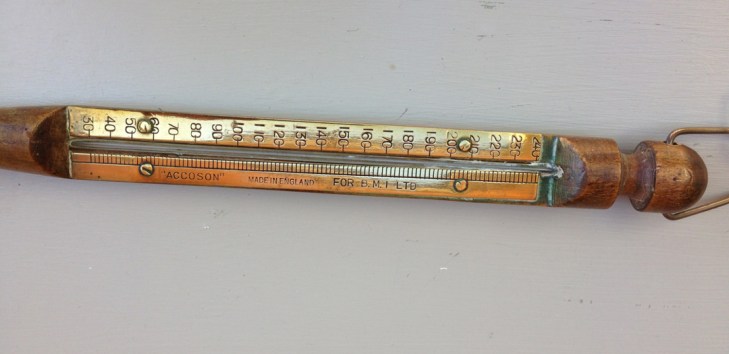
You may not have noticed, but it’s bloody hot outside. The thermometer has reached the mid-30s and it’s not even 8.30 a.m. No one in the Dodgy Perth office got much sleep last night and we’re all drinking Red Bulls and Coke Zeros like they’re going out of fashion.

This should make us sympathise with the residents of Perth 120 years ago, who had a very bad heatwave. Starting on Christmas Day 1895, the heat continued for more than two weeks, reaching up to 112F (44.5C) in the shade by early January 1896. If you were stupid enough to stand on the street without shade, solar radiation—the heat registered in the sun—was a mind-boggling 169F (76C).

Still, it had not broken Perth’s 25 January 1879 record of 117F (47.2C) in the shade. Which sounds quite hot to us, even though global warming could not yet be blamed.

Five people died of sunstroke, including Mrs Wilson who was staying with friends in Bayswater. By the time the doctor was called the unfortunate woman’s body temperature was 110F (43.3C).

Perhaps this heatwave could have been managed, but thanks to the incompetence of the Water Company, much of Perth had little or even no water to help them. A little water was available at night, and people had to fill their bath and every bucket they owned to get them through the next day.

People with wells had official types call round who ordered their only supply of water to be sealed off or face prosecution.

Naturally the City of Perth Water Supply Co. blamed low reservoir levels (don’t they always?) and then really helped matters by announcing that from now on water would be cut off between 12 p.m. and 5 a.m. No one knew what they meant. Noon to early morning? Midnight to early morning?

In any case, parents had to turn to giving children lemonade and ginger beer as the only source of fluid (there was no bottled water), and Perth suffered and suffered and suffered.

Where the streets have no name

map_perth

They appear to have accidentally built Perth on a load of lakes

Well, they do have names. And stories behind them. As we start to get things together for the Dictionary of Perth website, it’s fairly evident that one thing that fascinates people is the origin of street names. Having a story to go with your road makes it just a little bit more magical.

The first complete record of street names in the city was made on 12 February 1838, when an official map was issued. Perth was less than ten years old and there were very few decent roads in existence.

So, without further ado, we’ll get the ball rolling with the people behind some of the larger streets in Perth.

Aberdeen Street

Received its name in honour of George Hamilton Gordon, Earl of Aberdeen and Prime Minister of England in 1831.

Newcastle Street

The Duke of Newcastle, Secretary of State for the Colonies from 1852 to 1854. An old street named Ellen Street after Lady Ellen Stirling, wife of the Governor, extended from Lake Street to Stirling Street is now part of Newcastle Street. In the early days, the road east of Stirling Street was called Mangles Street, after Ellen’s maiden name.

Beaufort Street

Named after Irishman Rear-Admiral Sir Francis Beaufort, who in 1829 was the Admiralty’s chief map-maker.

One of his groupies was John Septimus Roe, who first planned Perth, and who not only named Beaufort Street after him but also Francis Street in Northbridge.

In an earlier version of this post we claimed it was named after Lord Charles Henry Somerset, second son of Henry, 5th Duke of Beaufort. This turns out to be a 19th century urban myth.

Goderich Street

Originally extended towards town as far as Barrack Street. It was named after Viscount Goderich, Prime Minister of England in 1827-28 and Secretary of State for the Colonies in 1830-1833.

Murray Street

Named after Sir George Murray, Secretary of State for the Colonies from 1828 to 1830.

James Street

Honours the Christian name of Sir James Stirling

Mount’s Bay Road

Shown on the 1838 map as Morgan Street, it took its name from J. Morgan, Resident Magistrate of Perth in 1832, and who was tasked with making this road.

Pier Street

Originally extended from Perth’s first landing stage northwards through the present grounds of Government House.

Stirling Street

The surname of the State’s first Governor

St. George’s Terrace

In honour of the patron saint of England.

William Street

Originally King William-street, after William IV. During the years the ‘King’ was dropped and when this was done, King Street came into being.

Hay Street

Named after Robert William Hay, Permanent Under-Secretary for Colonies when Perth started. East of Barrack Street, Hay Street was once known as Howick Street, after Lord Howick, an official in the Colonial Office.

Lord Street

Lord Howick, Lord Wellington and Lord Goderich having given their names to three parallel streets, Lord Street probably received its name from its close connection with the three thoroughfares.

Adelaide Terrace

Named after Queen Adelaide, wife of William IV.

Barrack Street

The first barracks in the State were erected near the corner of Barrack Street and St. George’s Terrace.

Wellington Street

With the victories of Nelson and Wellington still fresh memories, many street names show how patriotic the early settlers were. Nelson Crescent, Horatio Street, Nile Street (after a famous campaign), Waterloo Crescent, and Trafalgar Road. Bronte Street is so called because Lord Nelson was Duke of Bronte.

West Perth streets

In 1877-78, Col. R. T. Goldsworthy, Colonial Secretary of the State, who served during the First War of Independence in India (then called the Indian Mutiny) fixed the names of several Perth streets after this event. Colin Street after Sir Colin Campbell, Delhi Street, Havelock Street after General Sir Henry Havelock and Outram Street after General Sir James Outram.

Water, water, everywhere

salisbury

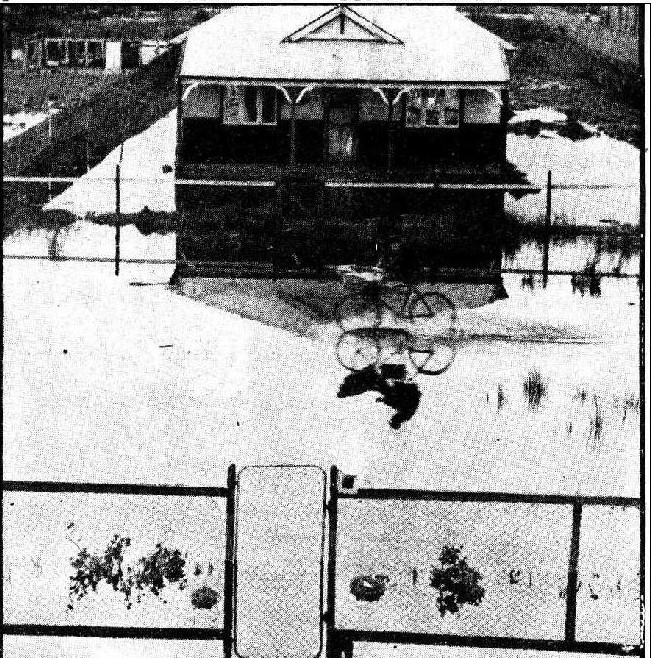
We’re not certain, but we think this is 43 Salisbury Street, Bayswater. And is still there.

It’s raining outside, so this seems as good a moment as any to discuss the Great Bayswater Flood of 1939. How do you feel like spending two months with your house underwater?

In July, floods forced several families to evacuate from their houses in Salisbury Street. A depression in the road had filled with water and it turned into a 40-metre-long lake. It was there so long, thousands of tadpoles swam in it and frogs kept up an incessant croaking.

One residence became an island and it was impossible to access the front door. But Mrs McBarron refused to leave her house, even though she could only get her family in and out through a gap in the side fence and then through their neighbour’s house.

Bayswater council made noises about dealing with the problem, but they had known about the issue for years and done nothing. Eventually, the council begged the government for help, but were (correctly) told small drains were Bayswater’s responsibility.

By August things were even worse. For three weeks Mrs McBarron had been walking along precariously balanced boards and boxes to get to the back fence. Her small daughter paddled around the backyard in a tin canoe, which allowed her to get to three houses either side. She might have thought this was fun, but her mother didn’t.

After seven weeks of living in the middle of a lake, things looked no better. Cars attempting to plough through the water stopped in the middle of the road and had to be pulled out. It was only when parts of Beaufort Street went underwater that the council and government finally got their act together.

Eventually, after August came and went, the water dropped. Bayswater finally decided to pull their finger out and do some drainage work the following year. All too little, all too late.

No one cares about ‘Straya Day

sydney

Captain Phillips somewhere on the other side of the country

On TV this year, cricket legend Adam Gilchrist encouraged everyone to celebrate Australia Day in their own way. And so he might. After all, it’s never been clear to anyone what the 26th January is actually for.

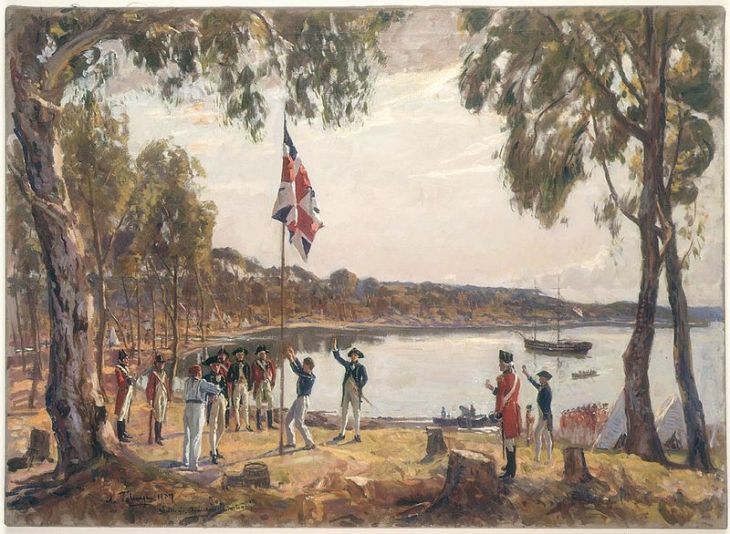
Sure we all know it represents the founding of New South Wales. But what are we, on the other side of the country, meant to do in response to that?

Some young ladies like to put on small and cheap patriotic bikinis from Red Dot [no objections here from the Dodgy Perth offices], some young men like to drape themselves in the flag, get pissed, and shout “Aussie, Aussie, Aussie! Oi, Oi, Oi!” [many objections]. Most people have a BBQ and listen to JJJ.

What we learn from the past is that they had no idea how to celebrate it either. For starters, they couldn’t even agree on a name. Some states called it Australia Day, others used the term Foundation Day or Anniversary Day. It was only in 1936 the Commonwealth Government ordered everyone to use the words Australia Day. But even this didn’t make it any clearer.

In the 1910s it was a day for kids and the place to be was South Beach. There were pony rides, fruit, swings, toys, swimming and running races, and a greasy pole in the pool. But by the 1930s no one was organising anything except a rowing regatta on the Swan. Which didn’t seem very patriotic to anyone, really.

Enter the Australian Natives Association (ANA). While they might sound as if they had something to do with Aboriginal rights, they couldn’t be further away. The ANA were the leading jingoistic mob, always demanding more be done to keep Australia white and British. There is still an ANA rowing club at Bayswater, but we imagine they’ve dropped their appalling racism by now.

It was pressure from the ANA and a bucket-load of nationalistic speeches from them about celebrating White Australia that forced the government’s hand in 1936 to make the day ‘Australia Day’ for everyone.

But no one cared. Each year the Perth newspapers tried really hard to educate the public about the arrival of Captain Phillip on Sydney Cove and why they should be celebrating this historic event. But no one cared. Even during World War II, when patriotic sentiment was at its height, the City of Perth forgot to put out the national flags on 26th January until the ANA shouted at them.

Australia Day has long been a holiday for Western Australians. And that’s all its ever been. Our only tradition has been to take the day off and enjoy it. We’re not particularly interested in Captain Phillip, just JJJ. And there are no objections here from the Dodgy Perth offices.

How to get rid of your tan

tanning

Ugly tanned body

At this time of year, especially after a day like today, it is all too easy to become tanned. In 1930 this was the last thing you wanted, since it would mark you as someone who worked outdoors. And you wouldn’t want to be mistaken for a tradie would you?

According to the West Australian, the solution was easy. And we invite Dodgy Perth readers to try this and report back.

Make up a solution of peroxide and ammonia bleach. Use six drops of household ammonia to three tablespoon…s of hydrogen peroxide. Pat this solution on the skin with a pad of cotton wool and allow it to dry in.

It is advisable to massage a nourishing cream into the skin after the bleach has thoroughly dried. To be really effective it is necessary to get someone else to apply the lotion to your back.

But perhaps your problem is freckles. And no one likes freckles, do they?

They are due, apparently, to an excess of iron in the system. The cure is a mixture of pumice and peroxide. Add sufficient hydrogen peroxide to three tablespoons of powdered pumice to make a creamy paste.

Smooth this over the freckles and let it remain until dry. To remove, moisten the pumice with cold water until it wipes off easily. Follow with an application of nourishing cream which should be permitted to remain on for five or ten minutes.

From now on we don’t want to see any of our readers with tans or freckles. At least not if you’re following the advice of The West.

New Year: A time for sexy mermaids

mermaid

Substantially more dressed than our heroine. But still a mermaid.

The Dodgy Perth team loves New Year’s Eve. This one will be spent reliving the ‘90s by watching Jebediah perform at the Rosemount Hotel. But it probably won’t be as exciting as one Perth event to welcome in 1935.

An impetuous little brown-haired miss, we’ll call her ‘Brownie’, asked her boyfriend to accompany her to a NYE party. Well, it was the ‘30s, and girls could get away with being unchaperoned in those days.

Unfortunately, Brownie’s boy couldn’t make the date so she decided to go on her own, knowing her good looks would easily enable her to get a lift home in the early hours. The affair was, as they used to say, a howling success. There was singing and dancing, all fuelled by the spirits the young men had brought in their hip flasks.

Of course it isn’t a party if you don’t have games, but this crowd wasn’t up for the usual kids’ activities. But no one could think of anything interesting to do until Brownie suggested a ‘stocking race’. She explained that the girls stood at one end of the room, whipped off their stockings, raced to the other end and back, and pulled on their hosiery again. The first one finished was declared the winner. The young men loved it.

After this, someone daring suggested a lingerie race along somewhat the same lines, but few of the girls were game. However, Brownie was still in the mood for fun. She promptly suggested a game of dares. All you had to do was dare someone to do anything, and you paid a forfeit if they were up for it. Since only Brownie was accepting the dares, this led to a number of—as they said at the time—amusing and exciting incidents.

Finally, it was crowned by Brownie, wearing only her undies, doing what she called a “solo mermaid dance”.

Unfortunately for our heroine, when she was being driven home by one of the lads at four a.m., she encountered her boyfriend. In an attempt to deflect any guilt, she blasted him for having failed to make a show.

What she couldn’t know is that her boy later found out about the stocking race and the mermaid dance. For her, nights on the beach with that boyfriend were over, and she would be a lonely mermaid by the water for some time.

Let there be light

lights

Not all history is just hot air. Honest.

As we approach the hour of the anniversary of the coming of the Christ child, it seems only right to ask the most significant question about God made flesh: When did Perth’s streets first have Christmas lights?

There were, of course, Christmas lights and decorations well before this time. Individual shops and malls had their own displays, and government buildings were beautified. But we are asking when the streets themselves were decorated.

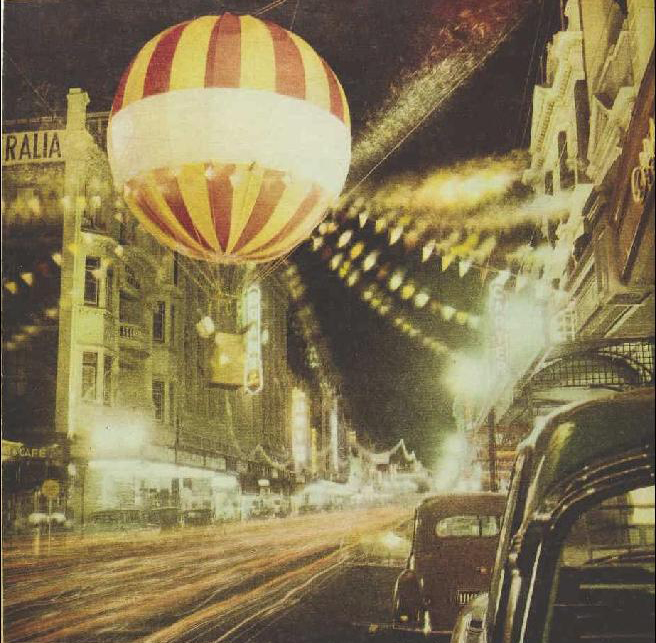
The answer is, for once, easy to come by. Following the lead of overseas cities and the other Australian capitals, Perth finally put up illuminations in 1961, at a cost of more than £4,000. The above scene shows Murray Street at the Forrest Place intersection. A giant balloon, themed on Around the World in 80 Days, dominated the area. Six metres in diameter, it was made by local Olympic yachtsman and sailmaker Rolly Tasker.

And why the ‘around the world’ theme? Because these decorations were to be dug out of the cupboard, dusted down, and reused for the Commonwealth Games (then known as the Empire Games) hosted by Perth in late 1962.

So, dear readers, next time someone asks you about Perth’s Christmas lights, you’ll know how to answer them.

It’s Christmas time

Xmas3

Just don’t ask. Don’t.

Here at Dodgy Perth, we are often asked about Christmas shopping at the turn of the twentieth century. Often, we tell you. So, for the first time 114 years, we present our glorious CBD in December 1901.

Mummified frogs. Mummified. Frogs. One grocer, H. H. Porter, had a window display of the Western Australian parliament recreated in mummified frogs. Which makes us feel all seasonal deep down inside thinking about it right now.

Want to feel the spirit of Xmas even more? Children who stopped too long to peer into the windows of the city’s shops were firmly moved on by the police. No cluttering up the pavements when there are real people with money to spend, thank you very much.

As the twentieth century started, Perth was feeling the full effects of the gold boom. Which meant there was real cash flowing around the city. Which meant shops could jack up their prices and justify it with nice window displays. Doesn’t sound at all like the city we know does it?

There being no holly or ivy locally, decorative greenery was supplied by the “health giving and invigorating” eucalyptus. Every lamp post and verandah post was covered with the stuff giving Perth the scent of the bush. Public buildings were draped with flags of every nation and shops had started to employ professional window dressers.

Take Sandover & Co, whose Hay Street window had a harvesting scene, in which a rosy-cheeked country lassie was reposing amongst sheaves of locally grown wheat. In the background a windmill—driven by an electric fan—turned itself around. How very Christmas. Although Sandover was the place to go for the novelty present everyone wanted that year: table tennis.

Of course, if you had a little more money, you could go to E. J. Bickford & Co, whose premises extended from Hay Street to Murray street. Normally a furniture dealer, in 1901 all sorts of Christmas novelties could be found there, including a display of Armenian glassware. But not needing Armenian glassware, we’ll just pick up one of their luxury ping pong tables.

J. Weidenbach & Co. had a splendid Christmas show that year. The windows were full of beautiful Chinese lanterns and umbrellas, Japanese art drapings and Chinese silk drapings. Beautiful, until you realise that 1901 was the year they passed the Immigration Restriction Act specifically to stop Chinese and Japanese people coming to Australia. Hypocritical bastards our ancestors.

Hughes & Doheny had snowstorms in their window, but much better they had Kinross whisky and Santa Ross wines inside.

And we in the Dodgy Perth office would have loved to have looked in the window of Carter & Co., to check out their “unique” display of ladies’ lingerie. Not for ourselves, you understand. Well, unless it fits nicely.

TelCo contracts, 1887 style

"You charge how much per megabyte?"

“You charge how much per megabyte?”

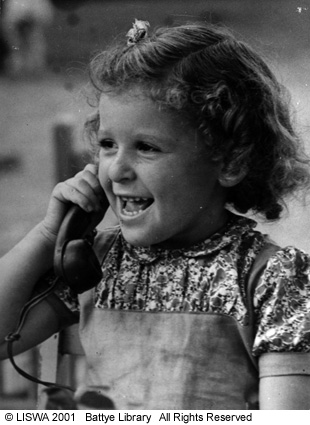
As is well known, the only thing that separates us from the animals is the tiny amount of data mobile phone companies provide us on a monthly allowance. Before tipping us upside down to shake out a few more pennies. We’re looking at you Telstra.

But this did make us wonder what the first telephone contracts in Perth looked like. As it happens, we have a copy in front of us. If you’d signed up in 1887 to be one of the first subscribers to this exciting new technology, you first had to agree to the following.

Calls were not charged individually, but there was a subscription of fee of £15 a year if you lived within 800m of the Perth or Fremantle exchange, and an extra 25 shillings for each additional 400m you needed further away. For your money, you would be provided with one telephone and a connection to the exchange. A bell cost extra.

It’s not easy to say how much money £15 a year would be today, but you could rent a cottage in Bunbury for the same amount. If you wanted to live in Bunbury, of course. If.

Whether you lived in Perth or Fremantle, you were allowed to talk to someone in the other city. Which is nice. Except under the fair use policy, no call between Perth and Fremantle could exceed five minutes.

Oh, and you could only call between 9am and 6pm on weekdays, 9am to 1pm on Saturday, and not at all on Sundays or public holidays.

A subscriber could not allow their telephone to be used by anyone else except their own personal servants. That is, unless the borrower had a telephone at their own residence.

Finally, there was the usual legalise you would expect:

No responsibility is assumed by the Government for any errors, omissions, or delay in the transmission or non-transmission, delivery or non-delivery, of any message, arising from any cause whatsoever.

No mention of a data allowance anywhere, or what happens if you want to upgrade to the latest iPhone. Probably in the small print somewhere.