When religious terrorists terrified Perth

Photographs were only in pen and ink in 1868. Evidently.

Photographs were only in pen and ink in 1868. Evidently.

After an immigrant committed an act of terrorism in New South Wales, there was the expected panic across the country. In Perth, demands were made for moderate members of the terrorist’s religion to distance themselves from the act, or risk all of them being tainted with the accusation of sympathiser.

Regular Dodgy Perth readers will not be surprised to discover the religion was Roman Catholicism. And the year was 1868.

The Duke of Edinburgh, second son of Queen Vic, was on an overseas jolly when he attended a picnic at Clontarf, now an upmarket Sydney suburb, but then a popular picnicking spot. While the Duke was enjoying the picnic, an Irishman with a history of mental illness, Henry O’Farrell, fired his pistol at close range. The bullet struck the Prince’s back, glanced off his ribs, finally inflicting only a slight wound. O’Farrell was nearly lynched by the crowd, and only saved by being arrested. He didn’t have long for this world, though, and despite his evident mental illness, he was hanged at Darlinghurst Gaol.

Even before this event, the 1860s had not been a good time for Catholic-Protestant relationships in the various Australian colonies. From newspapers, every non-Catholic knew all Irishmen were Fenians, thus making every Irishman a potential terrorist. Anti-Irish sentiment became rampant. New South Wales passed a law making it an offence to refuse to drink to the Queen’s health.

Following the failed assassination, large public meetings were held around the country including at the Court House in Perth. The fear was palpable. A number of convicts in Western Australia had been transported for being Fenians, and everyone was terrified at the terrorists we were now harbouring.

The British Government promised two military companies from Tasmania in the event of terrorism happening in Perth, and the State Government promised to use violent force to stamp out any local signs of Fenian activism.

Martin Griver, the Catholic bishop of Perth, had to stand up on behalf of ‘moderate’ Catholics to pledge loyalty to Queen Vic and plead that local residents would not see all Catholics as Irish, and not all Irish as Fenians.

The meeting ended with approving a letter to be sent to the Monarch expressing how very very British all Australians were really. And being good Brits they did not like shooting members of her family.

What is good, though, is that it would be impossible for the citizens of Perth in 2015 to treat one violent person in Sydney as a representative of his religion and call for immigration restrictions. This could never happen today.

Where’s me gargoyle then?

The Chrysler Building looking all retro-futuristic. But gargoyles.

The Chrysler Building looking all retro-futuristic. But with gargoyles.

Perth is missing something. And it’s quite an odd thing to be lacking. Gargoyles. Think of the gothic building in Ghostbusters. Yes, it was fictional, but compare the very real Chrysler Building.

Perth has a number of buildings of a similar age—if not quite the scale—but we never got gargoyles. Instead there were relief figures of historical significance, from zoology and mythology, symbolic and emblematic figures, but no gargoyles.

One of the most notable figures surmounted the façade of the Atlas Building: a life-size figure of Atlas himself supporting a globe.  This was also modelled in terracotta and finished in an ivory colour, with the globe made of sheet copper. Although the building still exists, Atlas was removed in the late 1960s when the roof was renovated.

Atlas looks over some Royal visit or other

Atlas looks over some Royal visit or other

On William Street you could have seen the fierce features of a Viking chief and just below a parapet which crowned with the prows of three Viking galleys. Unimaginatively, this was called Viking House.

The Vikings are coming. The Vikings are coming.

The Vikings are coming. The Vikings are coming.

In Hay Street there was a butchers which had a row of heads representing the bullock, sheep and pig. Another building had St. George in the midst of his heroic battle with the dragon. Three more dragons looked on from the façade of an adjacent building.

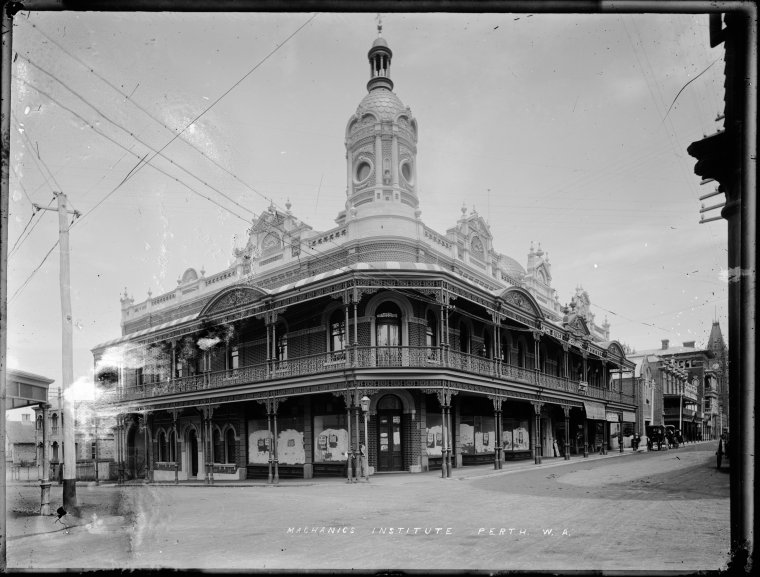
A large number of the buildings of Perth used to be crowned with black swans, for obvious reasons. One of the best adorned the Mechanic’s Institute, floating serenely amongst carved reeds and rushes.

mechanics

Something about the tower on the corner of the Mechanics’ Institute doesn’t look right. But that could just be us.

His Majesty’s Theatre is still capped by five huge lions contentedly resting upon the parapet. There are also several dragons woven into the design.

Lions relaxing after a hard day at the theatre

Lions relaxing after a hard day at the theatre

In Barrack Street one panel contained the visor and lances of a knight. While on the opposite side of the road, ten identical moustached faces gazed serenely over the traffic.

Although the majority of significant buildings on St. George’s Terrace were constructed when decoration was out of fashion, a couple of banks had faces above their entrances, one being that of a Maori.

But still, no gargoyles. Why did we miss out?

Do footballers prefer blondes?

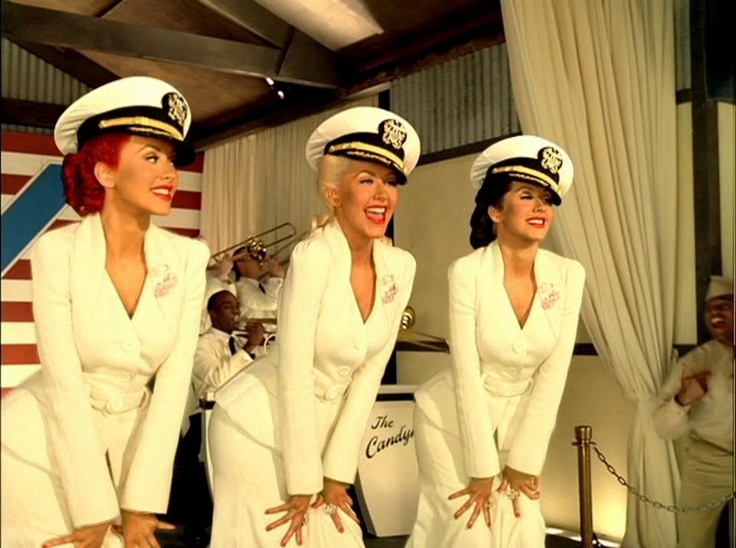
He's a one stop shop, makes my cherry pop

He’s a one stop shop, makes my cherry pop

What do we know of our football idols off the field? Well, in 2015 just about every single thing. Including lots of things we don’t want to know.

But in 1938 it was considered novel to interview an entire football team and discover the answer ot the most pressing question of the day: did they prefer brunettes or blondes?

Following is a selection of answers from the Perth starting eighteen:

Keith ‘Pop’ Hetherington A 22-year-old, who worked at the Government Printing Office. Not married; not engaged. Perth’s utility man, he came to the team from Wembley. One of the many blondes in Perth’s eighteen, he was an appreciative judge of a good looking girl. Blondes or brunettes were all the same to Pop; he considered a girl is only as good as the breakfast she can cook.

Eric Strauss A blond 18-year-old giant (six foot was tall in 1938). This was his first year in football, and he was also a first-class cricketer. He was single, and claimed not to have given much thought yet about blondes, brunettes or redheads.

Reg Trainor Wingman, aged 25, dark and single. A school teacher by profession; a good swimmer and good cricketer. Non-committal on the subject of blondes or brunettes; says a man can’t mix football and women.

Fred Puddey Crack centreman, better known as ‘Fred the Giant Killer’. Not married, not engaged—not interested. Definitely does not like blondes: “Too many of them are gold diggers,” he said.

Bob Love The 25-year-old goalkeeper. Compactly built, he was dark and single. Came from the Perth Mets (of which he was, captain). Refused to be drawn on the subject of women. “Forget about them,” he said, “Love is only my name—not my nature.”

Girls, take your pick.

Let them eat cake

Lord Mayor James Franklin, and wife Alice

Lord Mayor James Franklin and wife Alice

For some reason Dodgy Perth has decided to look at a time when Lord Mayors tried to restrain spending on hospitality, not simply indulge in it. It’s not like it’s a topical issue at the moment, or anything.

A century ago, Perth City Council was entitled to spend up to three percent of its revenue on running the council itself. This included entertainments for guests and treats for councillors. Stirred up by the media, ratepayers used to get very cross about fat elected officials drinking port and smoking cigars while the honest man was suffering the effects of the Great Depression.

To counter the outrage, in 1932 Lord Mayor James Franklin ensured each councillor was issued with twenty coupons a fortnight. Each coupon could be exchanged for one drink, one cigar or one packet of cigarettes. On principal, four of the twenty-five councillors refused their share of coupons.

But by mid-1933 the system was already on the verge of collapse. Somehow more coupons were being used than supplied and the budget was running into debt. More seriously, though, was that sometimes the Lord Mayor had to dip into his own pocket when receiving overseas visitors and take them to the local hotel when he had run out of vouchers.

Can you imagine a Lord Mayor dipping into their own pocket, rather than just corporate hospitality’s? Practically unthinkable in 2015.

After several councillors expressed dissatisfaction with the whole scheme, Perth City Council did what councils always do. They referred the matter to a committee to come up with a report.

Referring things to committees is always better than making decisions. Always.

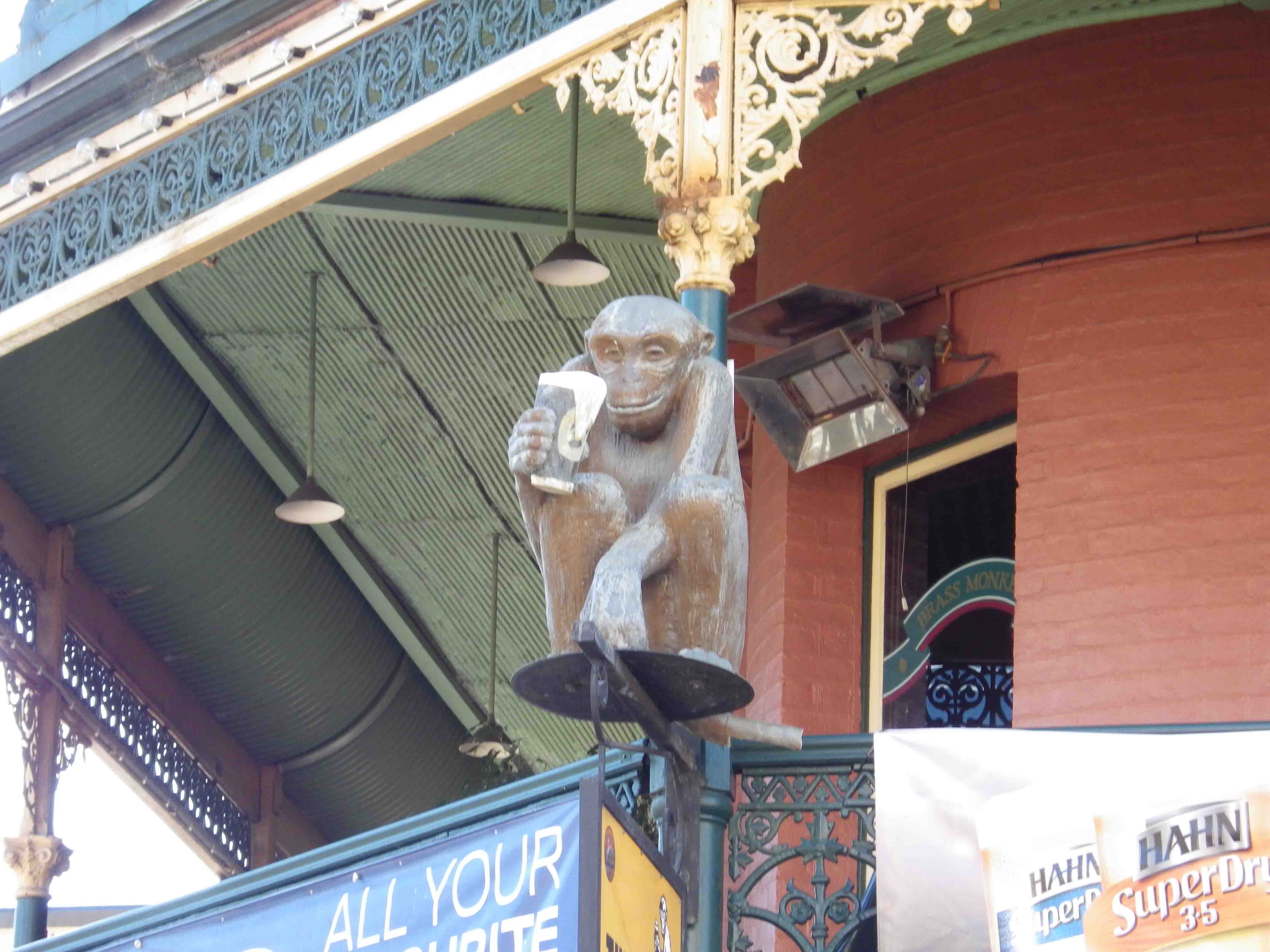
The Peanut King at the Brass Monkey

Given enough monkeys one of the will produce a hotel

Given enough monkeys one of them will eventually produce the plans for a hotel along with the complete works of Shakespeare

The Great Western Hotel (now the Brass Monkey) was designed in 1896 by Michael Cavanagh, who had arrived in Perth from Adelaide only the year before. He is mostly famous for his numerous buildings constructed for the Catholic Church.

His work includes Mercedes Colleges, St. Brigid’s Convent and the Redemptorist Monastery. However, he doesn’t appear to have put a lot of work into the Great Western, simply recycling his plans for the Barrier Hotel in Port Pirie, SA, which he designed in 1892.

In November 1913, William Urquhart was enjoying a drink in the Great Western with a friend. It was Urquhart’s shout, so he pulled out a purse. As he did so, a number of coins fell to the floor.

But others had entered the bar: William Proleta, McGaskiell and William Williams, locally known as ‘The Peanut King’. As Urquhart picked up the cash, Proleta said “That’s my half-sovereign, mate.” Then he grabbed the purse and punched Urquhart in the face.

Urquhart fell, but recovered in a few seconds. Rising from the floor, he ran to summon the police. Strangely, Proleta kept calmly drinking in the bar.

When Constable Molloy accused Proleta of robbery, the young labourer replied, “I —– didn’t rob him; I don’t know him.” He was searched, but only small change was found in his pocket.

While being arrested, Proleta struggled and was thrown to the ground. His hat fell off, and a sovereign and two half-sovereigns tumbled out. The Peanut King also turned out to have unexplained cash on him.

As a strange footnote, in another court case featuring The Peanut King, he denied his wife was known as The Cocoanut Queen. Nicknames were certainly different in the 1910s.

Horses, dentists and dealers

Percy's haul

Percy’s haul

From conversations we have, some people seem to think drugs weren’t a problem in Perth in the past. Boy, do we have news for them.

Prior to the 1920s, white citizens liked to see all Chinese residents as the only users in Perth. In this case opium was often the drug of choice. They were just as wrong as people who believe addiction is a relatively new phenomenon.

Dentists were suppliers and occasional users of cocaine, which was one of the new anaesthetics available to them. While stats for Perth are hard to come by, dozens of Melbourne dentists were struck off in the 1920s for being coke addicts.

The other source of cocaine was the racing industry which (illegally) used both it and heroin to give horses an advantage. In fact, the dose for one horse was enough to keep six people stoned for a night. It was said that the majority of Perth users got their drugs from trainers, not from drug gangs on the street.

In 1929, one unfortunate addict came to light after breaking into a Nedlands’ chemist and stealing bottles of cocaine, morphine, strychnine, heroin, and hydrogen peroxide. The thief, Percy Preston, was later found lying unconscious at Claremont with a hypodermic by his side.

While one user does not imply an epidemic of drug use, if a user has the money to pay for drugs from a dentist or trainer they won’t come to the attention of authorities. Percy was just unlucky enough to have run out of cash in a moment of need.

And Percy’s case also shows there was sufficient ‘dope’ around to become an addict. So drugs are not a new thing in Perth, and we are neither winning nor losing the ‘war’, simply managing it generation by generation.

Bottled mouse

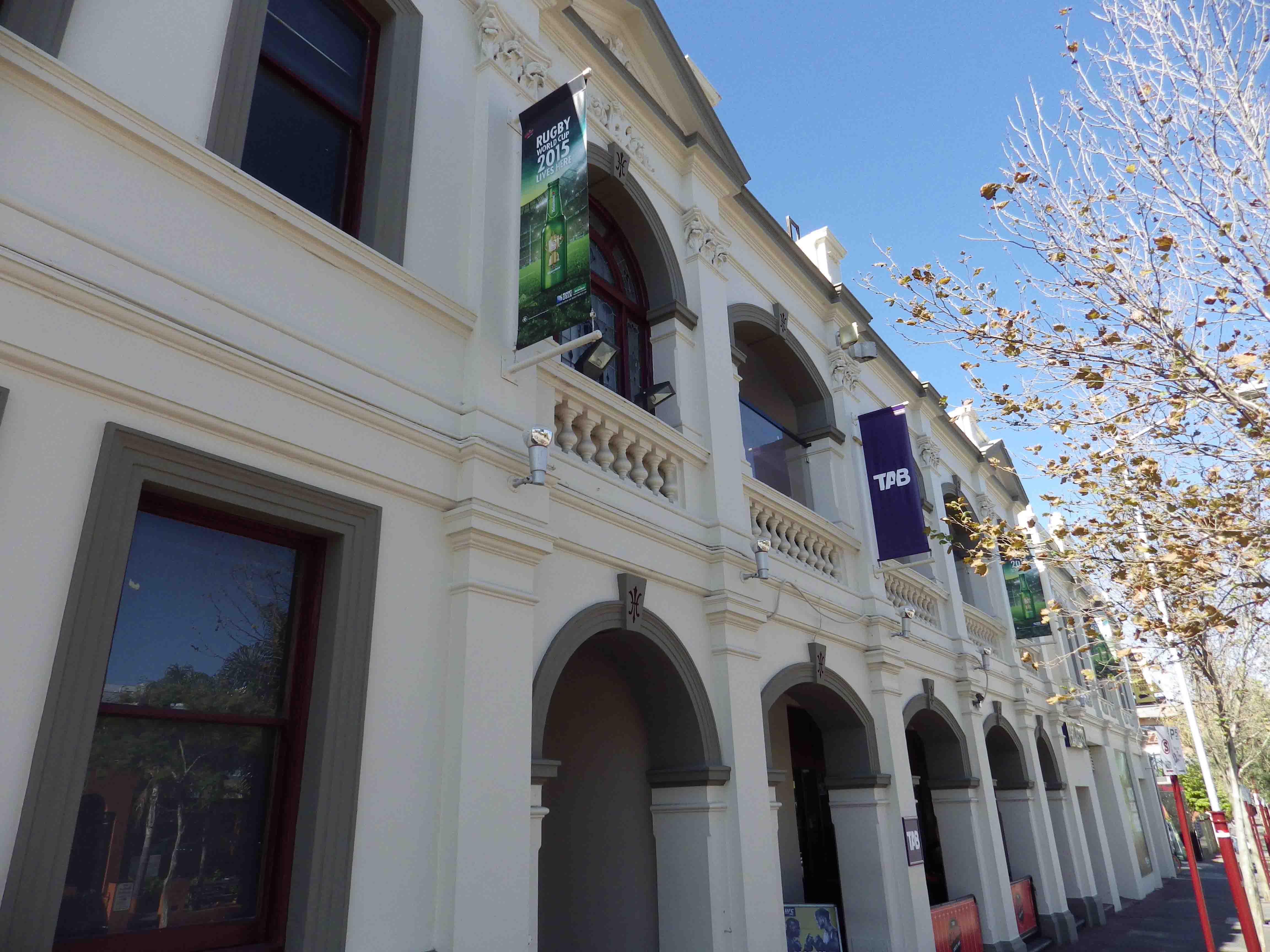
Anyone fancy a game?

Anyone fancy a game?

When it first obtained a license in 1886, the All Nations Hotel (now Games Sports Bar) was already operating as a boarding house. The name ‘All Nations’ suggests literally that. Everyone was welcome, whether Irish, English, Italian, or whatever. It probably did not include Aboriginal people, however.

In 1905 a skittle alley (with other extensions) were added to the design of an architect we have already come across, William Woolf. When Woolf went bankrupt in 1898, he owed £470, borrowed at an exorbitant rate. He revealed to the court he had fled Melbourne and Sydney with other un-remitted borrowings. Great architect as he was, he was definitely a man who lived well beyond his means.

The Games Sports Bar does not seem to be able to keep a name for two weeks running. Originally the All Nations (1886-91), it became the Cosmopolitan Hotel (1891-1905), when new landlord, M. R. Davies, arrived from Townsville, where he had run a pub of that name. Then it transformed into Union Hotel (1905-39), Red Lion Hotel (1939-90), Aberdeen Hotel (1990-2015), and under a new name right now. But for how long is anyone’s guess.

In 1921, an odd case about the Union Hotel came before the courts. John Simopolis bought a bottle of Swan beer from the pub, and started drinking it. Suddenly he noticed a dead mouse in the bottle. Naturally he felt a little queasy at this point and, although there were no long term medical effects, he sought £25 compensation from the pub and the brewer.

A number of brewery employees testified it would be impossible for a mouse to get into a bottle during the manufacturing process. The defence lawyer claimed it was a frame-up. The judge was not convinced and awarded £10 10s damages to Simopolis.

Lions and tigers and bears, oh my!

For sale, one careful owner

For sale, one careful owner

We at Dodgy Perth love a good stock clearance. Much of our wardrobe comes from discount racks at Myer. So it is a shame we couldn’t be there for Perth Zoo’s clearance sale.

Starting in 1902, the Zoological Gardens auctioned excess animals each year at a sales room in the CBD. Besides the purely ornamental animals and birds, there were several young tigers, a leopard, a bear, and a buffalo. Each animal was exhibited in a cage in the auction house for the public to inspect before making an offer.

Since we have the auctioneers’ catalogue for 1903, Dodgy Perth invites you to choose your next pet:

  • Lioness, tigress, brown bear (male)
  • Malayan honey bear, white dingo puppies
  • Equine deer, Pekinese deer, hog deer, fallow deer
  • Goat cart, harness and goat
  • Mule (broken to saddle and all kinds of harness)
  • Kangaroos, wallaby, African baboon
  • Young Macaque monkeys
  • South American marmosets, or pocket monkeys (beautiful ladies’ pets)
  • Ferrets (good for either rabbits or rats)
  • Tortoise (very large), tortoise (small baby)
  • Guinea pigs
  • White swans, black swans
  • Muscovy ducks, black ducks
  • English wild ducks, swamp hens
  • Silver seagulls, pea fowl
  • English pheasants, bronze-wing turkeys
  • Silver pheasants, red-legged partridges
  • Australian quail, guinea fowls
  • Silky fowls, Japanese red bantams
  • Blue and yellow macaw, red and blue macaw
  • Leadbeaters, pink cockatoos, sulphur crested white cockatoo, rosy cockatoos, cockatiels, parrots
  • Warbling parakeets, Indian cinnamon doves
  • Peaceful doves, diamond doves
  • Pigeons, from prize stock
  • Canaries, especially good lot
  • Java sparrows, diamond sparrows, Gouldian finches
  • African finches, English finches
  • Gold and silver fish

Dodgy Spirits

Anyone want to go see a band with us?

Anyone want to go see a band with us?

The Rosemount Hotel is the work of Charles Oldham, best known for designing the magnificent AMP Building. It was during the construction of this he wrote a letter to his clients. AMP, saying the Clerk of Works had to be fired.

Oldham claimed Robert Bushby was too picky with the materials (he didn’t like the Donnybrook stone which had been delivered) and the contractors couldn’t work with him. Bushby was dismissed and immediately sued Oldham for libel. He originally won £200 in damages, although this was overturned on appeal, since the letter was deemed to be in confidence.

William Cutmore, licensee of the Rosemount Hotel, ended up in court in 1910, accused of selling potato spirits masquerading as good, honest rum. Cutmore had purchased five gallons of the stuff, and only sold one shot, before the Chief Inspector of Liquors showed up at his premises. The inspector picked up a bottle, put it to his nose, and announced, “I don’t like the odour of this stuff.”

In the lab, the spirit in question was found to be made from potato, coloured with burnt sugar, and flavoured with some type of rum essence. The ingredients of the latter included manganese dioxide and sulphuric acid, to which, birch or coconut oil had been added.

The government scientist refused to tell the court if the ‘rum’ was injurious to health, protesting “I am not a duly-qualified medical man.” But, he added, “I have my own opinion on the subject.”

Cutmore’s defence managed to establish he was an innocent victim here, but he was fined £20 anyway. In the meantime, the newspapers fretted that if too much dodgy rum hit the market, WA’s percentage of ‘lunatics’ was bound to increase by leaps and bounds.

Crying Woolf

We remember when it was much more sleazy

We remember when it was much more sleazy

The Commonwealth Hotel (now the Hyde Park Hotel) was designed by liar and architect, William Woolf. Born 1855 in New York, Woolf always claimed he studied architecture at Heidelberg, Germany. There was no such education facility there at the time.

In 1891, he was accused of swindling a servant girl out of £220 in Melbourne, In WA, he was regularly in court for failing to pay his bills, but still managed to design many great buildings. His most significant contribution to Perth’s architecture is His Majesty’s Theatre.

The Commonwealth’s first landlord was Charles Simms. He had been a publican in New South Wales, South Australia, and in Fremantle. However, getting a licence for his new hotel was to prove a little difficult in 1901.

Like any good police officer today, Inspector Drewery opposed the application, but this time it was on account of the manner in which the applicant had conducted his other hotels.

The Inspector read the bench a list of Simms’ convictions over the previous four years. Disorderly conduct on licensed premises; supplying liquor to an underage boy; allowing prostitutes to congregate in his bar; Sunday trading; trading after hours; employing staff after hours; and, again allowing prostitutes in a pub.

After hearing Simms’ excuses for each conviction, the bench adjourned.

After lunch, they said that “after very anxious consideration,” Simms could have a licence, since they did not like to “take the responsibility” of refusing the application in this instance.

So, Charles Simms did become the Commonwealth’s first landlord after all. But only just.