Duel purpose

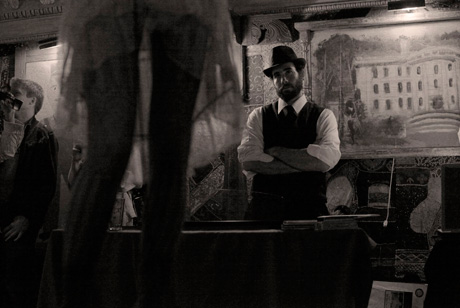
duelling“The horrid and murderous system of duelling has found its way to this Colony under the hypocritical name of honour.” So said Joseph Hardey, who built Tranby House on the Maylands Peninsula.

Hardey referred to the only duel in Western Australian history—that between George French Johnson and William Nairne Clark.

George, a Fremantle merchant, had been at loggerheads with William, a solicitor, for some time. Heated insults were often exchanged between the pair.

Matters came to a head on Thursday, 16 August 1832. William once again approached George and insulted him in front of several witnesses. At the time George said nothing, but simply walked away.

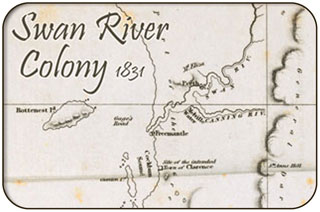
But the next day William was informed George wished to settle the argument in a duel. The challenge was accepted and the place was fixed at the back of house near Cantonment Hill, Fremantle.

At the appointed hour next evening, the two duellists selected their pistols, went to opposite parts of the yard and, standing side-on, fired when the signal was given.

George fell instantly, with a gaping wound in his thigh. A doctor was hurried to the scene and the wounded man taken to hospital. But just twenty-four hours later he died.

William was immediately arrested and tried for murder. Strangely, and despite the rigid laws governing duelling, he was found not guilty.

It’s getting hard for miners

impotenceIf you’ve ever stayed up late watching SBS you will probably have noticed those adverts. The ones where they prey on men’s fears of declining performance and then offer a medical miracle that will turn you into a bunny again.

The Dodgy Perth office would like to assure readers that we have no problems in that department. Proof may be obtained in exchange for a meal and single red rose.

But before nasally delivered medicine, do you suppose that men didn’t fret about their declining performance? Of course they did. Even hardened miners feel pressure to perform.

And where there is anxiety, there will be someone out to make a profit.

In 1908, it was herbalists Collison & Laking, who plied their trade next to the Maritana Hotel in Kalgoorlie. They advertised they could cure all diseases of a private nature: failing manhood, nocturnal emissions, and night losses. (Impotence and wet dreams, basically.)

But first, you need to know how a strong manly miner could have come to such a situation. The answer is, as ever, simple. He disobeyed Nature’s Laws when he was young. And this is his punishment.

No, our grizzly gold digger had not broken the law of gravity. Worse. He had engaged in an (at least one) act of masturbation when a teenager. The shame. The pity. The horrible consequences.

But there was no point in getting all depressed about this dreadful violation of Nature’s Laws. Instead, he simply needed to nip over to Collison & Laking who were the specialists who could sell him a remedy before it was too late.

They stressed that ordinary medicines were useless in these cases. Only herbal medicine could restore true manliness.

So, to all Dodgy Perth readers who have indulged in self-pleasure in the distant past, before you fully understood the consequences, we say beware. And get yourself down to your nearest herbalist.

Then we can talk about that dinner date.

Islamophobia, 1832 style

When we think of the early Swan River Colony we usually picture white British settlers and Aborigines. And no one else. So it might come as a surprise to find there was a thriving Muslim community (perhaps from Indonesia) right from the start. Unfortunately, we only know this because racist bigots decided to beat them up.


On Christmas Eve 1832, Samud Alli was on his way to George Leake’s store when John Velvick grabbed him outside the Perth Hotel and said “You black man, give me glass of grog.”

Samud protested that, as a Muslim, he didn’t drink. So Velvick punched him two or three times, using language the newspaper said was “too disgusting for publication”.

Then Velvick held him while his white mate started laying into Samud with a stick. He was only rescued when other Muslims arrived and calmed the situation.

The Muslims went back home, while the white men went to another pub, Mayo’s Bar. Here, they got very pissed. Twenty of them (including teenagers) grabbed heavy sticks, determined to start a fight with their Muslim neighbours and tear down their huts.

Leading the baying mob, Velvick demanded Samud fight him, to which he calmly replied “I no fight.”

“You bloody bastard, you must fight,” screamed Velvick, calling on his twenty mates to lay into the eight Muslims.

The defenceless party had no chance. Most were still sitting down, and some were attempting to shake hands with their attackers.

The beating was so bad, every Muslim was covered with blood.

For this vile act, Velvick got three months. But a worse fate was waiting for him.

Shortly after he was released from prison, he and his brother were killed by Aboriginal resistance leader, Yagan. Neville Green has suggested the Velvicks were singled out because they were known to be violent racists.

Unfortunately, events spiralled out of control, leading ultimately to Yagan’s death at the hand of a colonist.

Welcome to the founding of our colony.

They don’t spare the rod in Perth

spanking

And doesn’t he look happy about it

Today Dodgy Perth answers that difficult question: Is it okay to hit 17 year old girls? In the 1920s The Mirror used to run an advice column. Readers would send in their problems and the following week other readers would offer their opinions.

Today, we offer a problem and advice from 1928:

Up to what age should a father spank his daughter?

I have a daughter who is nearly 18, and lately I have had to speak to her several times regarding the late hours she keeps but she takes no notice.

I am now seriously considering asking her father to apply the slipper but I am afraid he would refuse on the grounds that she is now too old to be spanked.

There does not seem to be any other way to enforce parental authority. What should I do?

Yours etc, ‘Mother of Five,’ (East Perth).

The answers were consistent.

‘Mother of Five’ has a perfect right to ask her husband to spank her seventeen-year-old daughter if she won’t do what she is told and refuses to correct her bad habits.

Spanking isn’t a matter of age; it’s a matter of common sense and girls should be spanked until they have sufficient common sense to be able to get along without the strap.

Yours, ‘Twenty-one,’ (Subiaco).

Another mother wrote:

I take the opportunity of giving the lady a little advice on this most important subject, which as far as spanking children is concerned, is as old as the hills.

If the girl of nearly 18 years old did not do as I told her and she treated me with so much contempt I would not go to her father to perform the operation of spanking her.

I should take the pleasure of getting a cane about 18 inches long and put her across my knee, and use it to such an extent that it would sting and hurt, and give her something to remember.

Don’t think she is too old to punish at 18, don’t hesitate about it, and you will get the respect all the sooner from your daughter.

Yours etc., ‘Another Mother.’

Anyway. So now you know.

Sex and the city

riviera

Contemporary picture of a den of iniquity

Over the last couple of days, Facebook and Twitter have been full of mourning for long demolished blocks of flats in central Perth. Even councillors at the City of Perth having been bewailing the loss of such buildings as the Riviera Flats.

For our part, we are happy to let people wallow in nostalgia and believe that blocks of flats were a good thing.

No. Wait. This is Dodgy Perth.

In 1929, as flats became more common in Perth, it was becoming clear that nothing good was going to come of this new way of living.

The media had discovered that some of these apartments were being rented by young single men. To understand why this was controversial you need look at the alternatives.

If the young man lived at home, his parents would be there to stop any hanky-panky shenanigans happening in his bed.

The only other option, before flats, was to live in a boarding house. The communal nature of the building, and because they were ruled over by a middle-aged matron, definitely meant no sexy time in a boarding house.

But flats were different. They were your own space, and you (and others) could come and go as you pleased without being observed. No wonder they terrified both the older generation and the media.

The young man who rented a flat could invite his girlfriend over for a ‘quiet drink’, or throw a party. And these were not the kind of parties that would be sanctioned in their parents’ homes.

Inevitably, the newspapers went all “won’t somebody think of the girls?” No decent girl, they said, would be used to drinking. So as soon as she had a few in a private flat, she would instantly become the victim of her predatory host.

Well. Maybe. But probably not.

Why can’t the law stop young men renting flats? was the cry. Private flats for young men were only going to cause trouble.

So, to those who are unhappy that blocks of Art Deco flats were demolished, Dodgy Perth asks you this simple question: Won’t somebody think of the girls?

You can cheque out any time you like

Brothel-460Cashed-up miner gets drunk. Spends too much money on booze and hookers. Regrets it the next day. End of story.

Bet you’ve never heard that one before. Except this didn’t happen during the most recent mining boom, but in 1903.

Augustine Eyre was the miner in question, and one evening he hailed a cab from outside the Palace Hotel where he was staying and asked to be taken to ‘Monte Carlo’. To understand this strange request, a little background on Perth drinking culture.

There were no legal late-night drinking joints. And no licensed nightclubs. So a man wanting a drink after closing time needed to visit a ‘house’. These were (in theory) private residences, in practice speakeasies-cum-brothels.

The two most infamous (and longstanding) in 1903 were Monte Carlo in Murray Street and Shakespeare Villa in Dyer Street, West Perth. These houses were mostly tolerated by the police, although subject to the occasional raid.

Anyway, Augustine asked to be taken to Monte Carlo. For reasons which are unclear, but which may involve a backhander from the owner to the cabbie, he was dropped at Shakespeare Villa instead.

The miner knocked back a few drinks and then caught the train back into town, where the Palace Hotel bar was still open, so he had a few more. Out he walked, hailed another cab, and requested again to be taken to Monte Carlo.

The driver dropped him at Shakespeare Villa.

Perhaps realising this was as good a place as any, Augustine started hard, hard drinking and carousing. For several days. Yes, days. They knew how to have a good time in 1903.

At the end of his stay, presumably with a very sore head, Augustine wrote out a cheque to his very hospitable hostess, Annie Wilson, for £150. This was to cover the cost of accommodation, food, drinks, and—ahem—the company of a number of young ladies.

It was not until a few days later that Augustine realised that, while completed pissed, he’d handed several cheques over to Annie, totalling nearly £400.

Completely regretting this, he went to the police to demand they get him a refund.

The consequence was that Annie was charged with running a house of ill repute, and fined a measly £10. The judge said that Augustine was a fool and, as far as we know, he never saw his money again.

We named a kiosk after her?

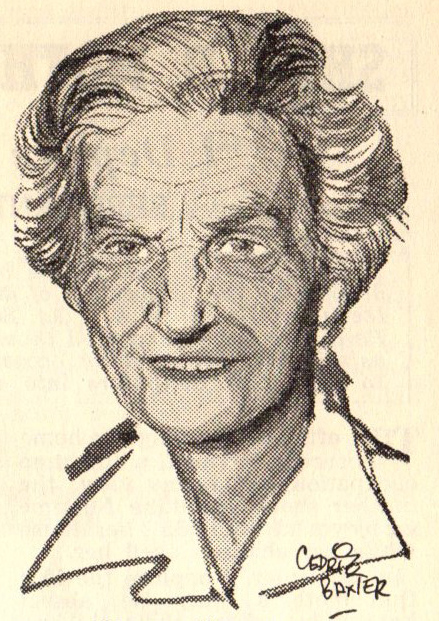
img20141216_13265957She was the first female councillor at the City of Perth. She was awarded an OBE. Had a kiosk on the Esplanade named after her which they recently knocked down and rebuilt at taxpayers expense. And, oh yes, there is a pathetic little park on the corner of St George’s Terrace and Mount Street bearing her name.

What a wonderful lady Florence Hummerston must have been to have all these accolades. After all, look at the gentle love beaming from Cedric Baxter’s portrait.

Such a woman deserves respect. Let’s listen to Auntie Flo’s opinions on women with jobs. I’m sure they will be heart-warming, just like an afternoon spent at her park.

Today we find so many mothers setting their children aside and going out to work because they believe it is more interesting and because it satisfies their egotistical desire for admission to society.

Okay. So FloHum isn’t exactly Germaine Greer. But let’s read on, maybe she’ll soften up a bit.

The price of this, the loss of love and respect of their children is no concern.
They know they are neglected. They pretend to love the mother because they are afraid.

Right. Yes. Fine. Anyway, Councillor Hummerston, do continue.

The argument that a mother can properly care for her children, her husband and her home and undertake a job which requires her daily absence from the home is unsound.

Oh do tell us why.

There is no time to cut lunches so the children go off with a few pence to spend at the tuck shop and the children’s lunch is usually chips, sweets and a bottle of fizz, as they call it.

Oh FloHum, you are so hip and down with the young folk. No wonder they all love you.

And what happens to children of those evil homes where the mother (perish the thought!) has a job?

With revenge they rejoice in their ‘day of reckoning’ and set out on a crime spree.
They are the delinquents, the problem we hear so much about.

So, if you were at school in the late 1950s or early 1960s, had a working mother and ever partook in a bottle of ‘fizz’ (as we believe the hipsters say), take a good look in the mirror.

FloHum did not approve of you, and there was no hope for your future.

It’s a bust! Strippers, cops and His Maj

Legendary American striptease artiste, Sally Rand

Legendary American striptease artiste, Sally Rand

Today Dodgy Perth answers the question on everyone’s lips. Who was the first stripper in Perth? However, the answer to ‘when’ and ‘where’ is much easier than ‘who’. The name of our brave pioneer has been lost to history.

In January 1940 His Majesty’s announced that Perth audiences would see their first ever American-style striptease. The producer, Jack Lester, promised it would be “an artistic contribution” to the programme, and not at all indecent.

On the night it was announced the quantity of clothing removed would be in direct proportion to the level of applause. The crowd, unsurprisingly, went wild.

First off came one glove, then a second glove, a dress, and—we shudder to even say the word—a brassiere. Then the scantily-clad miss disappeared in a subdued light and a storm of applause.

Perhaps ticket sales were not what Jack Lester had hoped. Following nights saw several girls stripped to the waist. And then Jack pulled off his greatest publicity coup. For the first time ever, Perth audiences saw someone go the whole way.

A dainty brunette, she gradually discarded her clothing piece by piece until the last, most important, item dropped at her petite feet and she pirouetted nude.

When the audience recovered from the shock, the reaction was deafening. They clapped and whistled our local girl until the last of her birthday suit disappeared from the stage.

The news spread and next night His Maj was packed. Among the audience were four cops standing at the back, ready to spring into action.

As the stripper appeared on stage, the crowd was in a frenzy. But the presence of the law meant her act ended with both tights and brassiere firmly in place.

Cries of “’Fraud!” rang out, but the presence of the police meant that there was to be no repeat of the previous evening. It was said that Perth had seen its last striptease.

And we firmly state that we assume this is true, and would have no clue if there are strippers in town today.

A bridge too far

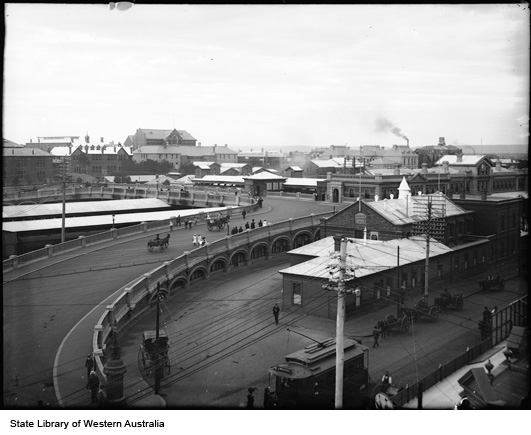
Anyone who has lived in Perth for more than a week knows the story of the Horseshoe Bridge. How the Railways Department came up with a brilliant solution to the problem of restricted space, making it (according to the Heritage ‘Style’ Council) an “outstanding example of a major urban railway overbridge of its time”.

Well, this is Dodgy Perth, so prepare to have all your illusions shattered. Our comments on the above story are no, no, and God no.

Firstly, it is not innovative. Nor did anyone claim it to be at the time. It was not called The Horseshoe Bridge in 1904, just described as a horseshoe bridge.

Why this particular design? Because wherever they were going to put a bridge, the tight-arse Railway Department didn’t want to hand over cash to landowners on Wellington or Roe Streets. They wanted a bridge that would only use land the Government already owned.

There never was restricted space. Just an attempt to save money.

Speaking of hard cash. Robert Howard, a draughtsman working for the Public Works Department knocked up plans for a horseshoe bridge and then offered to sell them to the Government for £1,000. They told him to bugger off, since he was an employee. So Robert quit the PWD and then sold the plans to the Government for £1,000 anyway. (The cheeky sod actually went to court later to obtain even more money from them!)

The estimated cost of the bridge was £25,000. It was delayed for a couple of years because no one could build it for that amount. When finished, the thing cost £40,000. It would have been much, much cheaper to buy some land from private owners and put up a regular bridge.

Everyone hated the new crossing. And we mean everyone. A footbridge over the railway was pulled down, forcing people to walk the long way round over the new erection. The newspapers were full of outrage. The City of Perth kept complaining to the Government that 22,000 people had to walk over the bridge every day, meaning an 3,600 extra miles daily, or 1,140,000 miles a year.

So, all up… the Railways Department created their own restriction, bought their plan off an employee who drew it on Government time, failed to budget the project correctly, and seriously annoyed everyone who worked in the CBD.

And that, friends, is what the Style Council likes to call an ‘innovate design solution’. Dodgy Perth has a different opinion.

A wagyl’s revenge

Matt Benson-Parry, Wagyl & Dewi (2007)

Matt Benson-Parry, Wagyl & Dewi (2007)

The last time Dodgy Perth was in Claremont was to see a band at the Claremont Hotel. But next time we’ll be making a short pilgrimage to see a verified home of a wagyl.

Some white folk have an impression that wagyls (there were many of them—not to be confused with The Wagyl) were well-meaning creative spirits who just happened to look like big snakes. Not even close.

Wagyls were extremely dangerous and their presence alone at a place could make it winnaitch (taboo). And such was the case at Karbomunup Hill in Claremont, roughly where Osborne and Bindaring Parades meet.

Once on this hill, according to legend, some children broke an important food law, and the wagyl living there became so boogur (angry) it came out of the hill and swallowed all the men, women and children of the place. All except one woman, who was gobbelguttuk (pregnant).

A peculiar shaped stone on or near the shore at Claremont was supposed to have actually been the gobbelguttuk woman. The stone and the hill were ever after winnaitch. Just to go there was to risk death.

In 1894, when the Osborne Hotel was built on Karbomunup Hill, the owner announced a corroboree as one of the opening-day attractions. Naturally, no local Aborigine would take part, so some North West folk were recruited instead.

A much retold story says that two of the North Westerners fell down while dancing, and although taken to the white man’s hospital they soon died. Locals said that had been wagyl bom—wagyl struck.

Definitely worth a trip out to Claremont to see if the wagyl is still active.