Trouble on the Sabbath

Now open on Sundays

Now open Sundays

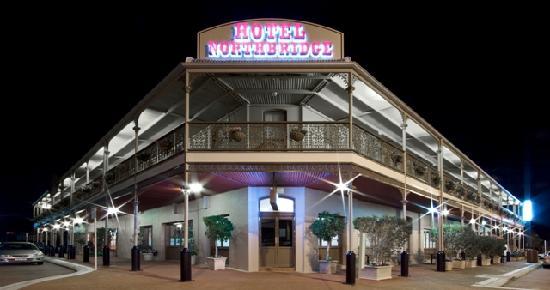
How Thomas ‘General’ Jackson found time to design the Royal Standard Hotel (now Hotel Northbridge) is baffling, since he had at least nine children in his household, the result of two marriages.

He studied in England under Edward Barry, designer of the Royal Opera House, Covent Garden. Although responsible for many buildings, when the General died in 1929, the obituaries were more interested in his role in founding bowls in WA, and his skill as a player, than any of his architectural achievements.

Landlords often ended up in court by selling booze on a Sunday. You could only sell beer to a bona-fide traveller on the Sabbath. A famous ruling said a bona-fide traveller was:

A man who drinks to travel, not a man who travels to drink.

In 1903, George Hiscox, licensee of the Royal Standard Hotel, was charged with Sunday trading. Fortunately he had a brilliant defence lawyer, Edward Hare.

Constable Brodie swore he visited the hotel at 10pm one Sunday, and found three men drinking in the front bar. Brodie knew that one of them, Flynn, lived on Bulwer Street.

Mr Hare asked if it might not have been pints of ginger beer in front of the patrons.  Brodie had to admit he had neither tasted nor smelt the contents.

“It was brown liquor,” insisted the constable. “I can tell ginger-ale from beer. And I am sure it was beer, because it is Flynn’s usual drink.”

“Never mind about that,” said the sly lawyer, for all anyone knew “Flynn may have been to the Salvation Army that morning, and renounced beer for ever.”

The bench decided to dismiss the case, without calling upon the defence.

School’s out forever

Dodgy Perth's favourite small bar

Dodgy Perth’s favourite small bar

You’d imagine turning a school into a pub would be controversial, but the PICA Bar is too cool for anyone to object. When the government became liable for education, they needed a central Boys’ and Girls’ School, so the Public Works Department built them one in 1897.

The school had 500 boys on the ground floor and 500 girls upstairs. When it closed in 1958, Perth Technical College moved in. Its heir—TAFE—left the building in 1988 and Perth Institute of Contemporary Arts (PICA), complete with trendy bar, took over.

But back to the building’s school days. There is one historical universal: somebody will always worry about what is happening to our young girls. In 1910, people fretted that girls were growing up with only a basic knowledge of cooking and cleaning.

For those marrying farmers, training in practical household duties was considered essential. For those who would marry men who worked in the city, they needed to be proficient enough they could do without servants.

Perth Central School was useless if all it did was provide a ‘bookish’ education. Miss M. Jordan was appointed to the Central Girls’ School to acquaint her pupils with the duties associated with being a wife. A ‘housewifery cottage’ was built in the schoolyard, where the youth could learn to wash, iron, fold and put away.

Here, they also cooked, laid the table in the appropriate fashion—complete with flowers in the middle—as well as scrubbing the floor, blackening the grates, and brightening the silver.

There was concern that the cottage was so well equipped, the poor darlings would struggle in a real household, but these anxieties were dismissed, and the girls kept learning how to be drudges.

Wolfe’s problem with ladies

At least there's one famous Belgian thing

At least there’s one famous Belgian thing

Next time you are in the Belgian Beer Café, don’t forget to ask them about their policy on serving people in the sex industry. Because it was this that got Robert Wolfe into trouble.

But first, a little background. The Belgian Beer Café was originally called the City Hotel, and there has been a pub on the site since 1879. But Robert Wolfe had the original City Hotel demolished and a new one built in 1898.

The architect was Henry Trigg, whose grandfather (also Henry) is remembered in Trigg Beach and the suburb. Unfortunately, Henry Jr. made the mistake of taking younger brother Edmund into the firm. Trigg descendants claim Edmund was the black sheep of the family who embezzled the firm’s finances, finally driving Henry bankrupt.

In 1899 the City Hotel was situated in the rough part of town. King Street was largely slum housing, several of which functioned as cheap brothels. This was a problem for Wolfe because his bar was the closest for the women of low repute. It was a real problem, because it was illegal to serve prostitutes.

A complaint was made to the police by Susan Mahoney, a regular drinker at the bar. Of course, she said she only ever had one beer, and really only went there to chat with the barman, George. She recognised three ladies of the night, and this was enough for the police to send a plain-clothed officer, who also discovered the women there.

So Wolfe was charged with permitting ladies of low repute to frequent a licensed premise. But the cop had only told the barman to remove the unfortunate women. He never spoke to Wolfe, simply relying on George to pass the message on.

This was enough for the bench to dismiss the charge against Wolfe, since it could not be proved he ever got the official instruction. Although they did give him a firm warning to keep the demimonde class out of the City Hotel.

And on one final note, we presume Wolf Lane is named after Robert Wolfe. Any particular reason no one checked the spelling?

The difficult birth of a statue

Looking grumpy about the time it took to erect

“I think I can see my brother from here”

Visitors to Kings Park can’t help but notice the memorial to John Forrest. As imposing a statue as the man was in life, it didn’t have an easy time coming into being.

Firstly, the organising committee tried to raise money from the public, both here and in England. Perth residents were mostly uninterested, and contributed very little. As a result, by 1921 the Brits got all sulky and decided to spend their cash on a stain glass window to Forrest in St Paul’s Cathedral, London.

So the committee had to go, somewhat predictably, to the government and beg some cash to get their statue. But it three more years before anyone got round to doing anything about it. And then the choice of sculptor, the England-based Sir Bertram Mackennal, caused outrage.

Perth had its own very popular sculptor, Pietro Porcelli, who had already done a good job on Forrest’s brother, Alexander. In addition, Pietro had known Forrest, so might have seemed like the obvious candidate. Instead. someone with a ‘Sir’ in front of their name got the job.

In March 1926 a large box arrived at Fremantle and was shipped to Kings Park. And there it was dumped in a shed and forgotten about. Rumours started to spread that Mackennal had created such an ugly statue no one was prepared to put it on show. No one from the Kings Park Board bothered to contradict this, so it quickly became the received opinion.

The reason for the delay is still mysterious, and it took nearly eighteen months for the memorial to be erected, and finally unveiled in August 1927.*

And then the Mayor of Perth managed to ruin in the whole event by using his speech to rant about the lack of funding for a State War Memorial. The crowd got quickly bored by William Lathlain’s raving and walked off, leaving the Mayor talking to a near empty park.

Nothing ever goes to plan, does it?

* Note to the Botanic Garden & Parks Authority. The statue was unveiled in 1927, not 1928 as your website claims. A small detail, but we historians get all worked up about such things. Please change it so we can calm down.

Sulphur and fire

Just waiting for a squaddie with a match

Just waiting for a squaddie with a match

It deserves to be better known, but the first town in the Swan River Colony was not Perth or Fremantle, but Sulphur Town on Garden Island. Admittedly, Albany had been colonised a couple of years before.

Sulphur Town was home to the first Government House, and saw WA’s first horse race. What became of it is the subject of today’s story.

More than 400 people lived in the town, named after the ship which carried the 63rd Regiment. A regiment that was to start and end the settlement.

But by 1834, Sulphur Town was practically abandoned, as people left in the rush to claim good land along the Swan River. Even so, all the original buildings still remained.

In May of that year, the transport ship Lonach was anchored off shore. Onboard were the 45th, 55th, and 63rd Regiments. Some of the soldiers’ wives were permitted to land on Garden Island to do the laundry, and it seems that a few of the men followed them.

After a few ales, the squaddies did the only reasonable thing possible. They burnt the entire town to the ground. It seems likely they started with Governor Stirling’s old residence, before moving on to the barracks, the stores, and several huts and out-houses.

Ladders belonging to Thomas Peel were tossed into the flames, while any locked cabinets were broken open, just in case something valuable had been left behind.

The newspaper howled for the severest punishment the law allowed, but by this time the Lonach had departed, taking all the guilty men (and their wives) with them.

Recently, local archaeologist Shane Burke has discovered a molten champagne bottle on Garden Island, a permanent reminder of the need to keep soldiers well away from matches.

Where was Perth’s first gym?

Feel the burn

Feel the burn

There is, apparently, anger at the news ECU is thinking of privatising its gyms. All the users will get in exchange is better opening hours and increased investment in the equipment. Outrageous!

But this does lead to the historical question: where was WA’s first gym? It’s not an easy question to answer, since it depends on what you mean by gymnasium. The school at Fremantle had the first equipment, but it wasn’t open to the public.

In which case, we nominate Stirling Square at Guildford. Some wooden gear, painted white, was erected there around 1885. This was organised by future MLC and local businessman, James Morrison, who was worried about the local larrikins and wanted to give them something energetic to do.

stirling_square

Named after James ‘Young Brides’ Stirling

The following year, Wellington Square got Perth’s first outdoor fitness centre. There was a trapeze, a horizontal bar—one for adults and one for kids— rings and a climbing pole. While it was popular, residents complained the unpainted wood made it look half finished.

Wellington_Square

Then known as the Recreation Ground

A commercial gym was established in 1887 by William Rosevear at the back of his ironmongers in William Street, right where the entrance to the Bankwest Tower now sits. The club taught self-defence, and had a horizontal bar, free weights and other equipment.

The 1880s saw an obsession with gyms because of the rotten kids. Boys were standing on street corners, smoking and swearing, while the girls were walking the streets looking for a quickie. The solution, known as Muscular Christianity, believed that anaerobic exercise resulted in more spiritual souls.

As the Dodgy Perth staff can testify. After a good gym session we are in no state to smoke, swear or seek one night stands. Muscular Christianity works.

A late visit from Conan Doyle

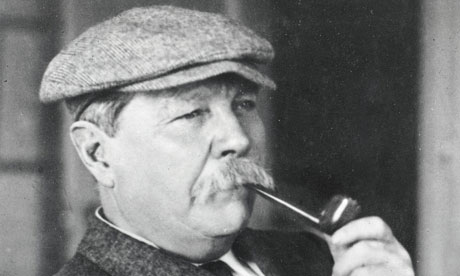
Conan Doyle pretending to be Sherlock Holmes

Conan Doyle pretending to be Sherlock Holmes

Following on from our recent story about Sherlock Holmes’ creator visiting Perth, we should mention that Arthur Conan Doyle came back to WA in August 1930. That might not seem unusual, until you realise that he had been dead for more than a month.

A Sydney psychic (Psydney psychic?) claimed to be the first to have had a vision of the great man, but this was instantly rubbished by west coast mediums. If Conan Doyle was going to appear anywhere in Australia, it would definitely be in Perth. After all, hadn’t he visited here in 1921, and didn’t he donate £85 to the Spiritualist Church? And wasn’t WA the only place in Australia to actually have a spiritualist church at all?

So, a local apparition of the famous author was needed quickly, and fortunately one came to herbalist and clairvoyant, Maud McDonough. He had no particular message for her on this occasion, but she did see him quite plainly.

However when Conan Doyle returned three years later he had a very clear message for Maud. She was to take charge of all the various smaller spiritualist groups in Perth and Fremantle and unite them under own command. This was to be the grand Spiritualist Church of Western Australia (Inc).

Unsurprisingly, this did not go down well with the other leaders in the movement, who rejected Maud’s unambiguous mission from Conan Doyle. A series of bitter meetings took place, where Maud was roundly condemned and attempts made to expel her from the club.

The church administration fragmented, while numerous lawyers’ letters failed to resolve the situation. In the end, the secretary and treasurer resigned, taking the association’s cash with them.

Apparently the spirit of Arthur Conan Doyle didn’t see that coming.

Speaking to the war dead

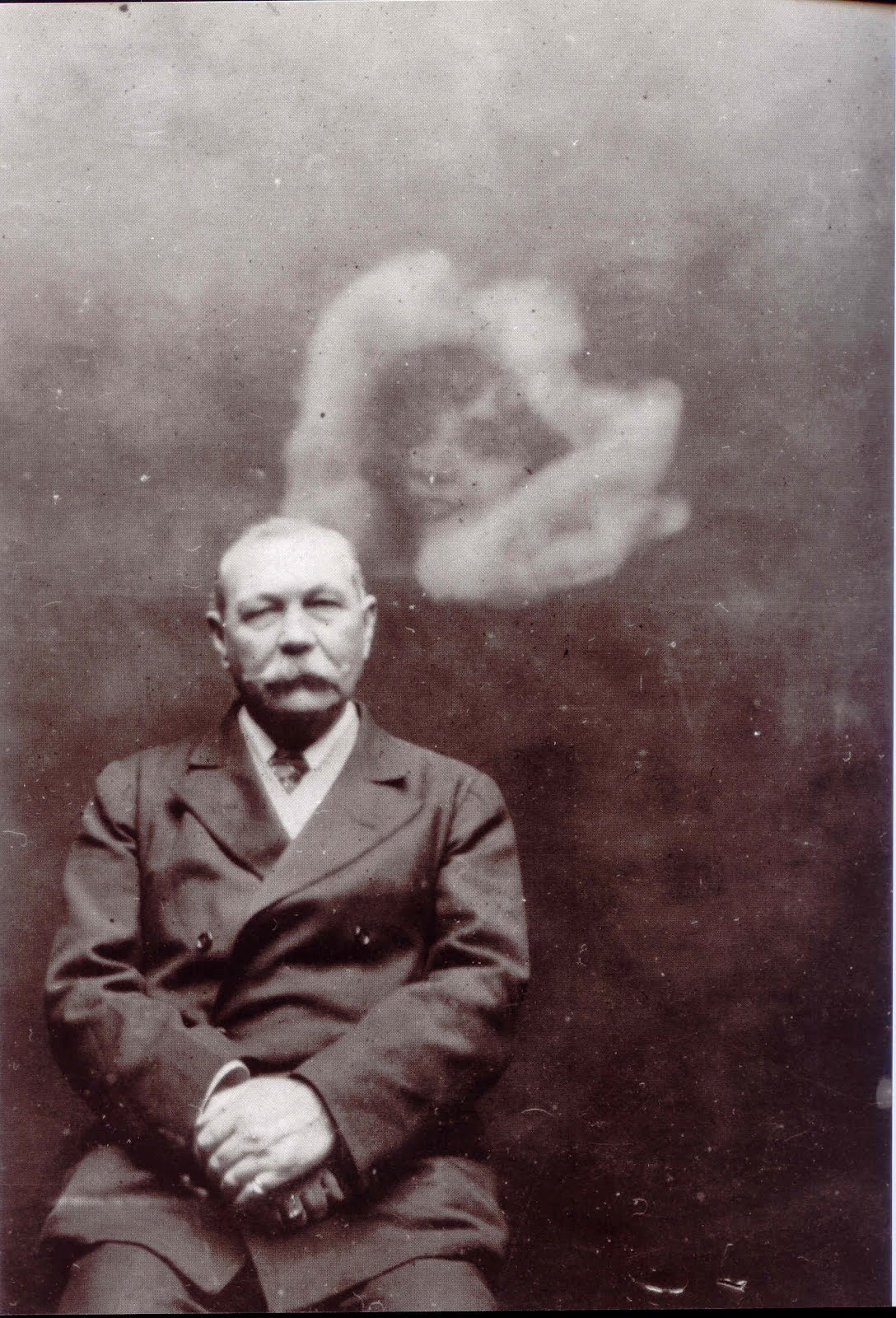
Arthur Conan Doyle and friend

Arthur Conan Doyle and friend

What do Sherlock Holmes and speaking to the dead have in common? The answer is, of course, Arthur Conan Doyle, who visited Perth in 1921 as part of a world tour.

But he wasn’t here to plug his books. Instead, Conan Doyle wanted to talk about his latest obsession, spiritualism. And His Majesty’s was packed out for the lunchtime event, with almost everyone in the audience being female. But we’ll come back to that.

Conan Doyle briefly sketched out the history of contacting the deceased, announcing that anyone who denied the existence of life after death was “either ignorant or a moral coward”. Certainly, the audience were receptive to the idea.

Especially when the speaker mentioned that his good friend, the brilliant scientist Oliver Lodge, had talked with the boys who had been killed in World War I. Every person in the audience had either lost a son or a husband in that conflict, or knew someone who had. Their bodies might not have been brought home, but now someone was offering a chance to say farewell.

“That,” said Sir Arthur from the stage, “is the message we have tried to give Australian mothers.” Mothers. Conan Doyle clearly knew who his audience was.

He had even spoken to his own dead son, Kingsley, who died in 1918 from the flu epidemic which raged across the world. A medium had relayed the words to Conan Doyle, who discovered that Kingsley was happy in the afterlife, and he even felt the touch of his son on his forehead.

How much excitement would that have created in an audience of mothers? An undoubtable, serious writer was proclaiming the very real possibility of once again speaking with lost children. How many tried and failed after this, we will never know.

There is no doubting Conan Doyle’s sincerity. He was no con artist, and was prepared to face ridicule for promoting his beliefs. Many of his friends tried to discourage him, not least Harry Houdini, the famous escapologist. But for Sir Arthur, this would mean giving up the belief he had finally said goodbye to his own son.

Speaking to the WWI dead is not usually thought of as part of Anzac history, but it fully deserves a small place in the tales to be told about 1914 to 1918.

Dances with trees

It's not the size of your chopper...

It’s not the size of your chopper…

On this day, 12 August, Helena Barbara Dance swung an axe at a tree. And for the most part, that is all most people know about her. First, let’s look at the account as given, very woodenly (see what we did there?), by Charles ‘Rapist’ Fremantle:

The Lieutenant Governor made up his mind to establish a town up the Swan River to be called Perth and to lay the first stone of it on the King’s birthday the 12 August 1829. There being no stone contiguous for our purpose to celebrate the commencement of the new town, Mrs Dance cut down a tree, fired volleys, made speeches and gave several cheers, naming the town Perth according to the wishes of Sir George Murray.

Although Fremantle says Helena cut down the tree herself, Alexander Collie downplayed her role saying she only “gave the first blow”.

And George Pitt Morison didn’t like a woman doing too much manly work either. So in 1929 he paints a bloke waiting to the side ready to finish the job after Helena has tapped the tree with her tiny axe.

We know she was intrepid. It is often claimed Helena was only present because all the other women were giving birth. But that’s not what was said at the time. Hubby William said she was the only female brave enough to leave Garden Island and venture into a ‘savage land’. By which he meant it was full of savages.

The pregnancy excuse was invented by later generations who didn’t want to think their great-great grandmothers were anything other than bold explorers.

And now it gets odd. William Dance has a different description of the foundation of Perth:

By the bye, the laying of the first stone of this town, which took place on August 12, and on which occasion we made as much noise and rejoicing as our limited means would allow, was done by Mrs. Dance.

So Fremantle and Dance disagree on whether or not there were any stones. Perhaps Helena’s husband was being metaphorical. Or had a really bad memory.

The Dances were forced to leave Perth in 1832 when they had to escort James ‘Young Brides’ Stirling back to England so he could desperately try to salvage his failing colony, and the couple never returned.

After living in England and France, Helena died in 1863, never knowing how much her brief moment of fame would later be celebrated.

Incidentally, Dodgy Perth is sceptical about the alleged box made from Mrs Dance’s tree which was miraculously found by the Queen of England herself in a junk shop and gifted back to WA in the 1930s. When a story is too good to be true, it’s always too good to be true. One day we hope the real story about this box will be uncovered.

The red under our bed

Findlay MacKay the red biker

Findlay MacKay the red biker

Schools have become hotbeds for extremists wishing to corrupt our youth. We refer, of course, to the leaflet handed out on James Street to schoolkids encouraging them to see a lantern slide about Soviet sporting culture. Thrilling it was too. Maybe.

Bloody Communists. No wonder 1933 never came back into fashion.

Anyway, it turns out that a James Street shop had been converted into the headquarters and clubhouse for the local branch of the Communist Party.

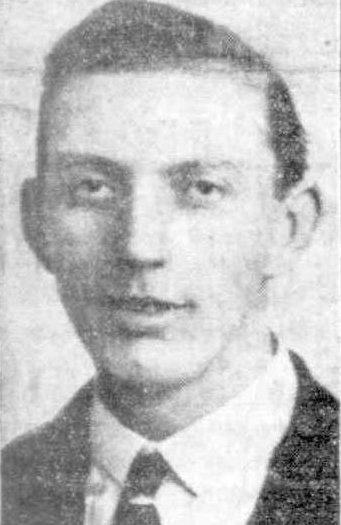
And in 1931, WA’s first ever Communist candidate for the federal senate was Findlay MacKay (pictured above), an engineer who lived in Gwenyfred Street, South Perth.

It is clear that the clean-cut young Commie was much better than the current Socialist Alliance lot who could do with a shower, a barber, and a job. (We are looking at you Alex Bainbridge.)

Poor Findlay not only lost his deposit—reds not being all that popular here in the 1930s—but also got fined for holding an unauthorised rally in Bunbury.

Long a motorcycle enthusiast, it was as a result of his bike colliding with a bus in Vic Park in 1942, that Findlay sadly lost his life.

Biker, Commie, and agitator on the streets of Bunbury. What’s not to like?