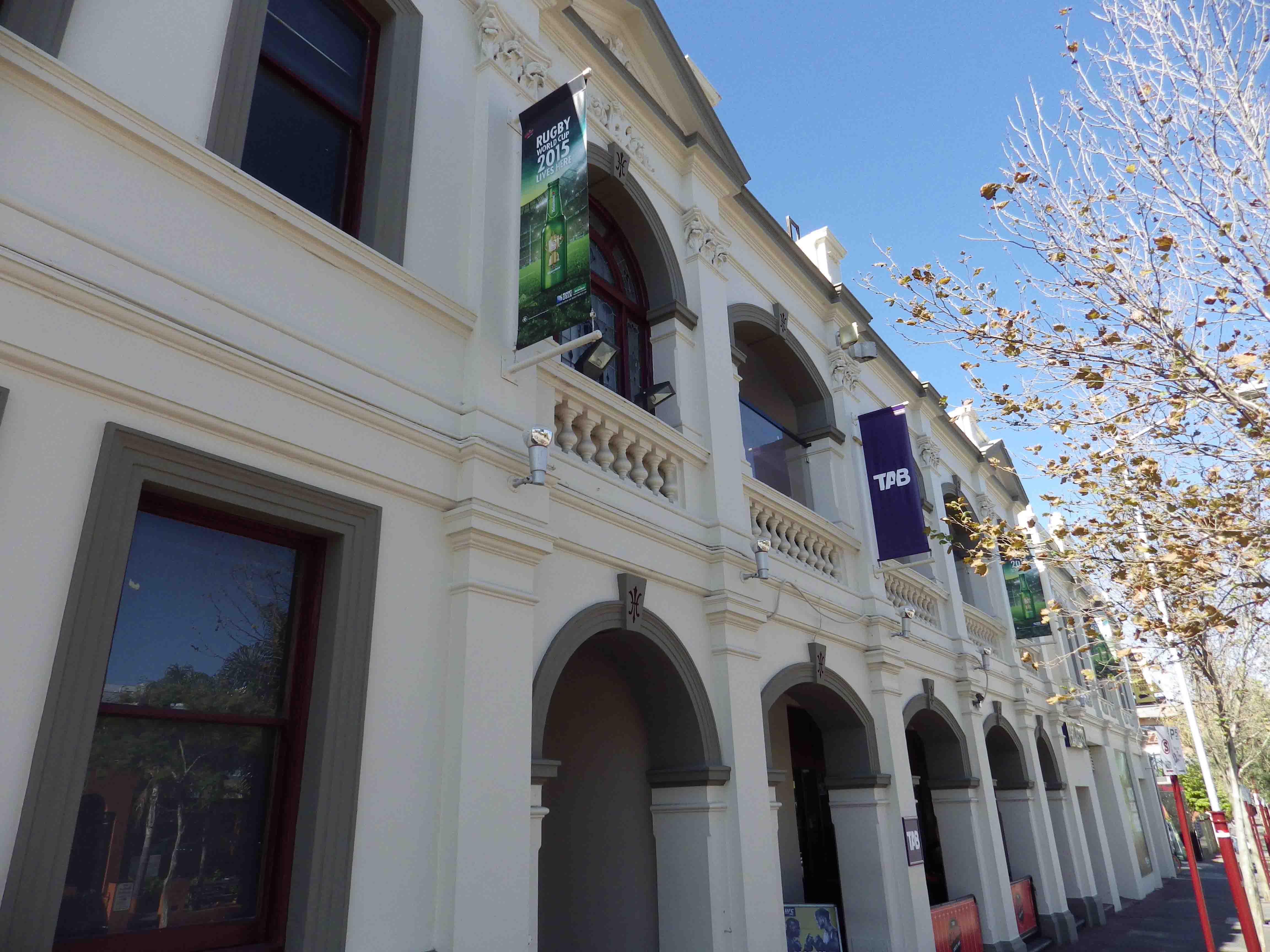
The Bayswater treasure hunt

Accurate map of Bayswater

Accurate map of Bayswater

We have received another e-mail from an African princess who needs our help. Being good people in the Dodgy Perth offices we thought it greedy to accept her offer of $2bn for our aid. So we’ll pray for their safety and promised to keep an eye on the newspapers.

Which reminded us of the time there was £32,000 buried in Bayswater, or Busselton, or Greenbushes. Depending on which version of the letter you got.

In 1915 the scam was known as the ‘Spanish Prisoner Swindle’. A letter would arrive from Guzman Penalto, explaining he had once lived in Western Australia but was now being held prisoner in Spain. Fortunately, he had buried a fortune between two pieces of crystal shortly before leaving these shores.

If the recipient of the letter would be so kind as to forward £398 in the enclosed envelope, a priest will be able to get to Perth from Spain, dig up the buried notes and they could be split between Penalto and his Australian saviour.

Couldn’t be easier, could it? Unfortunately, Penalto was under the impression that Bayswater was hundreds of kilometres from Perth, which hinted either he had never been here, or prison had upset his memory.

Since the Dodgy Perth offices are based in Bayswater and we refuse to share the money, we have spent each evening with a spade turning up each and every inch of grass in the suburb. There’s some way to go yet, but we will not be discouraged.
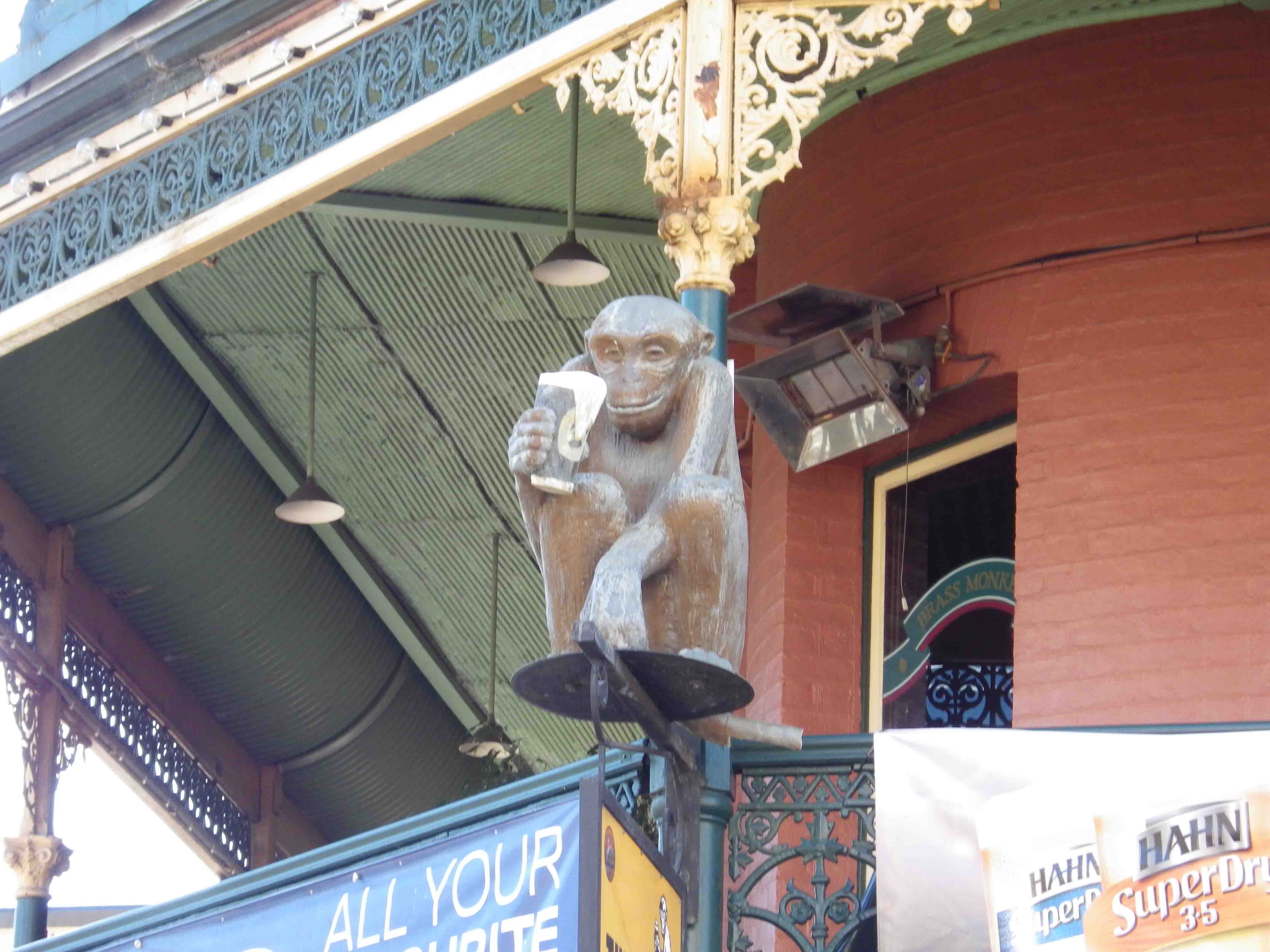
The Peanut King at the Brass Monkey

Given enough monkeys one of the will produce a hotel

Given enough monkeys one of them will eventually produce the plans for a hotel along with the complete works of Shakespeare

The Great Western Hotel (now the Brass Monkey) was designed in 1896 by Michael Cavanagh, who had arrived in Perth from Adelaide only the year before. He is mostly famous for his numerous buildings constructed for the Catholic Church.

His work includes Mercedes Colleges, St. Brigid’s Convent and the Redemptorist Monastery. However, he doesn’t appear to have put a lot of work into the Great Western, simply recycling his plans for the Barrier Hotel in Port Pirie, SA, which he designed in 1892.

In November 1913, William Urquhart was enjoying a drink in the Great Western with a friend. It was Urquhart’s shout, so he pulled out a purse. As he did so, a number of coins fell to the floor.

But others had entered the bar: William Proleta, McGaskiell and William Williams, locally known as ‘The Peanut King’. As Urquhart picked up the cash, Proleta said “That’s my half-sovereign, mate.” Then he grabbed the purse and punched Urquhart in the face.

Urquhart fell, but recovered in a few seconds. Rising from the floor, he ran to summon the police. Strangely, Proleta kept calmly drinking in the bar.

When Constable Molloy accused Proleta of robbery, the young labourer replied, “I —– didn’t rob him; I don’t know him.” He was searched, but only small change was found in his pocket.

While being arrested, Proleta struggled and was thrown to the ground. His hat fell off, and a sovereign and two half-sovereigns tumbled out. The Peanut King also turned out to have unexplained cash on him.

As a strange footnote, in another court case featuring The Peanut King, he denied his wife was known as The Cocoanut Queen. Nicknames were certainly different in the 1910s.

Horses, dentists and dealers

Percy's haul

Percy’s haul

From conversations we have, some people seem to think drugs weren’t a problem in Perth in the past. Boy, do we have news for them.

Prior to the 1920s, white citizens liked to see all Chinese residents as the only users in Perth. In this case opium was often the drug of choice. They were just as wrong as people who believe addiction is a relatively new phenomenon.

Dentists were suppliers and occasional users of cocaine, which was one of the new anaesthetics available to them. While stats for Perth are hard to come by, dozens of Melbourne dentists were struck off in the 1920s for being coke addicts.

The other source of cocaine was the racing industry which (illegally) used both it and heroin to give horses an advantage. In fact, the dose for one horse was enough to keep six people stoned for a night. It was said that the majority of Perth users got their drugs from trainers, not from drug gangs on the street.

In 1929, one unfortunate addict came to light after breaking into a Nedlands’ chemist and stealing bottles of cocaine, morphine, strychnine, heroin, and hydrogen peroxide. The thief, Percy Preston, was later found lying unconscious at Claremont with a hypodermic by his side.

While one user does not imply an epidemic of drug use, if a user has the money to pay for drugs from a dentist or trainer they won’t come to the attention of authorities. Percy was just unlucky enough to have run out of cash in a moment of need.

And Percy’s case also shows there was sufficient ‘dope’ around to become an addict. So drugs are not a new thing in Perth, and we are neither winning nor losing the ‘war’, simply managing it generation by generation.

Bottled mouse

Anyone fancy a game?

Anyone fancy a game?

When it first obtained a license in 1886, the All Nations Hotel (now Games Sports Bar) was already operating as a boarding house. The name ‘All Nations’ suggests literally that. Everyone was welcome, whether Irish, English, Italian, or whatever. It probably did not include Aboriginal people, however.

In 1905 a skittle alley (with other extensions) were added to the design of an architect we have already come across, William Woolf. When Woolf went bankrupt in 1898, he owed £470, borrowed at an exorbitant rate. He revealed to the court he had fled Melbourne and Sydney with other un-remitted borrowings. Great architect as he was, he was definitely a man who lived well beyond his means.

The Games Sports Bar does not seem to be able to keep a name for two weeks running. Originally the All Nations (1886-91), it became the Cosmopolitan Hotel (1891-1905), when new landlord, M. R. Davies, arrived from Townsville, where he had run a pub of that name. Then it transformed into Union Hotel (1905-39), Red Lion Hotel (1939-90), Aberdeen Hotel (1990-2015), and under a new name right now. But for how long is anyone’s guess.

In 1921, an odd case about the Union Hotel came before the courts. John Simopolis bought a bottle of Swan beer from the pub, and started drinking it. Suddenly he noticed a dead mouse in the bottle. Naturally he felt a little queasy at this point and, although there were no long term medical effects, he sought £25 compensation from the pub and the brewer.

A number of brewery employees testified it would be impossible for a mouse to get into a bottle during the manufacturing process. The defence lawyer claimed it was a frame-up. The judge was not convinced and awarded £10 10s damages to Simopolis.

Lions and tigers and bears, oh my!

For sale, one careful owner

For sale, one careful owner

We at Dodgy Perth love a good stock clearance. Much of our wardrobe comes from discount racks at Myer. So it is a shame we couldn’t be there for Perth Zoo’s clearance sale.

Starting in 1902, the Zoological Gardens auctioned excess animals each year at a sales room in the CBD. Besides the purely ornamental animals and birds, there were several young tigers, a leopard, a bear, and a buffalo. Each animal was exhibited in a cage in the auction house for the public to inspect before making an offer.

Since we have the auctioneers’ catalogue for 1903, Dodgy Perth invites you to choose your next pet:

  • Lioness, tigress, brown bear (male)
  • Malayan honey bear, white dingo puppies
  • Equine deer, Pekinese deer, hog deer, fallow deer
  • Goat cart, harness and goat
  • Mule (broken to saddle and all kinds of harness)
  • Kangaroos, wallaby, African baboon
  • Young Macaque monkeys
  • South American marmosets, or pocket monkeys (beautiful ladies’ pets)
  • Ferrets (good for either rabbits or rats)
  • Tortoise (very large), tortoise (small baby)
  • Guinea pigs
  • White swans, black swans
  • Muscovy ducks, black ducks
  • English wild ducks, swamp hens
  • Silver seagulls, pea fowl
  • English pheasants, bronze-wing turkeys
  • Silver pheasants, red-legged partridges
  • Australian quail, guinea fowls
  • Silky fowls, Japanese red bantams
  • Blue and yellow macaw, red and blue macaw
  • Leadbeaters, pink cockatoos, sulphur crested white cockatoo, rosy cockatoos, cockatiels, parrots
  • Warbling parakeets, Indian cinnamon doves
  • Peaceful doves, diamond doves
  • Pigeons, from prize stock
  • Canaries, especially good lot
  • Java sparrows, diamond sparrows, Gouldian finches
  • African finches, English finches
  • Gold and silver fish

Dodgy Spirits

Anyone want to go see a band with us?

Anyone want to go see a band with us?

The Rosemount Hotel is the work of Charles Oldham, best known for designing the magnificent AMP Building. It was during the construction of this he wrote a letter to his clients. AMP, saying the Clerk of Works had to be fired.

Oldham claimed Robert Bushby was too picky with the materials (he didn’t like the Donnybrook stone which had been delivered) and the contractors couldn’t work with him. Bushby was dismissed and immediately sued Oldham for libel. He originally won £200 in damages, although this was overturned on appeal, since the letter was deemed to be in confidence.

William Cutmore, licensee of the Rosemount Hotel, ended up in court in 1910, accused of selling potato spirits masquerading as good, honest rum. Cutmore had purchased five gallons of the stuff, and only sold one shot, before the Chief Inspector of Liquors showed up at his premises. The inspector picked up a bottle, put it to his nose, and announced, “I don’t like the odour of this stuff.”

In the lab, the spirit in question was found to be made from potato, coloured with burnt sugar, and flavoured with some type of rum essence. The ingredients of the latter included manganese dioxide and sulphuric acid, to which, birch or coconut oil had been added.

The government scientist refused to tell the court if the ‘rum’ was injurious to health, protesting “I am not a duly-qualified medical man.” But, he added, “I have my own opinion on the subject.”

Cutmore’s defence managed to establish he was an innocent victim here, but he was fined £20 anyway. In the meantime, the newspapers fretted that if too much dodgy rum hit the market, WA’s percentage of ‘lunatics’ was bound to increase by leaps and bounds.

Crying Woolf

We remember when it was much more sleazy

We remember when it was much more sleazy

The Commonwealth Hotel (now the Hyde Park Hotel) was designed by liar and architect, William Woolf. Born 1855 in New York, Woolf always claimed he studied architecture at Heidelberg, Germany. There was no such education facility there at the time.

In 1891, he was accused of swindling a servant girl out of £220 in Melbourne, In WA, he was regularly in court for failing to pay his bills, but still managed to design many great buildings. His most significant contribution to Perth’s architecture is His Majesty’s Theatre.

The Commonwealth’s first landlord was Charles Simms. He had been a publican in New South Wales, South Australia, and in Fremantle. However, getting a licence for his new hotel was to prove a little difficult in 1901.

Like any good police officer today, Inspector Drewery opposed the application, but this time it was on account of the manner in which the applicant had conducted his other hotels.

The Inspector read the bench a list of Simms’ convictions over the previous four years. Disorderly conduct on licensed premises; supplying liquor to an underage boy; allowing prostitutes to congregate in his bar; Sunday trading; trading after hours; employing staff after hours; and, again allowing prostitutes in a pub.

After hearing Simms’ excuses for each conviction, the bench adjourned.

After lunch, they said that “after very anxious consideration,” Simms could have a licence, since they did not like to “take the responsibility” of refusing the application in this instance.

So, Charles Simms did become the Commonwealth’s first landlord after all. But only just.

Trouble on the Sabbath

Now open on Sundays

Now open Sundays

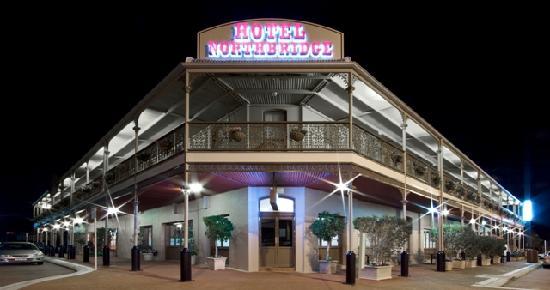
How Thomas ‘General’ Jackson found time to design the Royal Standard Hotel (now Hotel Northbridge) is baffling, since he had at least nine children in his household, the result of two marriages.

He studied in England under Edward Barry, designer of the Royal Opera House, Covent Garden. Although responsible for many buildings, when the General died in 1929, the obituaries were more interested in his role in founding bowls in WA, and his skill as a player, than any of his architectural achievements.

Landlords often ended up in court by selling booze on a Sunday. You could only sell beer to a bona-fide traveller on the Sabbath. A famous ruling said a bona-fide traveller was:

A man who drinks to travel, not a man who travels to drink.

In 1903, George Hiscox, licensee of the Royal Standard Hotel, was charged with Sunday trading. Fortunately he had a brilliant defence lawyer, Edward Hare.

Constable Brodie swore he visited the hotel at 10pm one Sunday, and found three men drinking in the front bar. Brodie knew that one of them, Flynn, lived on Bulwer Street.

Mr Hare asked if it might not have been pints of ginger beer in front of the patrons.  Brodie had to admit he had neither tasted nor smelt the contents.

“It was brown liquor,” insisted the constable. “I can tell ginger-ale from beer. And I am sure it was beer, because it is Flynn’s usual drink.”

“Never mind about that,” said the sly lawyer, for all anyone knew “Flynn may have been to the Salvation Army that morning, and renounced beer for ever.”

The bench decided to dismiss the case, without calling upon the defence.

School’s out forever

Dodgy Perth's favourite small bar

Dodgy Perth’s favourite small bar

You’d imagine turning a school into a pub would be controversial, but the PICA Bar is too cool for anyone to object. When the government became liable for education, they needed a central Boys’ and Girls’ School, so the Public Works Department built them one in 1897.

The school had 500 boys on the ground floor and 500 girls upstairs. When it closed in 1958, Perth Technical College moved in. Its heir—TAFE—left the building in 1988 and Perth Institute of Contemporary Arts (PICA), complete with trendy bar, took over.

But back to the building’s school days. There is one historical universal: somebody will always worry about what is happening to our young girls. In 1910, people fretted that girls were growing up with only a basic knowledge of cooking and cleaning.

For those marrying farmers, training in practical household duties was considered essential. For those who would marry men who worked in the city, they needed to be proficient enough they could do without servants.

Perth Central School was useless if all it did was provide a ‘bookish’ education. Miss M. Jordan was appointed to the Central Girls’ School to acquaint her pupils with the duties associated with being a wife. A ‘housewifery cottage’ was built in the schoolyard, where the youth could learn to wash, iron, fold and put away.

Here, they also cooked, laid the table in the appropriate fashion—complete with flowers in the middle—as well as scrubbing the floor, blackening the grates, and brightening the silver.

There was concern that the cottage was so well equipped, the poor darlings would struggle in a real household, but these anxieties were dismissed, and the girls kept learning how to be drudges.

Wolfe’s problem with ladies

At least there's one famous Belgian thing

At least there’s one famous Belgian thing

Next time you are in the Belgian Beer Café, don’t forget to ask them about their policy on serving people in the sex industry. Because it was this that got Robert Wolfe into trouble.

But first, a little background. The Belgian Beer Café was originally called the City Hotel, and there has been a pub on the site since 1879. But Robert Wolfe had the original City Hotel demolished and a new one built in 1898.

The architect was Henry Trigg, whose grandfather (also Henry) is remembered in Trigg Beach and the suburb. Unfortunately, Henry Jr. made the mistake of taking younger brother Edmund into the firm. Trigg descendants claim Edmund was the black sheep of the family who embezzled the firm’s finances, finally driving Henry bankrupt.

In 1899 the City Hotel was situated in the rough part of town. King Street was largely slum housing, several of which functioned as cheap brothels. This was a problem for Wolfe because his bar was the closest for the women of low repute. It was a real problem, because it was illegal to serve prostitutes.

A complaint was made to the police by Susan Mahoney, a regular drinker at the bar. Of course, she said she only ever had one beer, and really only went there to chat with the barman, George. She recognised three ladies of the night, and this was enough for the police to send a plain-clothed officer, who also discovered the women there.

So Wolfe was charged with permitting ladies of low repute to frequent a licensed premise. But the cop had only told the barman to remove the unfortunate women. He never spoke to Wolfe, simply relying on George to pass the message on.

This was enough for the bench to dismiss the charge against Wolfe, since it could not be proved he ever got the official instruction. Although they did give him a firm warning to keep the demimonde class out of the City Hotel.

And on one final note, we presume Wolf Lane is named after Robert Wolfe. Any particular reason no one checked the spelling?