Getting to the point

hatpins

Inspector White: “Just the facts, Ma’am”

While British women were being imprisoned for demanding the vote, the fair sex in Western Australia was subject to an even more sinister form of control. We refer, of course, to the notorious anti-hatpin crusade of 1912-13.

It all started in March 1912 in Melbourne, when the Australian Women’s National League resolved to start the crusade. If you were to believe the press (although we never do) numerous people were being blinded by the awful hatpins, and even one case of death where the pin pierced the brain of an innocent man walking by.

Sydney responded immediately with a ban on unprotected hatpins, with a fine of £10 for each offence. By May, Boulder had drafted similar laws. After Perth outlawed these dangerous weapons in August, one Perth drapery firm sold thousands of hatpin protectors in a single week.

And Perth City Council wasn’t joking, officers were appointed to walk the streets and take down the names of offenders for prosecution. In one day in February 1913, forty indignant women were charged with having broken the most serious of all laws.

These Perth women were indignant, claiming that the council was oppressing their freedom to dress as they wished. Sometimes they claimed they didn’t know about the law, which led (male) newspaper journalists to bemoan that the feminine members of the community limit their newspaper reading to the births, deaths, and marriages column and social notes.

A huge sweep was undertaken by Inspector White on 27 March 1913, when seventeen ladies were dragged before the magistrate for having worn unprotected hatpins on Hay and Barrack streets.

One of the ladies successfully argued that her pin was too short to protrude from the edge of her hat, even though the good Inspector White gave evidence to the contrary.

Another defendant, Eliza Tuxford, explained that the protector had fallen off her hatpin, so was fined only five shillings. The remaining fifteen were each ordered to pay ten shillings, and warned to never endanger the lives of the public again.

Most Australian cities dropped the laws quickly after this, leading to the end of this oppression. But Inspector White was determined to press on regardless. He was still bringing cases in 1919, leading to allegations he was on a bonus scheme for increasing the council’s revenue. But that could never be true, could it? Like parking inspectors today, he worked for love, not to aid budget lines.

Don’t look back in anger

coat_of_arms

What you looking at?

Dodgy Perth promises this is the last time we will ever deal with this controversial issue. Especially since we are going to put it bed for once and all time.

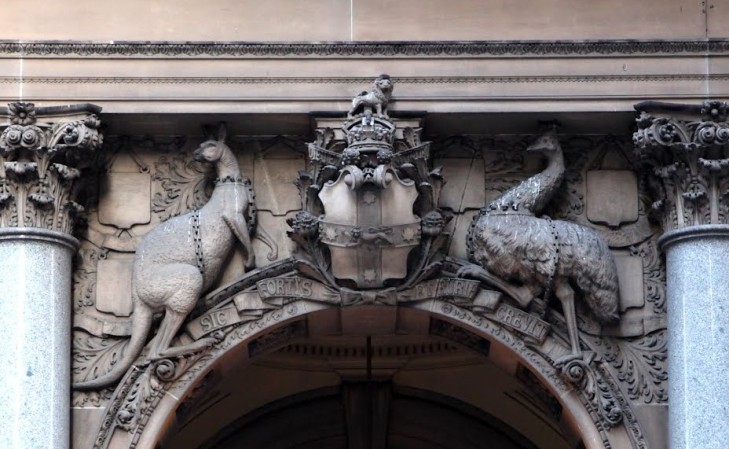
Take a look above at the Australian coat of arms on Perth’s GPO, freshly installed when this photo was taken, with the kangaroo looking the wrong way. As is well known, the sculptor didn’t get paid so the roo is looking in an accusing fashion towards the treasury building.

Wait, did we say this was Perth GPO? Our mistake.

This is actually a picture of the coat of arms installed on the new parliament building in Canberra in 1926. So, evidently this sculptor didn’t get paid either. What is it about sculptors not getting paid in the 1920s?

1-gpo-george-facade

Oi, look at me when I’m talking to you!

But sculptors haven’t been getting paid for a long time before the 1920s. Oh yes. This is the old Sydney GPO, which predates the Commonwealth, and the roo is looking in an accusing way towards… well, towards something presumably.

Every time this story gets a mention on local radio, someone rings up and claims their father (or grandfather, or uncle) made the GPO coat of arms, and the legend is completely true.

Well, we’re sorry to say folks, that this is just how some fancy shield things were done in the past. Just is. Nothing more interesting than that.

Is the Hartog Plate a hoax?

hartog

Close-up of the Hartog Plate

The Dodgy Perth team loves a good conspiracy. So we were delighted to find one about the upcoming 400th anniversary of Dirk Hartog’s trip to Western Australia, and the famous Hartog Plate which will be on show at the Maritime Museum.

This is the mother of all conspiracy theories: the Hartog Plate is fraudulent. Before you accuse us of having gone loopy, versions of this theory were promoted by an expert on European discoveries, George Collingridge, and by our very own leading historian, James Battye.

According to this version, the Hartog Plate was faked by Willem de Vlamingh in 1697 to ‘prove’ the Dutch had landed in WA first. If Hartog ever landed, there is no evidence of it. The British were sniffing around WA, and de Vlamingh was under orders to find proof of prior Dutch landing, by whatever means necessary.

Is there anything to back this up? It’s important to realise that there are no independent accounts of Hartog’s explorations other than the mysterious plate and a 1627 Dutch map labelling us as ‘Eendracht Land’ after Hartog’s ship.

When de Vlamingh visited Hartog Island in 1697, he said he removed the old plate, fixing another in its place. The Vlamingh Plate copies Hartog’s on the top with a new addition by de Vlamingh below. In the ship’s journal, published in Amsterdam in 1704, the key entries read:

On the 1st of February, early in the morning, our little boat went to the coast to fish… Our chief pilot, with De Vlamingh’s boat, again went into the gulf, and our skipper went on shore to fix up a commemorative tablet.

On the 3rd de Vlamingh’s chief pilot returned on board. He reported that he had explored 18 leagues, and that it was an island. He brought with him a tin plate, which in the lapse of time had fallen from a post to which it had been attached, and on which was cut the name of the captain, Dirck Hartog… who arrived here in 1616, on the 25th October…

How could the first commemoration, fixed up on 1st February, contain words only discovered two days later? They can’t have been added after, because they would be below de Vlamingh’s message. Did he rip the first draft down and put up a new one? Or did he have a copy of Hartog’s inscription before he arrived in WA? If so, where could he have got it from, since it was never published?

Or did de Vlamingh just make the whole thing up to prove prior claim over the Brits? All very mysterious. As is the subsequent history of the Hartog Plate, which only arrived in the Rijksmuseum in Amsterdam in 1875, where it now resides.

Dodgy Perth is sure all of this can be cleared up by someone answering the following questions:

  1. Is Hartog’s Plate capable of being dated as to whether it is early or late 17th century?
  2. Other than taking de Vlamingh’s word for it, what other evidence is there that Hartog ever landed in WA?
  3. How can Hartog’s words on the Vlamingh Plate be explained, if the original wasn’t found until two days later?

We look forward to hearing some answers when the 400th anniversary of Hartog’s voyage is celebrated next month.

Cars not trains, said the Minister for Railways

meltham

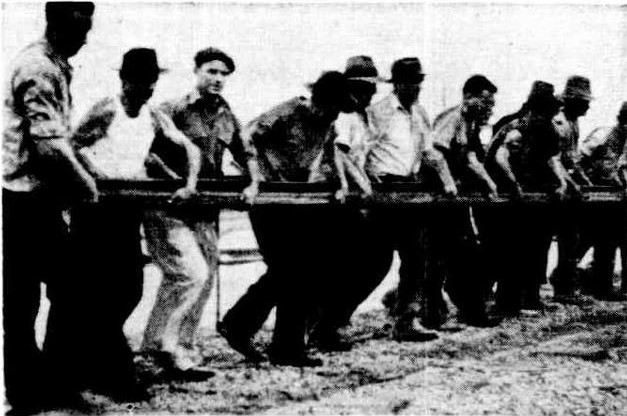
Lifting the old track at Meltham Station (1947)

The PTA suggests closing ‘underperforming’ stations on the Midland Line, and Dodgy Perth is very cranky. We’ll start with a declaration of interest: Meltham is our local station, and we hate the long trek from Maylands, especially when it’s raining. Or hot. Or any form of weather at all.

Dear PTA, your predecessors first promised us a railway station at Meltham in 1898, and the Meltham Estate was only built and sold with that pledge in mind. There wouldn’t have been development if people thought they’d have to walk to Bayswater or Maylands. But they did have to. A generation later, in 1923, the Commissioner of Railways turned down Bayswater Council’s repeated pleas for station at Meltham.

Another ten years went by and the council was getting desperate. The government suggested the council should subsidise a new station, so Bayswater guaranteed to cover losses up to £50 a year. At the moment, they said, “people were compelled to walk great distances…, and it was felt that the lack of any reasonably close travelling facilities was retarding the development of the district”.

Even so, the Minister for Railways said no. This made the council quite cross, so they resolved to keep demanding a station until the government gave in. And they engaged engineers to design reasonable solutions. Didn’t make the government budge one inch.

By 1937, the council was offering even more money and a private developer offered to chip in as well. The local MLC said, very reasonably, “if the Government wanted people to use trains in the metropolitan area it must provide facilities”. Nope, said the Minister for Railways, who was in favour of more roads!

We’ll skip over the war years, but in 1947, half a century after first proposed, it was announced Meltham would get its station. Work began in April and then immediately stopped due to a shortage of labour and materials. In fact, it was so delayed that when opened on 14 May 1948, only a tiny part of the platform had been constructed and it was essential to be in the last two coaches if you wanted to alight.

It might have surprised the Minister for Railways, but it came as no shock to anyone else that the station was an immediate success, even if only part of the platform was open. Fifty years of pleading, offers to subsidise, and proof that a station was essential had finally paid off.

And now the PTA wants to close it. Just. Don’t. Even.

Is chivalry dead?

chivalry

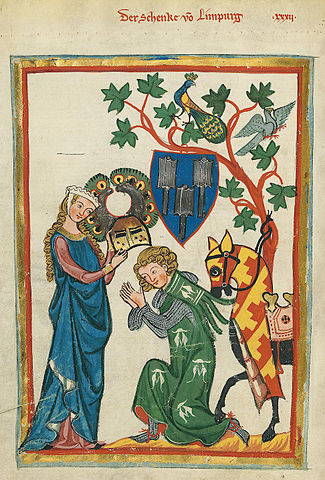
If only he had a hat to doff

Chivalry is dead, goes the cry. Gentlemen no longer hold doors open for ladies, they expect the weaker sex to pay for their own restaurant meals and tickets to the picture house, men no longer stand or doff their hat when in the presence of lady, etc., etc.

Which makes the historian wonder when the golden age of everyone behaving properly towards the fairer half of our population actually was. The 1980s? The 1950s? The thirties? Well, of course, the answer is always and never. There never was a golden age and people have always been complaining that chivalry is dead.

At the end of the end of the 18th century, English philosopher Edmund Burke declared “the age of chivalry is gone” and “the glory of Europe is extinguished forever”. These lines were later invoked to oppose the suffragettes, who were “boring” men with their constant claims for equality.

Here in Australia, in 1884 women were allegedly being “degraded” on roads and in parks, but only because chivalry was dead. By 1905, someone calling herself Beatrice said young ‘hooligans’ were only walking their girlfriends to the bus and forgetting to lift their hat to say goodbye, and not even opening the bus door for her. ‘Jack’ responded to Beatrice, claiming that if women wanted men to be more chivalrous then women should be more thoughtful and ladylike. It’s always the woman’s fault, always.

Try catching a tram from Victoria Park in 1926, because it was clear chivalry was dead when young men were so obsessed with their iPhones (sorry, penny dreadfuls) they weren’t standing for the gentler sex. The following year the West Australian ran a picture of a woman changing her own tyre with the headline “Is chivalry dead?” To which a feminist responded that she bloody well hoped so, since women could change tyres without any help from men.

And this brings us to the real point: few people (read men) ever bemoaned the lack of chivalry without turning it into an anti-feminist rant. If women would stop demanding equality, men would behave better. Curiously, some suffragettes tried to turn this to their advantage by noting that the truly chivalrous should understand women’s claims to basic human rights.

So the next time someone complains that society ain’t what is used to be, just ask them when their golden age was. And then laugh.

On fireworks and invasion

sorry

Were the original settlers sorry too?

Now that Fremantle has decided to dress up a budget cut in Politically Correct language and claim it is doing everyone a favour, Dodgy Perth needs to ask the question no one else is asking. What on earth did the original white colonists of Western Australia think they were doing?

Firstly, should it be called Australia Day or Invasion Day? Perhaps surprisingly, James Stirling would have agreed with the latter:

Their country has been taken from them by force… No sophistry can conceal the fact that Western Australia is a conquered Nation… We have taken the country from the rightful possessors of the soil, and must abide by the consequences of that first act of aggression…

And some of the earliest colonists agreed with Stirling, claiming they didn’t know they were about to steal land when they turned up here:

Which of us can say that he first made a rational calculation of the rights of the owners of the soil, of the contemplated violation of those rights, of the probable consequences of that violation, or of our justification for such an act?

Yet the colonists did take the land, even though they felt really, really guilty about it. And when people feel guilty about something (with no intention of putting things right) they have to offer a justification to themselves about why it’s okay really. Two defences of invasion were most common: the nice white folk were offering British citizenship to the Aborigines and they were also offered all the advantages of early 19th century technology, like bread and blankets.

However strange it might seem, the traditional owners didn’t seem very grateful for this forced swap of property for becoming subjects of an overseas’ king:

As a boon to the poor Natives for the loss of their land and their hunting and fishing grounds they made them British subjects! The Native says “Of what benefit is that boon of grace to me?”

Nor did the local Aborigines feel that handouts of bread was fair recompense for being evicted from their homeland. In prophetic words, one critic of the invasion said of such trade: “the benefit, if any at all, is only temporary, the injury inflicted is permanent”.

Here in the Dodgy Perth offices, we don’t really care if Fremantle has fireworks or not. But if they think it’s really going to work towards reconciliation and reparation they may as well be handing out bread, blankets, and British citizenship for all the good it will do.

Suffer little children

St_Edith

Eugenics R Us

Here at Dodgy Perth we’re a little over hearing so much praise for St Edith of Cowan. After all, how seriously can you take someone who named herself after a local university?

Should we save her house? Probably. Should ECU have spent $715,000 on a tent to name after her? Probably not. Because she was Australia’s first female politician should we assume she was Gandhi and Mother Theresa rolled into one? Absolutely not.

What really gets us is the way everyone keeps going on about how much she loved all of the little children? Did she? Let’s take a look.

In 1929 the Government proposed a new law which would sterilise any girl who they decided was ‘mentally defective’. This was needed, it was said, because the ever growing number of mental deficients were “poisoning with their hereditary taints the lifeblood of the State”.

Edith Cowan, who loved children you’ll remember, was outraged and demanded the bill be changed. She didn’t think, of course, the bill was offensive, but that it did not go far enough. The proposed law said parental consent was necessary before sterilisation, and Edith thought this was wrong. Parents were being cruel by letting their idiot children breed, and “the moron girl should be so treated that she would not become a menace by reproducing her type”.

Fortunately, the bill was shelved and before the Government could reconsider it the Nazis had given that kind of thing a bad name.

Edith Cowan did many great things in her life, but she also held some extremely offensive views. Let’s not create a saint from her life story but remember her as an all-too-real complex human being.


How WA invented Pommies

pomegranates

A picture of whining poms

Western Australia is famous for many things but, up until now, it has not received credit for its greatest contribution to Australian culture. We invented the word ‘pommy’. Dictionaries like to say the origins of the word are obscure, but they aren’t. It started here.

On the goldfields they liked to play with words. Immigrants got called ‘Jimmy Grants’ because someone thought that was funny. Then it was taken too far. From ‘pomegranate’, Jimmy Grants became Pommygrants. And after that it quickly became the word Pomegranate itself, before getting shortened to Pommy. All this in Western Australia in the first years of the 20th century.

Dictionaries are also wrong when they claim Pommy first appeared during World War I. It is much earlier than that, and even appears in print in WA in January 1912 when immigrant British policemen were referred to as Pomegranate Johns, or Pommy for short. The word quickly spread around the whole country, and by 1913 the whining Poms were claiming it was a racially abusive word and should be banned. A joke from that year went like this:

A canvasser visited a house in Perth, and was referred by the good wife at the door to the “Old Man”, in the garden. He found that the “Old Man” was a Chinaman. “Do you mean to say you’ve married a Chinaman?” he said incredulously to the woman. “Why not?” she replied, “the woman next door married a Pommy.”

Before he died in 1950, John Jones of Leederville used to boast he had invented Pommy while perving on English girls on Hay Street. This is unlikely to be true, but does show that Western Australia has always claimed to be the origin for the word. It is time we were once again proud of our heritage.

Damn you, Hoover

20160706_093422

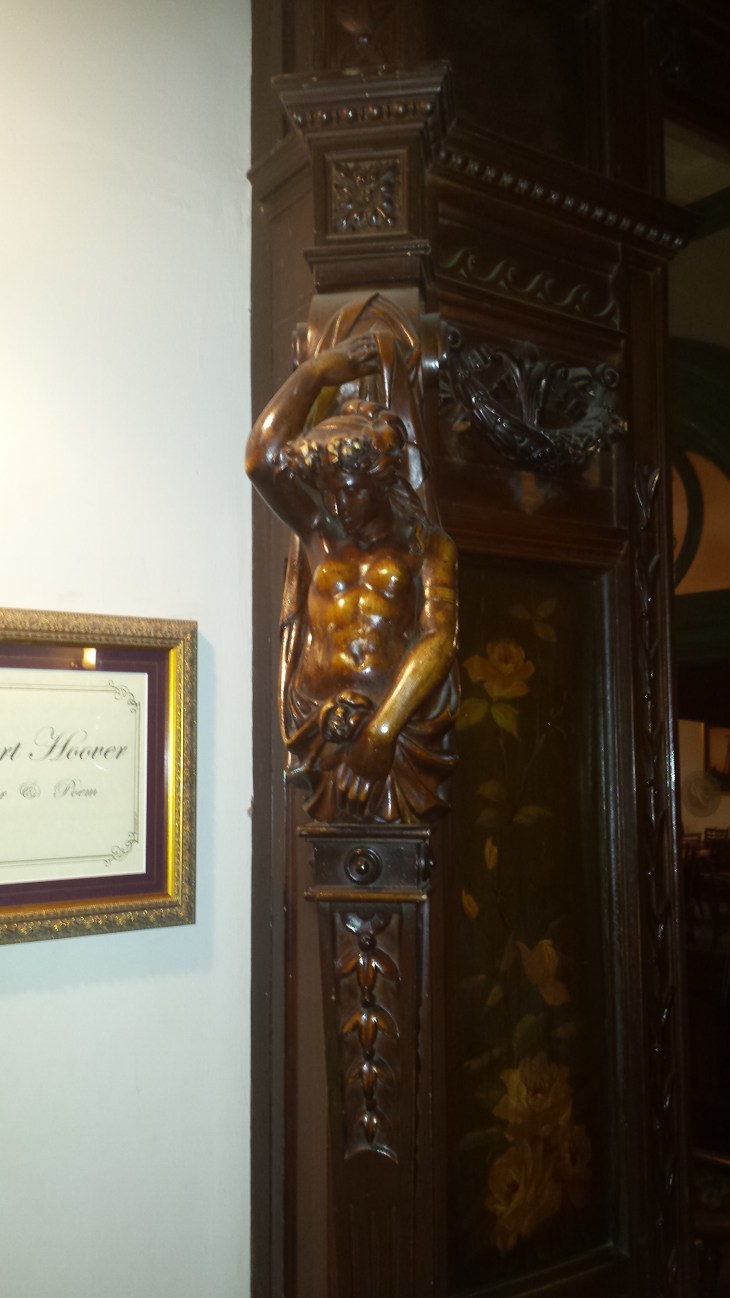
Topless, in a Kalgoorlie bar? The Dodgy Perth team wouldn’t know about such things.

20160706_093322

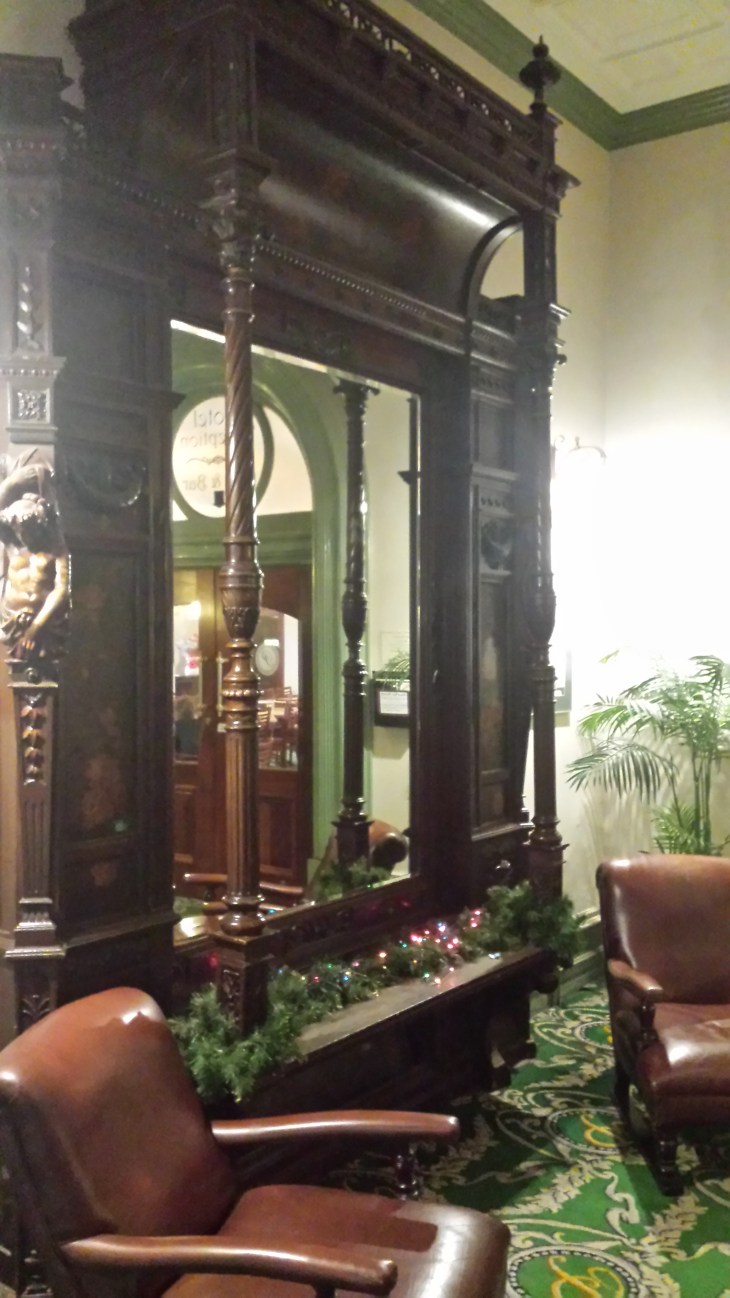
Mirror, mirror on the wall… Do you have anything to do with Hoover at all?

The Dodgy Perth team is spending some much needed downtime in Kalgoorlie. Like good historians, we booked ourselves into the Palace Hotel, which was probably much finer when it opened in 1897. Downstairs is the Hoover Bar; upstairs you can stay in the Hoover Suite. In the foyer is the famous Hoover Mirror, together with a copy of a romantic poem he sent to a barmaid at the Palace with whom he had fallen in love.

Herbert Hoover, 31st President of the USA, was a mining engineer on the Goldfields from 1897, just as the Palace Hotel opened. He was a regular visitor to the pub, and when he left town Hoover gave them the magnificent mirror as a parting gift. And the long poem addressed to his local sweetheart, the first verse going:

Do you ever dream, my sweetheart, of a twilight long ago,
Of a park in old Kalgoorlie, where the bouganvilleas grow?
Where the moonbeams on the pathways trace a shimmering brocade
And the overhanging peppers form a lover’s promenade?

They quite like Herbert Hoover at the Palace Hotel, and a great deal of their advertising likes to stress the connection. But, unfortunately (as you’ve probably guessed by now) all the above is total and utter rubbish. Except for the bit about Hoover working on the Goldfields.

The poem isn’t by Hoover at all (who, like many engineers, couldn’t write lyrically if he tried) but by Texas poet Hilton Ross Greer in 1906. It was originally set in Mexico and addressed to Carita. Someone, probably someone who had never visited Kal since it now contains references to things that were never there, simply substituted local allusions for the original:

Do you ever dream, Carita, of a twilight long ago,
When the stars rained silver slendor from the skies of Mexico?
When the moonbeams on the plaza traced a shimmering brocade,
And the fountain’s tinkling tumult seemed a rippling serenade?

As for the mirror, it’s never mentioned until after a major redevelopment of the Palace in 1936, where it suddenly becomes advertised as a tourist attraction. Originally just described as a ‘banksia-framed mirror’ in the dining room, a couple of years later it had obtained a new story about its origin.

The manageress, Mrs V Cook, spun a tale about how it had been made in Florence in the 1850s, shown at the Melbourne Exhibition in 1880, cost £1000 to make, had originally been covered in gold leaf, could grant wishes, and had been painted brown by her late husband to fit in with the rest of the furniture. Actually, we believe that last bit.

The mirror looks 19th century, and is certainly magnificent and worth the trip to Kal just to see it. Even more so now they’ve stripped off the brown paint and restored it to its original (gilt-less) beauty. But, sorry Palace Hotel, it has nothing to do with Herbert Hoover. Nor does the poem.

Sometimes, being a historian is a bit like telling kids about Father Christmas.

My oath!

mosque

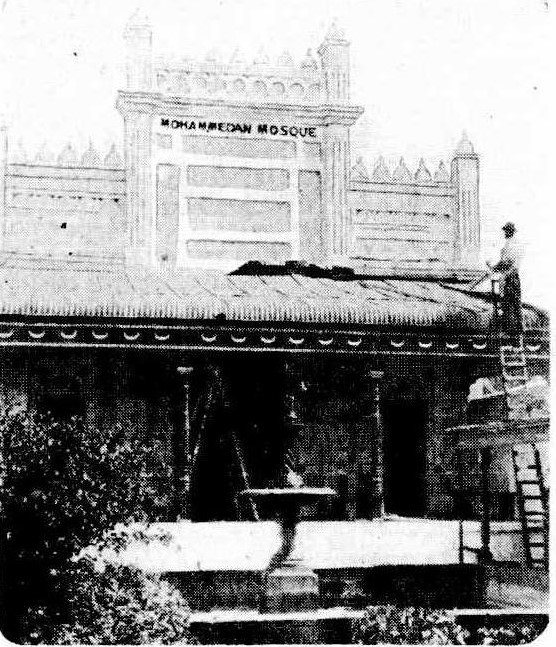
William Street mosque, complete with traditional Islamic bullnose verandah

Bloody Muslims, coming over here with their history of centuries of trading with Western Australia before Europeans arrived, having been an accepted part of local society since the birth of the colony, and demanding to be treated with the respect the law has always shown them.

Wait, that last one can’t be right can it? Well, yes it can.

The earliest reference to someone swearing on the Quran is from 1833 when Sumud Alli did so to testify against his racist attacker, the appalling John Velvick. The newspaper report didn’t make anything of this oath, other than to mention it in the same way it noticed anyone else who was sworn in, so the journalist didn’t think this was very unusual. By the way, Velvick got his comeuppance at the hands of the law and later met his death at the hands of Yagan.

By the early 20th century, the Supreme Court respected Islamic tradition by ensuring its copy of the Quran was first wrapped in canvas and then covered in colourful silk handkerchiefs. This way, it could be handled by court officials and still be considered acceptable to Muslim witnesses taking the oath.

And in 1918 the Supreme Court was even willing to allow a case between two Muslims to be adjourned so it could be settled using customary processes. A dispute over who owed what for a sale of camels was resolved when the defendant went to the William Street Mosque, washed himself in the presence of his Imam, put on clean clothes and then swore on a certain passage of the Quran. The judge accepted this and was happy with the outcome.

What’s with these people demanding the respect we used to accord them all the time?