Historians save your bacon

In 1975 bacon caused cancer

In 1975 bacon caused cancer

Ever wondered why historians are so chilled out? It’s because every time the media reports some ‘new’ health scare we simply ask ourselves “Where have we read this before?” Today’s example is that bacon gives you cancer.

On the radio this morning and all over the Interwebz, you could not avoid being told that lighting up a Pepperami was going to make you die. Tonight.

In October 1975 Australians opened their newspapers to discover that the link between cancer and bacon was so certain the delicious smoked meat would soon disappear from every shop. Well, until 1979 when they opened their newspapers to find a senior research fellow of the Cancer Council assure them bacon was not even slightly carcinogenic.

So was this the first time bacon was accused and then absolved of evil deeds? Not even close.

If you’d opened your newspaper in 1902 you would have been shocked to discover bacon was causing cancer. Particularly cheap American bacon. Although in 1923, if you wanted to fight cancer all you had to do was eat more bacon.

1928. Bacon is good.

1923. Bacon is good. For the next five years, anyway.

Trouble is, by 1928 bacon was causing cancer. Again.

In 1928 Katanning residents were warned against hot drinks, bacon and pork. And advised to live in the mountains on natural foods and with “sun-flooded air”. Mountains being quite far from Katanning, it’s not clear how useful this guidance from the medical profession was.

Just wait a couple of years and bacon will be fighting cancer again. And then it will give it to you again. And then it will fight it again.

You don’t need a doctor. You need a historian.
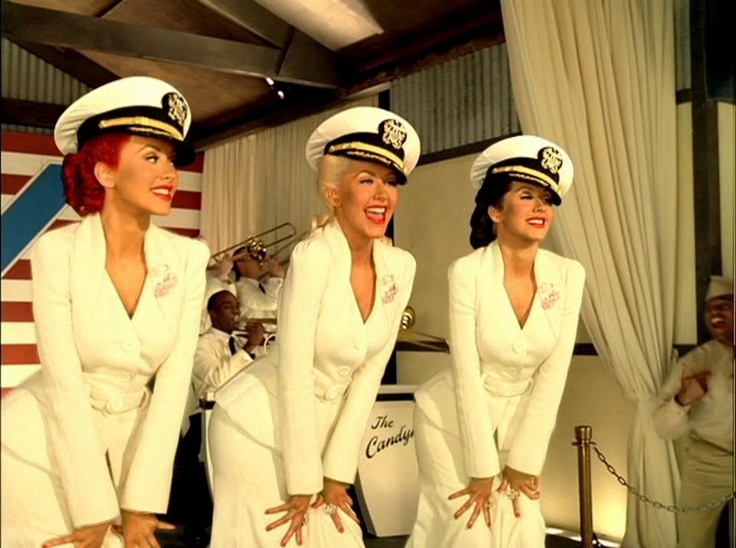
Do footballers prefer blondes?

He's a one stop shop, makes my cherry pop

He’s a one stop shop, makes my cherry pop

What do we know of our football idols off the field? Well, in 2015 just about every single thing. Including lots of things we don’t want to know.

But in 1938 it was considered novel to interview an entire football team and discover the answer ot the most pressing question of the day: did they prefer brunettes or blondes?

Following is a selection of answers from the Perth starting eighteen:

Keith ‘Pop’ Hetherington A 22-year-old, who worked at the Government Printing Office. Not married; not engaged. Perth’s utility man, he came to the team from Wembley. One of the many blondes in Perth’s eighteen, he was an appreciative judge of a good looking girl. Blondes or brunettes were all the same to Pop; he considered a girl is only as good as the breakfast she can cook.

Eric Strauss A blond 18-year-old giant (six foot was tall in 1938). This was his first year in football, and he was also a first-class cricketer. He was single, and claimed not to have given much thought yet about blondes, brunettes or redheads.

Reg Trainor Wingman, aged 25, dark and single. A school teacher by profession; a good swimmer and good cricketer. Non-committal on the subject of blondes or brunettes; says a man can’t mix football and women.

Fred Puddey Crack centreman, better known as ‘Fred the Giant Killer’. Not married, not engaged—not interested. Definitely does not like blondes: “Too many of them are gold diggers,” he said.

Bob Love The 25-year-old goalkeeper. Compactly built, he was dark and single. Came from the Perth Mets (of which he was, captain). Refused to be drawn on the subject of women. “Forget about them,” he said, “Love is only my name—not my nature.”

Girls, take your pick.

WA’s worst poet?

He was a poet and he did not rhyme

He was a poet and he did not rhyme

Today we want to celebrate one candidate for the position of Western Australia’s worst ever poet. Step forward Rhys J. Edmunds of Northam. In the 1910s Edmunds was attached to the Northam Courier, which was one of the few places brave enough to publish him.

When a Sunday Times reviewer described Rhys’ sentimental verses as “horrible”, the great poet himself stepped up with a riposte entitled “They call me poet”. We cannot bear to reprint the whole thing here, so will leave you with just the final four lines:

Had I the tongue to reach the heart,

This is the message I would impart:

“Honor the Poet, for it is he

Who defends us all i’ God’s imagery.”

During World War I, it is said Edmunds collaborated with a poet from the Lands Office to produce some jingoistic verse to be set to music for the use of local cadets. It is not clear if this project was ever finished.

To be fair, while he had some shortcomings in the poetic departments, Rhys worked valiantly to improve the surroundings of Northam, and after the weir was built did a lot of work for the local birdlife.

So Rhys J. Edmunds of Northam, Dodgy Perth salutes you and your efforts to improve the intellectual life and wildlife of your home town.

Racists lodge a complaint

Looking good for white visitors

Looking good for white visitors

When the Aboriginal gaol on Rottnest was turned into a luxury hostel for holidaymakers, it is understandable that it caused outrage. But not for the reasons you think. Oh dear no.

Some of the cells had their adjoining walls knocked down to make them suitable for married couples. You see, one white married couple occupies the same sleeping space as forty Aboriginal men. But that was not the reason for the outrage.

It wasn’t even controversial that a prison would be made into holiday homes at all. No one complained about the possibility of ghosts, or of disrespecting the heritage values of the place. That was not the reason for the outrage.

In 1911 as the hostel was being prepared for its first Christmas opening it was rumoured that the furniture had been made by ‘Asian’ labourers, and not just white folk. The Sunday Times, always quick to smell a racist opportunity, rushed a reporter over to the island and he confirmed the worst. There were the labels showing the fittings had been touched by non-white hands. (For those unfamiliar with just how racist furniture can be, click here.)

Naturally the Minister for Public Works was horrified (to have been found out). He ordered all the furniture returned to Perth and suspended the civil servant he held responsible for this barbaric crime.

The poor bureaucrat protested he had no instructions to buy only from white firms, and the Asian-made furniture was much, much cheaper. In fact, 90% of all furniture used in Western Australia was made by ‘Asiatics’. Much to the disgust of the (white) union movement.

So the cheaper items were replaced with more expensive, racially pure furniture and everyone was happy.

Except for those who cared about the horrendous history of the gaol. But it would be many decades before the media bothered telling that side of the story.

That pleasure only powder can provide

The gateway to a fun evening

The gateway to a fun evening

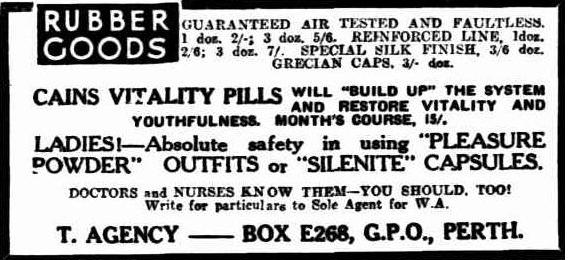
Contraception. We at the Dodgy Perth office understand it’s all the rage among the young folk. So we’re here to help out with alternative suggestions.

The above advert ran in Perth’s newspapers in the mid-1930s. Most of it is fairly easy to decode (the word ‘contraception’ doesn’t appear at all).

Rubber goods were condoms, of course, available in a range of styles. Except most women didn’t like condoms. They were mostly used for preventing disease rather than as a means of birth control, and so were more associated with the brothel than the bedroom. As a consequence, caps were more popular with married women.

Cains Vitality Pills were the 1930s Viagra. Whenever you see a reference to ‘building up the system’, ‘vitality’ and ‘youthfulness’ in an old advertisement, they are referring to erections. And nothing else.

But ‘Pleasure Powder outfits’ had the Dodgy Perth team stumped for a while. It took a bit of research into the history of contraception to find out what these were.

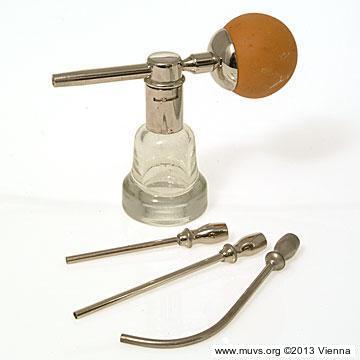
It consisted of two parts: a rubber bulb containing the powder attached to a hollow cylinder with a mark on it. The cylinder was inserted into the vagina up to the mark, then the bulb was pumped once or twice in order to catapult the necessary amount of powder against the opening of the uterus.

A Pleasure Powder outfit (c.1900)

A Pleasure Powder outfit (c.1900)

The powder consisted of boric acid, citric acid, tannic acid, gum arabic, and ‘powder’. Right up inside you. Must have been a wonderful experience.

Having been prepared in this way you had 30 minutes to get the deed over and done with, or the procedure had to be repeated.

So, condoms, caps, Viagra, and Pleasure Powder made from a variety of acids. Go for it kids, you have our permission.

Let them eat cake

Lord Mayor James Franklin, and wife Alice

Lord Mayor James Franklin and wife Alice

For some reason Dodgy Perth has decided to look at a time when Lord Mayors tried to restrain spending on hospitality, not simply indulge in it. It’s not like it’s a topical issue at the moment, or anything.

A century ago, Perth City Council was entitled to spend up to three percent of its revenue on running the council itself. This included entertainments for guests and treats for councillors. Stirred up by the media, ratepayers used to get very cross about fat elected officials drinking port and smoking cigars while the honest man was suffering the effects of the Great Depression.

To counter the outrage, in 1932 Lord Mayor James Franklin ensured each councillor was issued with twenty coupons a fortnight. Each coupon could be exchanged for one drink, one cigar or one packet of cigarettes. On principal, four of the twenty-five councillors refused their share of coupons.

But by mid-1933 the system was already on the verge of collapse. Somehow more coupons were being used than supplied and the budget was running into debt. More seriously, though, was that sometimes the Lord Mayor had to dip into his own pocket when receiving overseas visitors and take them to the local hotel when he had run out of vouchers.

Can you imagine a Lord Mayor dipping into their own pocket, rather than just corporate hospitality’s? Practically unthinkable in 2015.

After several councillors expressed dissatisfaction with the whole scheme, Perth City Council did what councils always do. They referred the matter to a committee to come up with a report.

Referring things to committees is always better than making decisions. Always.

Speaking bluntly

Tomato leaf, we presume

Tomato leaf, we presume

The Dodgy Perth offices have been uncomfortable this week. The boss has given up smoking as of Monday morning and he is behaving like a bear with a migraine. So, just for him an advertisement from 1867 in a Perth newspaper.

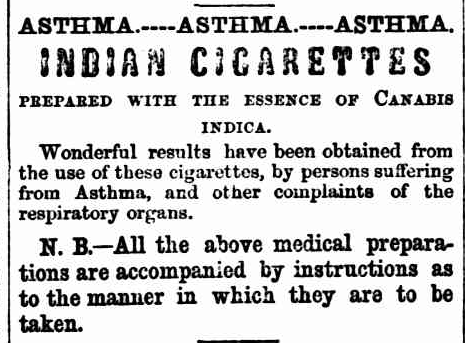
Do you suffer from asthma? Or perhaps you have another complaint of the ‘respiratory organs’ (we think they’re called lungs normally).

The solution, as it turns out, is to smoke a pre-prepared Indian cigarette impregnated with essential oil of Cannabis indica. Seriously. That’s how you treated asthma in 1867.

Perth Gazette, 21 June 1867

Perth Gazette, 21 June 1867

Naturally, you could only smoke your joint—sorry, ‘medical preparation’—strictly following the instructions given to you by your pharmacist. Yeah, right.

Perhaps one of these remedies might make the boss feel better. It might do the rest of us a lot of good, anyway.

The Bayswater treasure hunt

Accurate map of Bayswater

Accurate map of Bayswater

We have received another e-mail from an African princess who needs our help. Being good people in the Dodgy Perth offices we thought it greedy to accept her offer of $2bn for our aid. So we’ll pray for their safety and promised to keep an eye on the newspapers.

Which reminded us of the time there was £32,000 buried in Bayswater, or Busselton, or Greenbushes. Depending on which version of the letter you got.

In 1915 the scam was known as the ‘Spanish Prisoner Swindle’. A letter would arrive from Guzman Penalto, explaining he had once lived in Western Australia but was now being held prisoner in Spain. Fortunately, he had buried a fortune between two pieces of crystal shortly before leaving these shores.

If the recipient of the letter would be so kind as to forward £398 in the enclosed envelope, a priest will be able to get to Perth from Spain, dig up the buried notes and they could be split between Penalto and his Australian saviour.

Couldn’t be easier, could it? Unfortunately, Penalto was under the impression that Bayswater was hundreds of kilometres from Perth, which hinted either he had never been here, or prison had upset his memory.

Since the Dodgy Perth offices are based in Bayswater and we refuse to share the money, we have spent each evening with a spade turning up each and every inch of grass in the suburb. There’s some way to go yet, but we will not be discouraged.

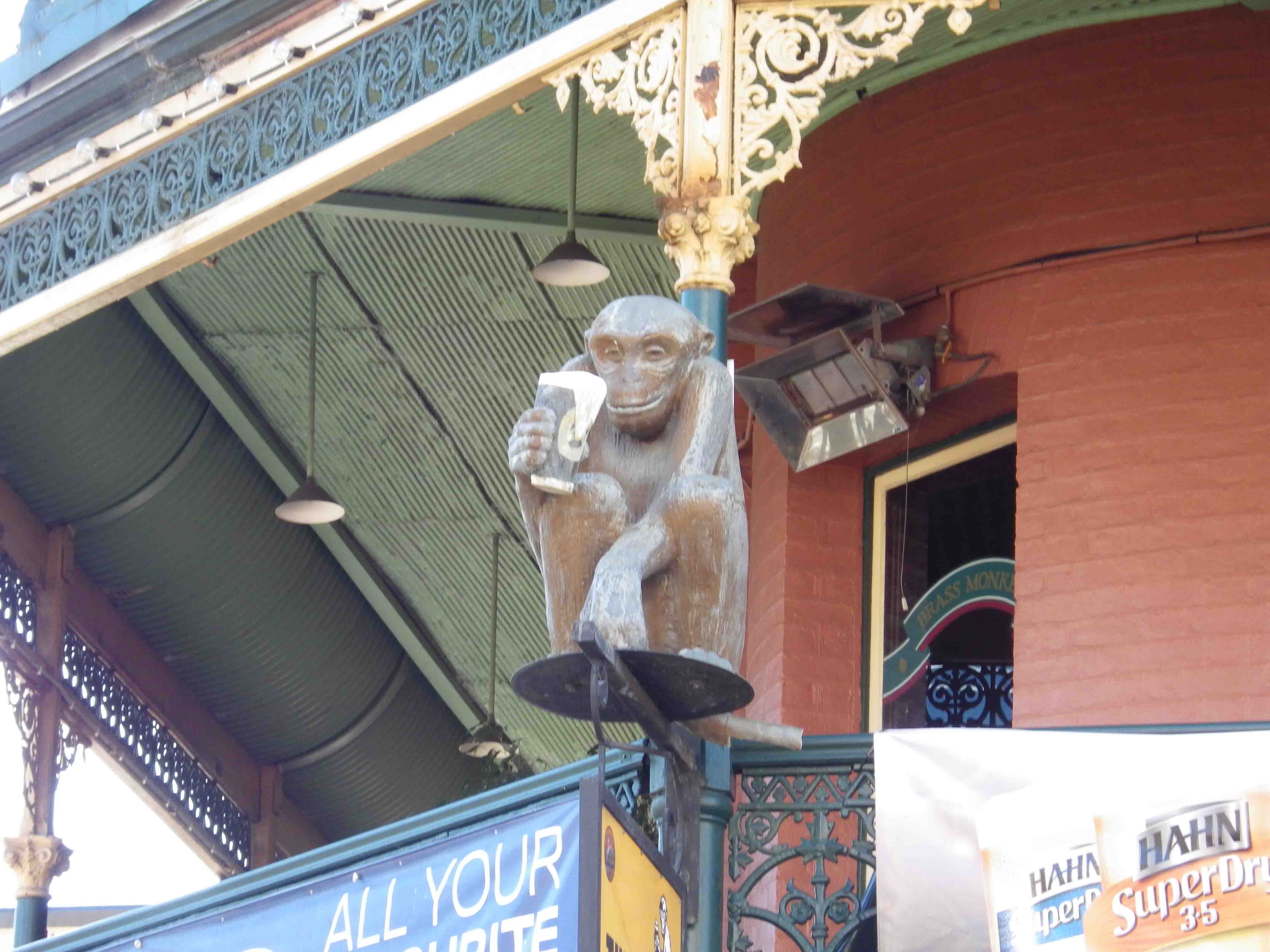
The Peanut King at the Brass Monkey

Given enough monkeys one of the will produce a hotel

Given enough monkeys one of them will eventually produce the plans for a hotel along with the complete works of Shakespeare

The Great Western Hotel (now the Brass Monkey) was designed in 1896 by Michael Cavanagh, who had arrived in Perth from Adelaide only the year before. He is mostly famous for his numerous buildings constructed for the Catholic Church.

His work includes Mercedes Colleges, St. Brigid’s Convent and the Redemptorist Monastery. However, he doesn’t appear to have put a lot of work into the Great Western, simply recycling his plans for the Barrier Hotel in Port Pirie, SA, which he designed in 1892.

In November 1913, William Urquhart was enjoying a drink in the Great Western with a friend. It was Urquhart’s shout, so he pulled out a purse. As he did so, a number of coins fell to the floor.

But others had entered the bar: William Proleta, McGaskiell and William Williams, locally known as ‘The Peanut King’. As Urquhart picked up the cash, Proleta said “That’s my half-sovereign, mate.” Then he grabbed the purse and punched Urquhart in the face.

Urquhart fell, but recovered in a few seconds. Rising from the floor, he ran to summon the police. Strangely, Proleta kept calmly drinking in the bar.

When Constable Molloy accused Proleta of robbery, the young labourer replied, “I —– didn’t rob him; I don’t know him.” He was searched, but only small change was found in his pocket.

While being arrested, Proleta struggled and was thrown to the ground. His hat fell off, and a sovereign and two half-sovereigns tumbled out. The Peanut King also turned out to have unexplained cash on him.

As a strange footnote, in another court case featuring The Peanut King, he denied his wife was known as The Cocoanut Queen. Nicknames were certainly different in the 1910s.

Horses, dentists and dealers

Percy's haul

Percy’s haul

From conversations we have, some people seem to think drugs weren’t a problem in Perth in the past. Boy, do we have news for them.

Prior to the 1920s, white citizens liked to see all Chinese residents as the only users in Perth. In this case opium was often the drug of choice. They were just as wrong as people who believe addiction is a relatively new phenomenon.

Dentists were suppliers and occasional users of cocaine, which was one of the new anaesthetics available to them. While stats for Perth are hard to come by, dozens of Melbourne dentists were struck off in the 1920s for being coke addicts.

The other source of cocaine was the racing industry which (illegally) used both it and heroin to give horses an advantage. In fact, the dose for one horse was enough to keep six people stoned for a night. It was said that the majority of Perth users got their drugs from trainers, not from drug gangs on the street.

In 1929, one unfortunate addict came to light after breaking into a Nedlands’ chemist and stealing bottles of cocaine, morphine, strychnine, heroin, and hydrogen peroxide. The thief, Percy Preston, was later found lying unconscious at Claremont with a hypodermic by his side.

While one user does not imply an epidemic of drug use, if a user has the money to pay for drugs from a dentist or trainer they won’t come to the attention of authorities. Percy was just unlucky enough to have run out of cash in a moment of need.

And Percy’s case also shows there was sufficient ‘dope’ around to become an addict. So drugs are not a new thing in Perth, and we are neither winning nor losing the ‘war’, simply managing it generation by generation.