Tell me again, Granny, how kids today don’t have any standards
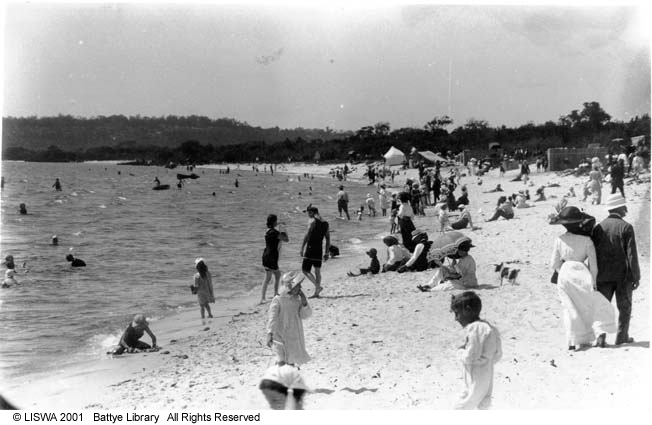
Once Crawley had all the nude parties and wild orgies by the river. Then Scarborough took up the challenge of being the leading place for such antics. But by 1936 Como Beach is where you needed to be for fun disgusting midnight parties.
One Sunday, decent members of society were shocked by what they encountered on a late-night stroll south of the jetty. Four drunken louts were chasing half a dozen tipsy girls along the beach. When they caught them, they dragged them back to a pile of stubbies.
And then—Dodgy Perth does not know if we can go on—they began tearing off their clothes like the wild beasts they were. God alone knows in what state of undress the girls must have arrived home the next day.
This degrading spectacle should not be allowed to happen on a decent beach like Como. Upright members of society need to be protected from having to see young people enjoying themselves. And the disgusting degenerates themselves should be locked up.
What makes it worse, as regular readers will have guessed, is these were not even working class louts. They came from some of Perth’s most respected families.
Four men, six girls. There’s a movie title there somewhere. Not the kind of movie Dodgy Perth would watch. Obviously.
Reader, you and I have grown quite intimate, have we not? We have confessed our thoughts to each other. Whispered those things of which only true friends can speak.
Yet, there is that one matter we have not dared to broach. And now it is time.
I lean over to you and say in a low voice: “Some of Perth’s heritage buildings are quite disappointing.”
There. It is out in the open.
In fact, right across Western Australia are hundreds of boring brick sheds with corrugated iron roofs, and a thin façade of Donnybrook stone glued on the front.
Lipstick on a pig, as the Americans say.
All fur coat and no knickers, as my mother says.
Or, as one critic said of the General Post Office in Forrest Place: “It’s like a lovely face on a baboon body.”
Next time you’re in the CBD, take a look at the sides of the GPO. You will see they would be easily mistaken, as the West Australian said at the time, for the walls of a factory.
Don’t get me wrong. The façade is charming. Really, really enchanting.
But, like so many buildings in this State of ours, the rest of the edifice has no architectural unity with the front. None whatsoever.
When the GPO opened, the Sunday Times was outraged. (Mind you, the Sunday Times was always outraged about something.)
They would never have done this in Sydney or Melbourne, it thundered, but the federal government feels able to “treat Perth with vulgar contempt.”
Sometimes you see a heritage building and think you’re falling in love. But then you realise that it’s just makeup, and there’s nothing behind it. And all your affection falls away.
Dodgy Perth is sorry we had to raise this issue, but you had to know.
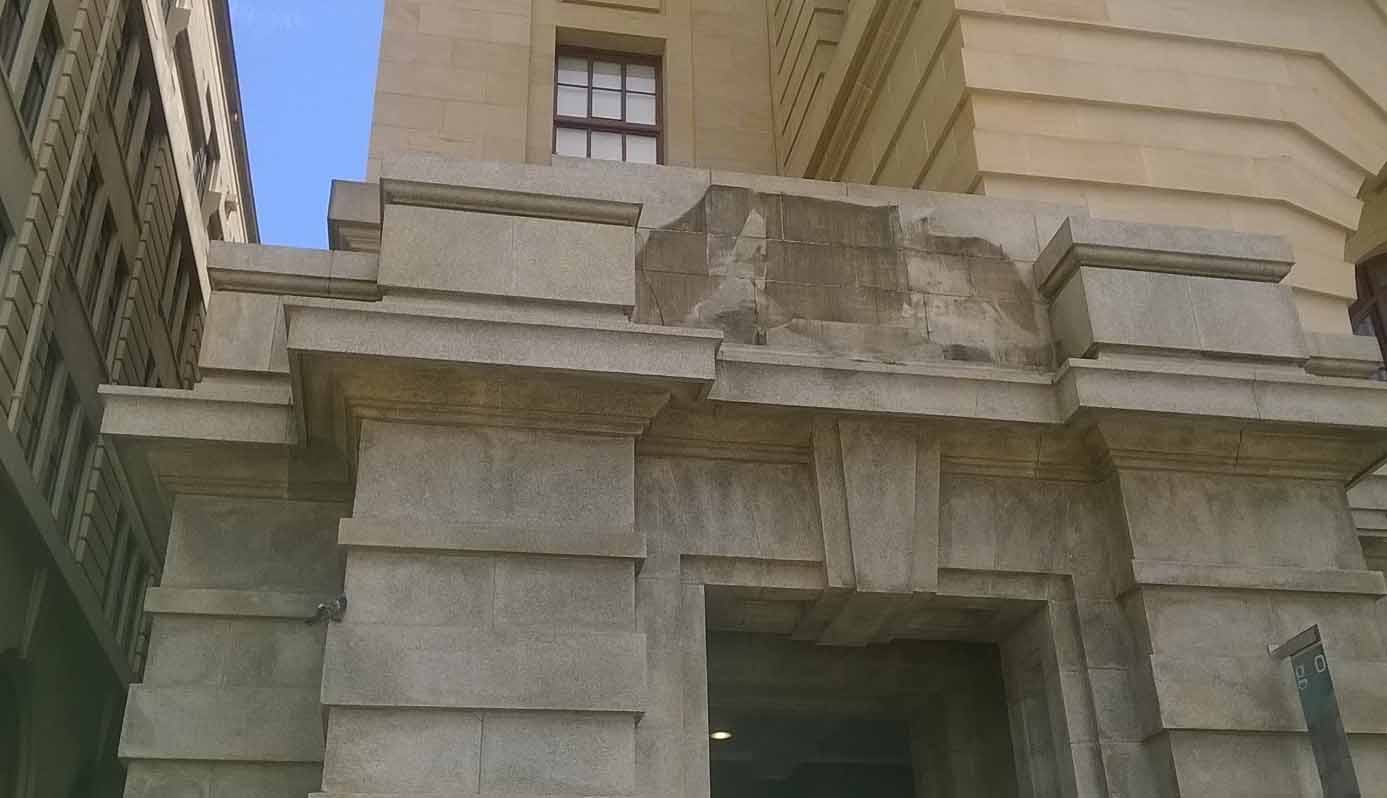
Dodgy Perth went to Forrest Place and noticed the two coats of arms on the Post Office had been removed. Both the Australian arms (above) and the British royal coat of arms. They’re gone because of yoof who decided it would be funny to smash them up.
Where’s me kangaroo gone, sport?
Anyway, the office got thinking. We’ve heard various stories about why the kangaroo on the GPO’s Commonwealth coat of arms faces the wrong direction. On all the other coats of arms, the two delicious animals face each other.
Burger time
Or to go all heraldic about it: why does the GPO have a sinister kangaroo regardant?
The best theory says because of swastikas, aliens, Masons, the illuminati and witchcraft. We don’t pretend to follow the argument, but we are convinced. Maybe.
Alternatively, the most popular tale concerns a sculptor who never got paid for his work, so the kangaroo looks back at the treasury as a rebuke.
We thought about this for a while.
So… the sculptor cast the coat of arms knowing in advance they wouldn’t get paid. And then no one noticed the sculpture was wrong when they put it up.
We back the illuminati story now.
But… Dodgy Perth is going can be the first to reveal the real, genuine, slightly mundane truth.
Take a look at the Commonwealth arms below:
Are you looking at me, mate?
This is the Old Parliament building in Canberra. It may look ordinary now. That’s because someone cut the head off the kangaroo and turned it round.
That’s right. The coat of arms on the national parliament once had a sinister kangaroo regardant. You were allowed creative licence in your interpretation in those days.
The reason was simple: both animals were looking at the royal coat of arms, which also adorned every Commonwealth building. It would have been rude for either kangaroo or emu to turn its back on the monarch.
God save our unicorn, long live our unicorn
Same reason goes for the GPO.
But the more observant among you will have noticed a tiny problem with this explanation. In Forrest Place, both bird and marsupial face away from the royal arms, which were on the GPO’s right.
Best explanation: the contractors who put them up weren’t told which one went where, and no one noticed on the day. If anyone commented later, it was too late to do anything about it. So for nine decades, kangaroo and emu have been studiously ignoring a succession of kings and queens of England.
Perhaps, now both coats of arms are in for repair, this is the ideal moment to put things back the way they were intended. Or make a republican statement and put them back the way they were.
The office at Dodgy Perth HQ is a fairly relaxed place. Not much makes us angry.
But today, we read of how Dalkeith residents were forced to listen to people having fun on the foreshore.
You can imagine how that made our blood boil.
Pictured above is the notorious Hot Pool at Dalkeith, which for decades was a popular place to relax.
One of the best things to do was get to the pool around midnight, strip off and hold a nude swimming party. However, the installation of floodlights and regular patrols by the police made this a more difficult activity to get away with.
So most people just turned up with a picnic and a few beers to have a good time. Right up to the 1950s.
Enter the Dalkeith residents. They had not spent all that money on housing to have to listen to people having a good time. No sir.
They pressurised the Nedlands Road Board who passed a by law forbidding barbecues on the foreshore. And for good measure they outlawed alcohol too.
Police started nightly visits looking for evil doers who wanted to barbeque a steak.
Unbelievable as it might seem, the police once found a group of young people who had some beer and who thought it would be acceptable to get together within earshot of Dalkeith. That was quickly put to an end.
So now Dalkeith is exactly as it should be. Big houses and no nudity. And certainly no fun on the foreshore.
Ye Olde Englishe Fayre was a fairground which included a freak show where you could see the monkey boy and a two-headed pig. It also had a variety show with the top acts of the day, in between local performers of varying quality.
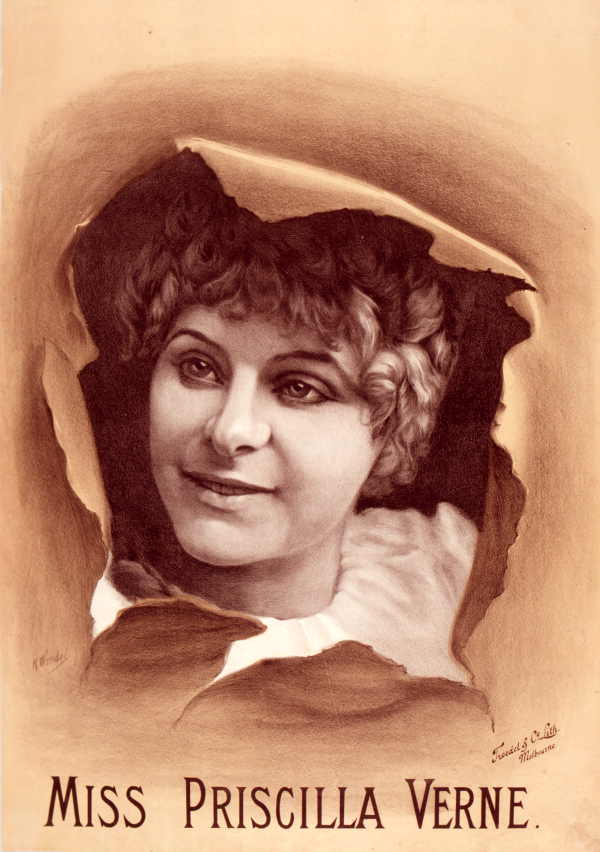
By 1896 the Fayre had relocated to the site now occupied by His Majesty’s Theatre where you could see renowned singer Priscilla Verne do her best known routine, a song called ‘He Sits in the Front Row’:
He sits in the front row; he is blushing like a maid,
I love you, darling; be my hub; now, don’t be afraid.
Don’t turn away in anger, dear; I always will be true,
Accept this kiss, and give me one; for I love you.
At this point she would lean forwards and beckon to a male patron in the front row to act out the final line. This particular Friday, she turned to Gus McBride, who fancied himself a bit of a ladies’ man. Priscilla invited him on stage to kiss her.
For reasons which are not clear, Gussie declined this generous offer and retorted with an insult which made Priscilla’s blood boil. “You contemptible little cad,” she snarled from the stage. The next day she consulted a lawyer, who advised her she should have her abuser horsewhipped in public.
So Priscilla sent a letter, signed ‘Alice Chambers’, claiming she had fallen in love with Gus and would like to meet him outside the Town Hall on Barrack Street that very afternoon. Together with other members of the show, she lay in wait with a cane hidden in her dress.
When Gussie arrived to meet with ‘Alice’ he was shocked to be greeted by the assembled Fayre employees. “Come here! I want to speak to you!” said Priscilla. Gus began to run along Barrack Street, followed by Priscilla who kept lashing out at him with the cane.
“You cad,” she shouted, “I’ll teach you not to insult another woman as you did me.”
By this time a large crowd was enjoying every moment of the scene, and Gus had to plead with two burly police officers to defend him. Soon afterwards he left Perth and we never heard from him again.
There’s probably a moral in all this, but we have no idea what it is.
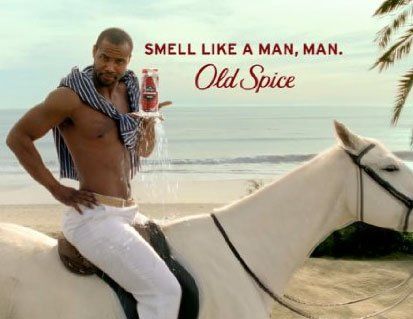
Do you remember the ads with Isaiah Mustafa proving all you need to become a manly man is deodorant? Well it turns out daily use of Old Spice would stop you getting to first base with Cottesloe stenographer, Gladys Smith.
In 1947, Australian perfume manufacturers tried to open up a new market. Noting that American men used scents, but no Aussie male was, Perth residents were asked how they like a bloke to smell.
Our beautiful Cottesloe stenographer thought that scented soap and hair oil for men was revolting. “Scent”, she firmly declared, “is for women.”
Perhaps her friend, Miss Myers from Nedlands, will appreciate a nice body spray. No. A man who smells of perfume is a “sissy”.
Time to move on. Let’s ask a married woman, Mrs Milford of St Georges Terrace. “When my husband and I went to live in America, we were disgusted to find the men using scented oil on their hair,” she sneered.
Perhaps we should just ask the blokes, rather than the ladies. We can’t imagine Vic Park hairdresser B. N. Bullivant disapproving. “I do not think scent suits an Australian,” he said. “The average Australian does not buy scented soap unless there is no other.”
And an East Fremantle baker, T. Wilson, just laughed at the idea. Pansies, he said. A scented man is a pansy.
So there you have it folks. Now we just have to update our Ashley Madison profiles to reflect our new non-scented status.
We at Dodgy Perth take pride in being just a little bit dodgy ourselves. (But only when no one is looking.)
However, we have a long way to go to catch up with Perth’s dodgiest man: ‘Doctor’ David Stewart, the man with more wives than Henry VIII.
David joined WA’s Department of Agriculture in September 1932, to become their head veterinarian. His praises were quickly sung by the newspapers. He was a genius, a war hero, a “real man’s man”, and Perth was very lucky to have him here.
Around six months into his post he was made to resign. Despite his protestations of innocence, he had been moonlighting as a medical doctor (with forged certificates) calling himself Dr Russell. Apparently faking medical qualifications was not the done thing in the 1930s.
Oh. And his vet degrees were faked too. As were all his references.
Even while working for the Dept of Ag, he had been defrauding a number of local businesses of various goods. And sold all the furniture from the house he was renting.
At the trial, David got two years for forging his certificates.
But this was only a tiny fraction of ‘Doctor’ David Stewart’s life. He was also a bigamist. If bigamist is a big enough word for someone with at least seven wives. (He claimed to not be able to remember how many!)
A few quick dates in the court life of an astoundingly complex character:
April 1923: Ipswich, QLD, married a minor
April 1923: Brisbane, obtained property under false pretences
September 1923: Brisbane, larceny
July 1924: Melbourne, larceny to obtain a car
December 1924: Melbourne, bigamy
July 1933: Perth, forged medical diplomas; got two years, but was released after serving three months
March 1938: Melbourne, bigamy
Such was the mess of his life, and the fact that he married and worked under at least nine aliases, no one was able to say how many wives he had or what other crimes he might be wanted for.
In honour of St Valentine, the Court Hotel is holding one of its (in)famous Traffic Light Parties this evening. If you haven’t been to one before, Dodgy Perth can assure you of a great night out.
The event will be hosted by two of the Court’s regular queens, Hannah Conda and Barbie Q.
Which leads to today’s historical problem: When did drag first come to Perth?
It is impossible to know who was the first local man to dress in women’s clothes, since appearing in public meant almost certain arrest. As happened to South Belmont resident Richard Moyes in 1949. Richard was only spared jail by agreeing to see a psychiatrist.
Stewart Hobbs of East Cannington was not so lucky the following year, when he was sentenced to fourteen days for wearing a dress.
But men will be men (or women in this case), and in 1953The Mirror was shocked to discover that suburban houses were hosting Drag Nights.
Because the innocent readers of The Mirror wouldn’t have a clue about the jargon of “the effeminates”, the newspaper helpfully defined ‘drag’. It meant having an elaborate wig, painted and rouged face, expensive frock and dainty underwear, brassiere with padding, silk stockings and high heeled shoes.
Sounds about right to us.
The paper had been tipped off by a man who ‘accidentally’ (yeah, right) attended one of these drag nights.
All the guests were men, and there was plenty of hard liquor and hot jazz and dancing. Especially dancing.
Most regrettable of all was that the queens were intelligent men, who held respectable jobs during the day.
The Mirror’s informant fled when one of the ‘synthetic sirens’ asked: “Have a dance with me please, darling.” So, unfortunately, the reader is unable to discover exactly what kind of debauchery took place later that evening.
However, the paper suggested that it might have involved a mock religious marriage ceremony. Or it might not, since no one saw anything of the sort.
Jazz. Dancing. Liquor. Drag queens. In Perth? Where was the strong arm of the law to sort things out?
Keziah Lockyer was not a woman to meddle with. She had arrived in Perth with hubby Paul and their many children in early 1830. Keziah had to finance the trip herself, since Paul was broke and, it turns out, feckless.
The worthless husband immediately abandoned his family and took up his favourite hobby: drinking. Mostly in the Sailor Jim Inn at Fremantle.
For the next two years he kept up the boozing and saw nothing of his family. Worse, his grog was bought by selling the few clothes the family owned. Eventually, Paul cruelly announced he no longer needed to be troubled by a wife and children at all.
Keziah’s daughter Eliza struck lucky when she married William Nairne Clark, a lawyer and journalist, while Keziah sought comfort in the bed of her employer, William Temple Graham. These two men had once been friends, but had fallen out. Unfortunately, Clark befriended his drunken father-in-law and the two schemed to embarrass their mutual enemies.
In March 1838, they placed an advert in the paper:
Caution
Paul Lockyer hereby intimates, that he will not be responsible for any debts contracted by his wife, Keziah Lockyer, who resides with Mr W. T. Graham.
How they must have chuckled. But they had underestimated Keziah. She got mad. And she got even.
The following week, a large advert declared: “Paul Lockyer ought to have stated that I have not resided with him since 1832, previous to which he deserted me and my children, as is well known”.
Paul is well aware I never had any debts for which he was troubled; he would do well to think of his own.
Paul is requested to pay the cash borrowed from me since he deserted me; also the doctor’s bill for the cure of his dislocated shoulder (got in a drunken brawl) under which he lay thirty weeks at Mr Graham’s expense.
Dodgy Perth wish we could say her story ends well. It doesn’t. Her employer-lover sought his own revenge by seducing Eliza, the wife of his mortal enemy. Naturally, this did not go down well with Keziah. While Graham was sneakily at Eliza’s house, Keziah arrived in a fury. “You old villain,” she screamed, “you have had enough of me, and now you want to make a whore of my daughter.”
Unfortunately, Keziah had now embarrassed one of Perth’s leading citizens, so was told to leave on the first available ship and never return. On 6 May 1839, Keziah arrived in Tasmania to begin a new life, and vanishes from our view.
In the early 1950s Melbourne was plagued by a pervert who enjoyed spraying people’s coats with some kind of disgusting heavy, greasy substance. He attacked on crowded trains, stations, buses and busy streets, but was never identified.
The creep had more than eighty victims! Every description of the offender was different. They were old. They were young. They were fat. They were thin. They were blonde. They had dark hair. They were a man. They were a woman.
Eventually it was thought they used a different disguise every time they went out on the prowl.
In Perth, there was one reported victim in May 1952. Jan Banachoski was a customer at the GPO in the city centre when he was attacked. However, nothing more seemed to come of it.
Suddenly in March 1953, the Melbourne sprayer appeared to have moved to Perth more permanently. Although no one really knew if it was just a copycat, or the original crank had actually relocated.
At one suburban hotel, four customers—who were who were unaware of anything amiss at the time, later found the backs of their coats daubed with something unidentifiable, but vile.
Even the cleaners who tried to repair the damage didn’t know if it would be possible to remove the oil.
All the victims were drinking at the bar when the sprayer struck, so quietly that he wasn’t spotted by anyone.
By August 1953, people in Adelaide were being attacked in a similar manner. And the media went hysterical over it.
As far as Dodgy Perth knows, no one was ever caught for this nationwide phenomenon, which makes it all the more mysterious.






 Dodgy Perth