Hot property

Bellevue3

The one thing you quickly learn in the history and heritage business is that no story is ever as simple as you’d like it to be.

And here’s the irony, 10 Bellevue Terrace, now in line for the demolisher’s wrecking ball, was once adaptively reused, rather than knocked over. Read on.

In 1926 a fire in Kings Park devastated two homes on the Terrace, including No. 10. At this time it was owned by prominent accountant and tennis player Sinclair James McGibbon, who lived there until his death in 1943.

A long-time president of the Kings Park Tennis Club, gates and a stand there are named in his honour.

The fire did sufficient damage to gut the property, but the walls retained enough integrity that they were incorporated into the renovation, which was designed by the famous Perth architectural firm of Eales & Cohen.

Although McGibbon was a ranting anti-Communist, who saw reds under the bed everywhere, we’ll forgive him on this occasion, since the renovation he commissioned is still an attractive house today.

And a house that has an even more interesting history than Dodgy Perth first thought.

The Highgate Rain Baby

No, it wasn't there in 1932, but it's still a great tower

No, it wasn’t there in 1932, but it’s still a great tower

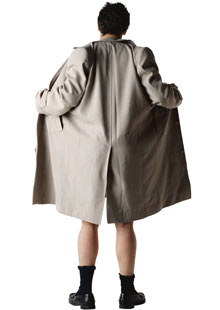
There are some things you don’t expect to find in Lincoln Street. A large tower to stop the sewerage smelling, yes. A weirdo dressed only in an overcoat and a pair of shoes, no.

Late one evening in June 1932, 28-year-old Stewart H. carefully folded his clothes and placed them under a tree. It was raining heavily. He told the arresting officer, Constable Weaver, he was simply having a shower. #YOLO

During the subsequent trial the media christened him the ‘Rain Baby’. As a defence, Stewart said he was unemployed and had been declined a chance to get to the Blackboy Hill Unemployment Camp to work for the dole.

The magistrate ordered him to pay costs, and ensured that he was found a place at Blackboy immediately. Sometime it pays to have an unusual shower.

Eighteen years later, Stewart was arrested in Roberts Road, Subiaco, dressed in women’s clothing and with powder and rouge on his face.

The clothing he was wearing was produced in Court. It consisted, as the newspapers carefully detailed, of a woman’s overcoat, dress, brassiere—packed with linen—a scarf, and women’s shoes. He was carrying a handbag and umbrella. Worst of all, according to the media, Stewart was wearing nothing under the dress.

“There seems to be something queer about you,” observed the magistrate.

Four years later in Kewdale, Stewart was charged with “alarming women and children” by lurking while dressed in women’s clothing. He had fled before the police arrived, but had already been recognised.

As the police explained in court, when they turned up at his East Cannington home he was wearing only blue swimming trunks and a dressing gown. This time he got fourteen days.

North Perth. Subiaco. Kewdale. Cannington. At least Stewart’s hobby got him out of the house.

Perth has no time for a Leake

bellevue

Sometimes the bad behaviour we catalogue here at Dodgy Perth does not belong in the past but in the present.

In our office we are not much given to campaigning for or against anything, usually preferring to sit back with a glass of red and just watch other people march up and down with placards and chants.

So the following is provided for information only, to be used by those who can find a use for such information.

If you take a walk around East Perth Cemetery (and you should), you will find memorials for several members of the Leake family, including George and his son, George Arthur.

George Leake was a turn-of-the-century lawyer and Premier of Western Australia. Famous for being one of the few people to stand up to John Forrest, Leake should also be remembered for developing the political party system we have today.

If he hadn’t died tragically young in 1902, aged just 45, he may well have gone on to become the first Prime Minister from this State. A memorial fountain for him was erected in Kings Park.

The year after his death, Leake’s widow, Louisa Emily, built a grand house at the edge of Kings Park, at 10 Bellvue Terrace, for herself and young family. Among her sons were Francis Walpole and George Arthur, both of whom followed in daddy’s footsteps and became lawyers.

During WWI, George Arthur signed up to the 10th Australian Light Horse Regiment. As a Second Lieutenant, he fell on 29 August 1915 at Gallipoli, where his body remains to this day.

The stunning Tudor-style home Louisa Leake built—a residence associated with the family of an early Premier and an Anzac hero—is still standing. But only just.

If you want to see it, we recommend walking past in the next few days because the bulldozers are moving in soon to replace it with a nondescript block of flats.

bellevue2

Sometimes the bad behaviour we catalogue here at Dodgy Perth does not belong in the past but in the present.

What was the Rain Baby doing in Lincoln Street?

rainbaby

In June 1932, Stewart Cecil Hobbs, then aged 28, was discovered in a lane off Lincoln Street dressed only in an overcoat and a pair of shoes.

It was 9.15pm and raining heavily. Hobbs told the arresting officer, one Constable Weaver, that he was simply having a shower.

On being asked where his clothes were, Stewart pointed to a neatly folded pile under a nearby tree.

During the subsequent trial, the media christened him the ‘Rain Baby’.

In his defence, Stewart said he was unemployed and had been declined a chance to get to the Blackboy Hill Unemployment Camp to work for the dole.

The magistrate ordered him to pay costs, and ensured that he was found a place at Blackboy immediately.

Sometime it pays to have an unusual shower.

Lyons frightened by Poppy

Poppys

“I have in my attaché case a few copies of some twopenny novels which I purchased recently at a city bookshop, and they reek with sex.”

So said Rev Arthur Lyons to a conference at the Wesley Church in 1933.

Apart from the fact they were not novels but magazines, the unfortunate expression ‘reek with sex’ only puts the Dodgy Perth office in mind of a kinky song Rihanna put out a few years back.

It seems odd that a Methodist minister would boast so openly of having erotic material in his briefcase.

Oh wait. It turns out Arthur only read them because he had to. So we don’t have to, you understand.

One publication in particular aroused the good preacher: Poppy’s Paper, Incorporating Nan’s Novels. According to Rev Lyons, this immoral periodical was typical of the sex-tainted books now in the hands of our young people.

And if they had this kind of thing, who knows what else may get in their hands?

Dodgy Perth has viewed many such 1920s and 30s magazines. They are certainly a little risqué for their time, and obsessed with ‘real life’ stories of marriages gone wrong. But far, far from pornographic. Even by the standards of the day.

Another speaker at Wesley Church, John Tucker, was also against dirty books, but had a more modern approach. He said young people were probably buying them out of curiosity, so if parents could be a little more forthcoming on the facts of life there would be less need for such literature.

Rev Tucker was in a minority.

Rev Jenkins leapt to his feet and shouted it was not enough to condemn books, but many films should be banned too.

At least Rev Lyons had actually seen some of the filthy material. One Rev Nye admitted he didn’t know anything about the subject, because he would not even touch dirty books, let alone read them. But that wasn’t going to stop him calling for a complete ban.

In addition, the reverend continued, we should also be banning so-called reputable novels, since these are more dangerous than magazines. At least with a magazine, you knew it was smut as soon as you opened it.

Thankfully today you wouldn’t find people claiming a new medium was corrupting our youth. That’s why everyone takes a sensible stance on video games and pop videos. Everyone, we tell you.

He or she? The Royal Show freak

Budd

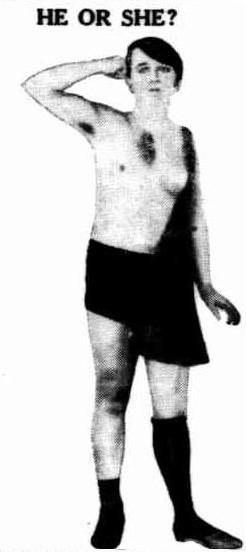
Anna-John Budd, 1938

Visitors to the 1938 Perth Royal Show could expect, as ever, to be both fascinated and repelled by the human freaks on offer in the sideshows.

That year the ‘freaks’ included Mexican Rose, an (unsurprisingly) Mexican lady, alleged to weigh 64 stone (400 kg). According to press reports, Rose had to be lifted off the boat by a crane on arrival in Australia.

Another exhibit was Jang, a 10-year-old from Borneo, who had been collected by jungle explorer and lion hunter Dave Meekin, who made a living out of gathering human curiosities for Royal Shows. Jang was said to have a tail.

Miss Betty Broadbent was a tattooed girl, with ink from her neck to her ankles. She boasted of having 465 designs, including the biggest single piece ever tattooed on anyone on her back: a copy of ‘Madonna and Child’. Her arms and legs were covered with gypsies, Chinese pirates, and across her throat were American eagles surmounting the American flag.

But none of these freaks were as important as the star attraction of sideshows, the ‘half-and-half’. Or hermaphrodite, as we might say today.

In 1938, the dubious honour of being the most sought after freak at the Royal Show was Anna-John Budd. A Canadian, Anna-John had been registered at birth as a girl, went to a girls’ school and it was never suspected she was anything but a girl.

When she was about fourteen her right side increased in size and bone structure, and hair began to grow only on the right side of her body. About the same time she was overcome with a desire to take part in men’s sports, rather than woman’s.

And now as a fully grown person, her left side was purely female, and her right side purely male. If there were any doubters, the public was offered the opportunity to intimately examine Anna-John to prove that this was a genuine medical wonder.

Perth’s police, however, were not so keen on allowing the general public to undertake such examinations, despite Anna-John’s protests that s/he had “always made it a practice to permit nothing indecent to be associated with the act” and that there was “much worse exposure on beaches of Sydney and Brisbane.”

It was also possible, if you desired, to buy postcards of Anna John for (ahem) private enjoyment in the privacy of your own home. HH-John-Anna-A2Today, the most probable explanation for Anna-John’s condition is that he was born a man, took hormones to promote breast growth and shaved the left half of his body. Combined with a specially designed dress and appropriate make-up, this would look convincing to the gawking paying customers.

Even so, it makes the current displays at the Royal Show seem very tame by comparison.

Garden party mayhem

food_fight

Would you like mustard with that?

Unfortunately, the common types at Dodgy Perth don’t get invites to Perth Mayoral garden parties. But in the 1920s, such events were free to any ratepayer who asked for an invitation.

In 1924, hundreds showed up to a gathering held to honour British naval officers visiting WA. The officers were in ceremonial dress, heads of government in suits, and ladies appeared in gorgeous silk evening attire. But most of the crowd were ordinary Perth citizens: tram conductors in uniform just off their shift, mothers with prams, and just about everyone else.

It didn’t go well. As one cynical observer noted, “There may have been enough to eat and drink for everybody. We don’t know.”

The mob didn’t wait to see. It surged towards the supper tables, leaping over chairs and anything else in its way. Rich and poor, businessman and tradie, titled ladies and washerwoman, all ran towards the buffet.

Platters were ruined by having punch spilt over them. One lady’s blouse was nearly torn off in a fight for a bottle of beer. Wine flowed everywhere, not all of it into mouths. The waiters did their best, but they were overwhelmed. It was everyone for themselves, and only the strong prevailed.

The Mayor appealed for calm, but to no effect. The crowd was out of control, and all they wanted was food and drink. Shouts from the back of the crowed to “leave off and give the others their cut!” were ignored. In the scrum, someone managed to get hold of the special champagne intended for the VIPs, and it didn’t last long.

On the outskirts of the scene the British officers looked on. If they found the scene amusing, they were too polite to smile.

Strangely, this was not the first time a mayoral party had descended into chaos. It seems most ended the same way.

The Dodgy Perth team will vote for whichever Lord Mayor promises to reintroduce this great Perth tradition of badly organised garden parties.

Fremantle’s ex-parrot

galah

Pining for the fjords

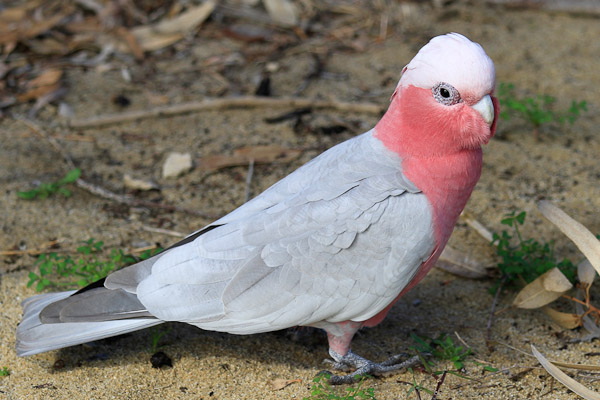
The Dodgy Perth office has never lost a pet galah, so we can’t imagine the pain it must cause when something like that happens. But Freo resident Reginald Freeman knew what it was like in January 1930.

Reg placed adverts in the newspaper, but still his pink and grey galah was missing. Then one day he was passing Emma Matthews’ house in Fremantle and he heard a squawk he recognised. Banging on the door he demanded Emma return his property. But Emma was made of sterner stuff than that. She had owned this particular bird for eighteen months, so it was definitely hers.

After repeatedly harassing Emma at home, the affair ended up at Fremantle Police Court.

The court asked Reg how he knew this galah was his. Which was a fair question. He said he could identify the bird because it had been trained to say “Puss Puss” and “I want a drink”.

The court ordered the parrot be brought forth and it was placed on the magistrate’s bench. However, despite Reg’s best efforts, the stubborn bird refused to talk. He tried over and over again to get it to say “Puss Puss”, but the bird just sat there in silence.

In a final attempt to persuade the magistrate, Reg picked up a tin of water and placed it in front of the bird. The galah kicked it over. That, said Reg, was proof it was his bird. What other bird would kick over its water? “Your evidence is rotten,” he screamed at poor Emma.

The bemused magistrate was not convinced. “I have seen plenty of birds do that”, he said.

Emma got to keep her galah.

Fight of the century. 1954 style.

Steve_Zoranich

Dodgy Perth spent Sunday morning in the pub watching one man hit another man in the head.

Because it was the Inglewood Hotel, this was happening on TV. Unlike our usual local, the Civic, where these kind of events happen in the car park out the back.

Anyway, we digress.

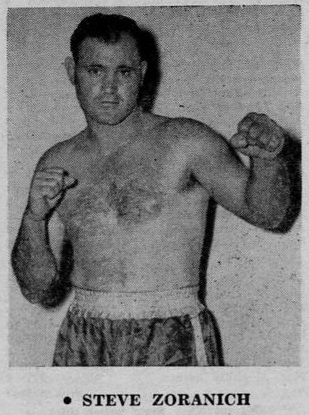
In 1954, the Empire Games (now called the Commonwealth Games) were being held in Vancouver. One of Perth’s star entries was Australian amateur heavyweight boxing champion, Steve Zoranich.

Steve was 25 at the time, having arrived in WA from Croatia at the age of eleven.

The Australian team was to fly to Canada via Hawaii, but for unexplained reasons, at the very last minute Steve was refused a USA visa, required to change planes.

Steve was bewildered: “My opinions have never affected anybody. I have never spoken from a platform, nor stood as a candidate for any Party. I have never appeared in court, nor even been cautioned for political reasons. I can’t understand it.”

He appealed to the American authorities but they refused to change their minds.

The only other way to Canada was via England, but this would have to be entirely at Steve’s own expense.

Fortunately his friends and family immediately started crowdsourcing the necessary money, which was raised amazingly quickly.

Even so, it took Steve nine days and 32,000 km to get to Vancouver, by way of Singapore, Calcutta, Cairo, Rome, London, and Iceland.

He also had no trouble with the Canadian immigration officials, the Americans still having failed to provide a reason for refusing a visa.

We wish that this story ended well, but it doesn’t.

In the first round his English opponent, Brian Harper, floored Zoranich with a solid right cross. Zoranich quickly got up, but before anyone knew what had happened, the referee claimed he had finished the count and the Englishman was declared the winner.

The manager of the Australian boxing team immediately protested, but his objections were waved away by the referee.

If there is a moral to this, it is that not all stories have happy endings. Bring on the next Mayweather-Pacquiao fight, so the right man can win at least once.

An unreliable history of Perth

Foundation_of_Perth

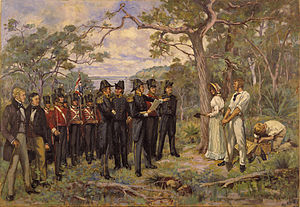
Commemorating the centenary of the founding of Perth, you might imagine people were serious in 1929. You would be wrong:

Forsooth on the 12th day of August in the year of grace one thousand eight hundred and one less than thirty, many good citizens gathered together unto themselves and said, “We must have a city.”

Forthwith they repaired to Governor Stirling, whom they found on his back on the floor of his coach-house endeavouring to repair the differential of his coach and pair.

“We good citizens and true wish to have a city,” they told him.

“The devil you do,” spluttered Stirling as he rose to his feet and adjusted his knee breeches. “Then a city you shall have.”

For the next few days there was great to-do in the new colony. Several good ladies immediately commenced making clothes for the natives in case they desired to attend and drink the King’s health and beer.

At last the great day dawned. The settlers cleaned up their huts and photographers adjusted their easels and paint pots. They came from far and near and further than that and flags flapped and skirts trailed in the dust as the colonists assembled round the Union Jack.

There was a rousing cheer for Governor Stirling as he began to speak: “This city we are founding today,” he said, “is destined to be the capital of a State of great potentialities and possibilities.” (Cheers from the bystanders and groans of “We’ve heard that one before” in the language of the blacks). “Here we will build a city that will one day be great. Along the track where Mrs Jones’ goat goes to call for the paper every morning we will make a street and call it Hay Street.

“Down here we will make Murray Street. From here Harry Boan will sell his third floor specials. Down further we will have Wellington Street, called after the Great Duke. The railway will be right next door. An ideal site this, ladies and gentlemen, for an advertising sign or a fruit barrow, think you not? And let’s have a market here! And a hotel or two.

“Come with me in imagination up this hill to the West. One day people will be able to travel there in trams or Government cars where we now ride in imagination. Here I beg you to tread quietly lest you waken those who will one day sleep there. Here will ambition be born and die, characters be made and lost; this will be Parliament—not the cemetery.

“Out yonder far beyond Harry Boan’s duckpond and Perry’s lane and Ginger’s hansom cab stand we will have a place for the dead. And on festival days and sundry Saturday afternoons the crowds will foregather. And behold their lamentations will be loud and their tears many when they see the dead. This my friends our children and grandchildren will call Ascot.

And forthwith the guests had afternoon tea while the settlers who had not been invited sat on one side and snarled and the natives threw boomerangs at the big sign that had just been erected on the site of the new city: “Eat Bullpup’s biscuits to prevent ingrowing toenails.”

Two men who were unemployed attempted to secure afternoon tea but the police—both of them—turned them away.