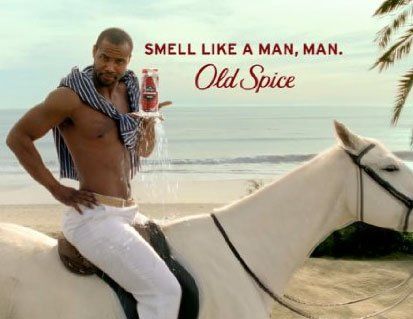
Hello ladies, now look at your man

IsaiahMustafaOldSpicecommercial

How the Dodgy Perth team imagine they look

Do you remember the ads with Isaiah Mustafa proving all you need to become a manly man is deodorant? Well it turns out daily use of Old Spice would stop you getting to first base with Cottesloe stenographer, Gladys Smith.

In 1947, Australian perfume manufacturers tried to open up a new market. Noting that American men used scents, but no Aussie male was, Perth residents were asked how they like a bloke to smell.

Our beautiful Cottesloe stenographer thought that scented soap and hair oil for men was revolting. “Scent”, she firmly declared, “is for women.”

Perhaps her friend, Miss Myers from Nedlands, will appreciate a nice body spray. No. A man who smells of perfume is a “sissy”.

Time to move on. Let’s ask a married woman, Mrs Milford of St Georges Terrace. “When my husband and I went to live in America, we were disgusted to find the men using scented oil on their hair,” she sneered.

Perhaps we should just ask the blokes, rather than the ladies. We can’t imagine Vic Park hairdresser B. N. Bullivant  disapproving. “I do not think scent suits an Australian,” he said. “The average Australian does not buy scented soap unless there is no other.”

And an East Fremantle baker, T. Wilson, just laughed at the idea. Pansies, he said. A scented man is a pansy.

So there you have it folks. Now we just have to update our Ashley Madison profiles to reflect our new non-scented status.

When the freak show came to Perth

Monkey BoySo you thought the Giants were good last weekend? Baby, you don’t even know what entertainment is.

Through the magic of history, let Dodgy Perth transport you back 120 years to show you a good time.

On Hay Street, right where the Kings Hotel now stands (lovely piece of architecture that it is) was once the site of Ye Olde Englishe Fayre. So on a hot December night in 1895, let’s find out what there was to see.

After passing through an elaborately decorated entrance, you would first see the standard fairground stuff: sideshows, refreshment stalls and a stage for a variety performance.

Persuasive attendants would tempt you to part with your money for swinging boats, shooting-galleries, and the inevitable Aunt Sally. Opportunities to lose money on games were everywhere.

But you want real entertainment, don’t you? Not the ordinary fairground paraphernalia.

Let’s pay (again) and enter the first tent. Here you’ll encounter waxworks, including those of Beach and Searle, renowned Australian scullers. Unfortunately, this wax wasn’t made for the Perth summer heat and is beginning to melt a little. Next!

Mummies. Four-thousand year old mummies. They will hold you for a bit.

And if mummies aren’t your cup of tea, how about the body of conjoined twins. That ought to make you stare. And at the two-legged pig right next to them. There were plenty of other freaks to guarantee value for your money.

But the big draw card of Ye Olde Englishe Fayre was Monkey Boy.

Either “a human monstrosity” or a “hideous freak of nature”, he was substantially under a metre tall, and a mere thirteen years old. He looked like a monkey, acted like a monkey, but (shockingly!) could talk to the crowd.

Everyone rushed forwards to touch and manhandle the weird child.

And the papers all agreed that “monkey-faced boy” was the best thing ever to appear in the colony.

Forget your Giants, Perth. They knew what real entertainment was 120 years ago.

Please note that this is an edited re-post of an earlier article. Dodgy Perth has many new followers lately, and the story is so good it’s worth rereading anyway.

Fraudster, bigamist… those are his good points

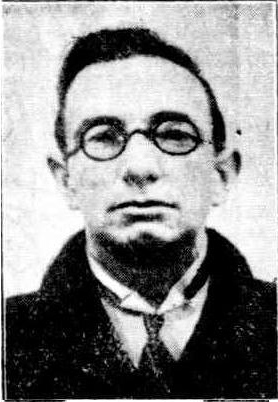
Dr David Stewart in 1938

Dr David Stewart in 1938

We at Dodgy Perth take pride in being just a little bit dodgy ourselves. (But only when no one is looking.)

However, we have a long way to go to catch up with Perth’s dodgiest man: ‘Doctor’ David Stewart, the man with more wives than Henry VIII.

David joined WA’s Department of Agriculture in September 1932, to become their head veterinarian. His praises were quickly sung by the newspapers. He was a genius, a war hero, a “real man’s man”, and Perth was very lucky to have him here.

Around six months into his post he was made to resign. Despite his protestations of innocence, he had been moonlighting as a medical doctor (with forged certificates) calling himself Dr Russell. Apparently faking medical qualifications was not the done thing in the 1930s.

Oh. And his vet degrees were faked too. As were all his references.

Even while working for the Dept of Ag, he had been defrauding a number of local businesses of various goods. And sold all the furniture from the house he was renting.

At the trial, David got two years for forging his certificates.

But this was only a tiny fraction of ‘Doctor’ David Stewart’s life. He was also a bigamist. If bigamist is a big enough word for someone with at least seven wives. (He claimed to not be able to remember how many!)

A few quick dates in the court life of an astoundingly complex character:

  • April 1923: Ipswich, QLD, married a minor
  • April 1923: Brisbane, obtained property under false pretences
  • September 1923: Brisbane, larceny
  • July 1924: Melbourne, larceny to obtain a car
  • December 1924: Melbourne, bigamy
  • July 1933: Perth, forged medical diplomas; got two years, but was released after serving three months
  • March 1938: Melbourne, bigamy

Such was the mess of his life, and the fact that he married and worked under at least nine aliases, no one was able to say how many wives he had or what other crimes he might be wanted for.

We take our hat off to Perth’s dodgiest man.

Fremantle sensual stew… and it’s not a recipe

NewportBack at the time of Federation, neither the Court Hotel nor Connections Nightclub were welcoming gay men. Since it was illegal to be homosexual, no one was supposed to be welcoming gay men.

So if you were gay in 1901, where could you meet other people on the scene?

Turns out the answer is a billiard room in a Fremantle hotel. Dodgy Perth strongly suspects that it was the Newport, then known as the Club Hotel. (Check out the Newport’s Thursday music nights. Coming up next week is Boom Bap Pow as the Divinyls. Which Dodgy Perth is definitely not going to miss.)

Some of WA’s finest citizens were known to go to this billiard room. The kind of elite who could afford the finest clothes, diamond rings, gold watches, and “even eye-glasses”.

It seems that the landlord of the Newport simply let out the room, and turned a blind eye to whatever went on. The local policemen were slipped a few pound notes every now and again and, strange to say, never saw a need to investigate the billiard room’s clientele.

It is even suggested that at least one police inspector and a local magistrate liked to play billiards from time to time.

In fact, had you attended before midnight, all you would have seen were some respectable citizens enjoying a game or two, while sipping a few beers.

But, come midnight, if you were a stranger and seemed likely to be gay, you would have been asked to stay on for “a little game on the quiet.”

After this, we cannot say for certain what occurred, but it must have been good because The Sunday Times described it as a “carrion filth heap of depravity”, a “foul Fremantle sensual stew”, and a “den of disgusting depravity”. Which sounds like a great night out.

So, when Dodgy Perth is at the Newport next Thursday, we will raise a glass (or two) to a generation whose love might not be able to speak its name, but could still find time for a game of after-midnight billiards.

Craigslist, 1834 style.

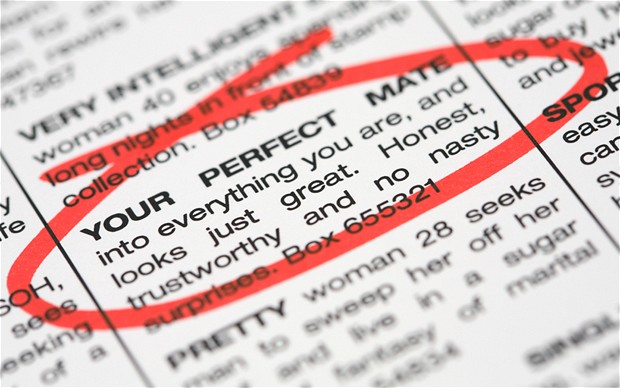
Personals Column Lonely Hearts Advert

Look no further

Now spring is well and truly sprung, a young man’s thoughts turn to things of fancy. To celebrate this, Dodgy Perth presents the 1834 equivalent of Craigslist.

How can you resist him ladies?

TO THE LADIES.

A young man about 22 years of age, without encumbrance, wishes to form a union with a young Lady of about that age, prepossessing in person, and competent to manage the household affairs.

The advertiser feels convinced that neither his person nor circumstances can form any objection to the views of any young lady, he having a comfortable home, together with other advantages too numerous to mention in an advertisement.

Letters to be addressed to I. Z. to be left at the Post Office, Perth.

When drag came to Perth

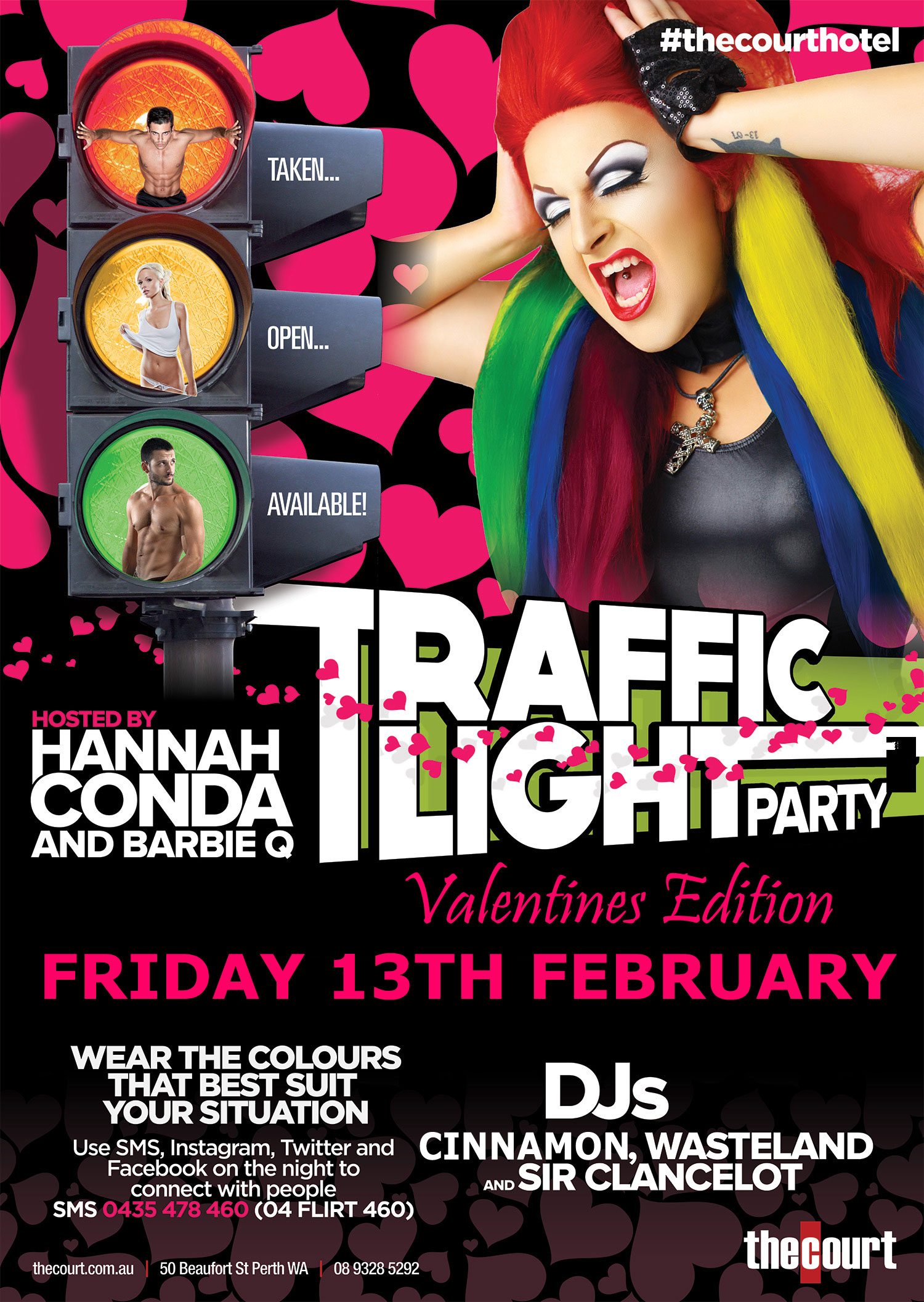
ValentinesIn honour of St Valentine, the Court Hotel is holding one of its (in)famous Traffic Light Parties this evening. If you haven’t been to one before, Dodgy Perth can assure you of a great night out.

The event will be hosted by two of the Court’s regular queens, Hannah Conda and Barbie Q.

Which leads to today’s historical problem: When did drag first come to Perth?

It is impossible to know who was the first local man to dress in women’s clothes, since appearing in public meant almost certain arrest. As happened to South Belmont resident Richard Moyes in 1949. Richard was only spared jail by agreeing to see a psychiatrist.

Stewart Hobbs of East Cannington was not so lucky the following year, when he was sentenced to fourteen days for wearing a dress.

But men will be men (or women in this case), and in 1953 The Mirror was shocked to discover that suburban houses were hosting Drag Nights.

Because the innocent readers of The Mirror wouldn’t have a clue about the jargon of “the effeminates”, the newspaper helpfully defined ‘drag’. It meant having an elaborate wig, painted and rouged face, expensive frock and dainty underwear, brassiere with padding, silk stockings and high heeled shoes.

Sounds about right to us.

The paper had been tipped off by a man who ‘accidentally’ (yeah, right) attended one of these drag nights.

All the guests were men, and there was plenty of hard liquor and hot jazz and dancing. Especially dancing.

Most regrettable of all was that the queens were intelligent men, who held respectable jobs during the day.

The Mirror’s informant fled when one of the ‘synthetic sirens’ asked: “Have a dance with me please, darling.” So, unfortunately, the reader is unable to discover exactly what kind of debauchery took place later that evening.

However, the paper suggested that it might have involved a mock religious marriage ceremony. Or it might not, since no one saw anything of the sort.

Jazz. Dancing. Liquor. Drag queens. In Perth? Where was the strong arm of the law to sort things out?

And especially important, where was our invite?

Trouble in an Inglewood paradise

Risque-Edwardian-lady

This was once considered porn. Seriously.

Today’s Dodgy Perth deals with a delicate story. As a consequence, we will use first names only. The protagonists are certainly deceased, but we wish to minimise the chance of young descendants stumbling across Great Grandma in this particular setting while researching family history for a school project.

Let us introduce Violet and Geoffrey . She grew up in North Perth and he in Inglewood. Both were born around the time of World War I.

Geoff was tall, broad-shouldered, olive-skinned, wavy-haired, and mustachioed. Looking every inch like a sportsman, he cut a handsome figure in his natty, gold-braided Flying Squadron blazer.

Violet was dainty, but extremely pretty with her raven black hair and noticeably high heels.

Their parents must have been delighted when the young couple met, fell in love, and married in 1940. It seems likely that the pair moved in with Geoff’s mother in Crawford Road, directly opposite Inglewood Primary School. (The house still stands, not looking at all like a home for what follows.)

Her parents were probably less than ecstatic when the following year Geoff was convicted of theft. Oh well. Newlyweds always have a few problems at first. But the problems kept coming for poor Violet.

It turned out the Geoff had a bit of a thing for laying her across his knee and spanking her bare bottom. Perhaps she could have lived with this if it wasn’t for Geoff’s habit of collecting pictures of men and women in (let us say) unusual poses and demanding that Violet act out the scenes with him.

No matter how many times she burned his stash of photographs, Geoff always seemed to be able to find more. When Violet finally cracked and threatened to take the porn stash to the police, Geoff blackmailed her by claiming he had taken photos of her sleeping. If she said anything, these would find their way into the public gaze.

In the divorce court in 1943, Geoff got a chance to put his side of the story. “I am not a sexual pervert”, he protested. “Every time we went to bed I was always too tired and wanted to go to sleep.”

In any case, Violet was difficult to live with, he claimed, alleging that his petite wife had hurled a heavy engineer’s hammer at his head, and made him beg on his knees just to get his trousers mended.

No one believed him, and maintenance was fixed at £2 10s a week.

An unfortunate marriage

early-perth

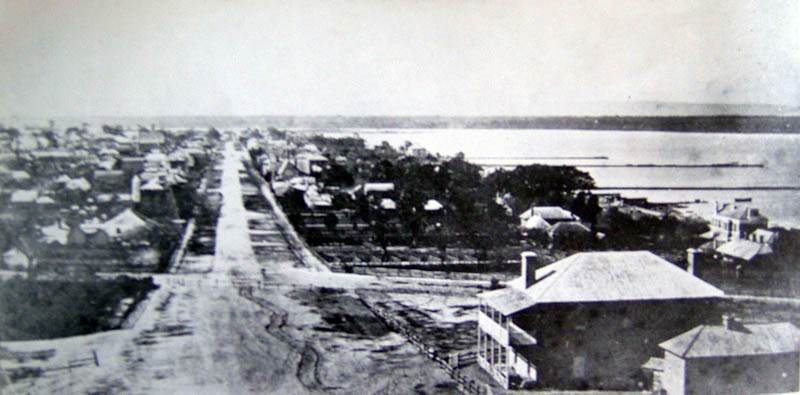
Early Perth, looking all black and white

Keziah Lockyer was not a woman to meddle with. She had arrived in Perth with hubby Paul and their many children in early 1830. Keziah had to finance the trip herself, since Paul was broke and, it turns out, feckless.

The worthless husband immediately abandoned his family and took up his favourite hobby: drinking. Mostly in the Sailor Jim Inn at Fremantle.

For the next two years he kept up the boozing and saw nothing of his family. Worse, his grog was bought by selling the few clothes the family owned. Eventually, Paul cruelly announced he no longer needed to be troubled by a wife and children at all.

Keziah’s daughter Eliza struck lucky when she married William Nairne Clark, a lawyer and journalist, while Keziah sought comfort in the bed of her employer, William Temple Graham. These two men had once been friends, but had fallen out. Unfortunately, Clark befriended his drunken father-in-law and the two schemed to embarrass their mutual enemies.

In March 1838, they placed an advert in the paper:

Caution

Paul Lockyer hereby intimates, that he will not be responsible for any debts contracted by his wife, Keziah Lockyer, who resides with Mr W. T. Graham.

How they must have chuckled. But they had underestimated Keziah. She got mad. And she got even.

The following week, a large advert declared: “Paul Lockyer ought to have stated that I have not resided with him since 1832, previous to which he deserted me and my children, as is well known”.

Paul is well aware I never had any debts for which he was troubled; he would do well to think of his own.

Paul is requested to pay the cash borrowed from me since he deserted me; also the doctor’s bill for the cure of his dislocated shoulder (got in a drunken brawl) under which he lay thirty weeks at Mr Graham’s expense.

Dodgy Perth wish we could say her story ends well. It doesn’t. Her employer-lover sought his own revenge by seducing Eliza, the wife of his mortal enemy. Naturally, this did not go down well with Keziah. While Graham was sneakily at Eliza’s house, Keziah arrived in a fury. “You old villain,” she screamed, “you have had enough of me, and now you want to make a whore of my daughter.”

Unfortunately, Keziah had now embarrassed one of Perth’s leading citizens, so was told to leave on the first available ship and never return. On 6 May 1839, Keziah arrived in Tasmania to begin a new life, and vanishes from our view.

Light of my life

slwa_b3799995_12The question that has long puzzled historians is: what did people do in the evenings before Twitter, Facebook and My Kitchen Rules?

Now the crack team of researchers at Dodgy Perth has uncovered the truth: our forefathers entertained themselves by going out for the night and looking at advertising signs. Seriously.

You can just imagine the conversation:

“Darling, television won’t come to Perth for another thirty years. How about you and me go check out some neon signage?”

“Oh Micky, you old romantic. I’ll get my coat.”

But it is all true.

City and Suburban Billposting Co were sign writers, originally based in King Street, but who relocated to a brand new Art Deco building in Hay Street in July 1928 (pictured above).

The following year, the company acquired the rights to manufacture a brand new invention: neon lighting. This, as any aficionado of film noir knows, was to radically change the commercial streetscape forever.

A subsidiary was formed—Rainbow-Neon Light Co—to manufacture and sell the novel product. Their headquarters, 383 Hay Street, was consequently the first ever building in Perth to have neon lighting installed on it.

The words Scanlan’s Rainbow Signs were written in green, blue, red, yellow and white. And the brightly coloured sign drew a large crowd to the spot to see this novelty. It was advertised (yes, the advert was advertised!) as being available for view between 8pm and 10pm each night.

Not only did the crowds flock in response, but the press raved about this new way of advertising, claiming that Perth was now the rival of Broadway in terms of modernity.

Perth firms rushed to install the new lights, because no one wanted to seem old fashioned with simply painted signs. If your hotel, say, had Rainbow-Neon lights outside, you were proclaiming exactly how up-to-date you were.

The magnificent Art Deco building above is currently for sale, and the irrepressible Dallas Robertson (aka Museum of Perth) is fighting to ensure the façade is saved for future generations to know where their ancestors once spent the evening staring at advertising signage. Because they were bored. Or something.

Check out the Museum of Perth Facebook page and lend your support to the campaign before it’s too late.

Dirty, dirty perverts

oil-stainIn the early 1950s Melbourne was plagued by a pervert who enjoyed spraying people’s coats with some kind of disgusting heavy, greasy substance. He attacked on crowded trains, stations, buses and busy streets, but was never identified.

The creep had more than eighty victims! Every description of the offender was different. They were old. They were young. They were fat. They were thin. They were blonde. They had dark hair. They were a man. They were a woman.

Eventually it was thought they used a different disguise every time they went out on the prowl.

In Perth, there was one reported victim in May 1952. Jan Banachoski was a customer at the GPO in the city centre when he was attacked. However, nothing more seemed to come of it.

Suddenly in March 1953, the Melbourne sprayer appeared to have moved to Perth more permanently. Although no one really knew if it was just a copycat, or the original crank had actually relocated.

At one suburban hotel, four customers—who were who were unaware of anything amiss at the time, later found the backs of their coats daubed with something unidentifiable, but vile.

Even the cleaners who tried to repair the damage didn’t know if it would be possible to remove the oil.

All the victims were drinking at the bar when the sprayer struck, so quietly that he wasn’t spotted by anyone.

By August 1953, people in Adelaide were being attacked in a similar manner. And the media went hysterical over it.

As far as Dodgy Perth knows, no one was ever caught for this nationwide phenomenon, which makes it all the more mysterious.