
This paper would rather see a female relative dead than married to a Chinaman. And the general sense of the community is the same.
Sunday Times editorial, 21 April 1907

Sunday Times editorial, 21 April 1907
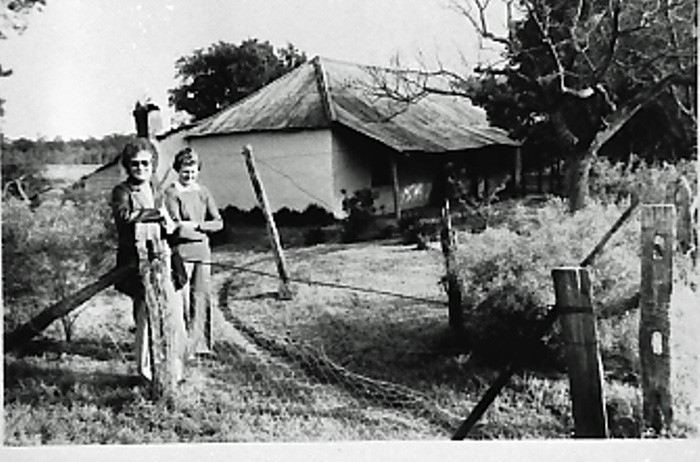 We’ve all been there. Had a few too many at the Sunday Session and then barged into a church and made a complete tit of ourselves in front of the whole congregation.
You haven’t? Just me and James Cockman then.
Above is Cockman House in Wanneroo. You don’t really need a reason to visit, but I’ll give you one anyway: to pay homage to the drunk colossus who maddened Perth Chapel.
James was born in London in 1809, and arrived in Perth just a few months after the start of the Colony.
A giant who weighed 140kg, he was renowned for his enormous strength. He worked as a labourer on some of the grandest buildings in Perth, including St George’s Cathedral, Government House and the Barracks.
James found himself in trouble with Perth’s governing classes when he was a little worse for wear and staggered into Perth Chapel one Sunday evening in April 1838. I like to imagine him singing loudly as he tripped down the aisle before abusing the preacher.
In any case, his raucous behaviour didn’t go down well, and he was forced to issue an abject apology:
I, the Undersigned, having on Sunday evening last entered the Perth Chapel in a state of intoxication and interrupted the Service, and thereby made myself liable to a very heavy penalty, hereby offer this public apology for my conduct, and likewise pledge myself never again to cause any interruption or disturbance, the Proprietors of the said Chapel having kindly consented to withdraw the proceedings they had entered into against me.
It seems unlikely that this was written by James himself since this public confession was signed with a simple ‘X’, showing he was completely illiterate. More probable is that it was written by a worshiper and James was forced to make his mark at the bottom to escape prosecution.
Although James was not the only person who had upset the congregation recently, the leading members of the colony declared he would be the very last to escape trial.
In the 1850s, he took his wife and seven children up to Lake Joondalup where he built Cockman House. When you visit, remember to have a drink at The Wanneroo Tavern in his memory.
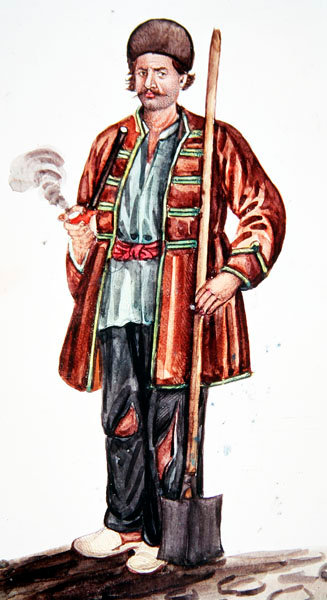 Today’s story concerns Northam resident, Abdallah Mahomet, who was living there in 1849. Abdallah was a Persian (modern day Iranian), who worked as a farm labourer.
But poor Abdallah never had any luck.
He started saving in 1841, only to have all his possessions (and £27 in cash) destroyed in a fire in 1845. A man of stoic character, he resolved to start again.
He built up a small farm, but in 1847 his three cows and heifer calf were stolen.
Did Abdallah give up? No! He cheerily said to himself “He who has not got cannot lose”, and started over once again.
But 1849 turned out to be a particularly bad year. Abdallah was slandered by a man called Hookham John, who claimed that Mr Mahomet was bankrupt and owed him money. The legal fees to set the record straight cost him a fortune.
And now comes the truly pathetic part. A woman (whom he bitterly refers to by the name of ‘Money’) came to his home and promised to be his wife.
Falling instantly in love, Abdallah bought her dresses, shawls, silk handkerchiefs, and the like.
But ‘Money’ was not faithful. Here we’ll let Abdallah tell his own story:
‘Money’ is flashing about with my property, bought with my money, on condition that she became my wife and made me a comfortable home. ‘Money’ has run away with my property, even to my very blankets!
I have spent, besides £29 on other goods, fruits, wines, etc., which she ought to return as they do not belong to her.
I reckon my loss altogether at £74, all through you, which is a great loss for a labouring man, and all is lost by cheating and roguery.
Not only that, but by spending so much time chasing after the floozy, Abdallah lost his job on the farm at Northam.
“I have lost 1849,” he sobbed. “I hope I shall not lose 1850.”
Abdallah relocated to Geraldton, where he ran a small market garden and where he drank himself to death in 1880.
I will allow the reader to draw their own moral from this sad tale. Although becoming disillusioned with love forever would be the most reasonable response.

With love, from me to you
The first posties in Western Australia were the colonists themselves, but they quickly priced themselves out of the market. So the Government decided to turn to a cheaper option.
Since Rottnest Island was a harsh prison for Aborigines, it was from here the new posties were ‘recruited’. In exchange for basic rations, sometimes just a handful of flour, Indigenous men were forced to carry the mail all over WA.
Failure to fulfill any part of the ‘bargain’ would mean an instant return to the hell that was Rotto.
So from October 1848, a new (almost free) postal service was in place. The lucky ‘employees’ had to walk with a hefty bag from Perth to Mandurah, or Mandurah to Bunbury, or Bunbury to Busselton. They could easily rack up more than 200 km a week.
Unsurprisingly, some Aboriginal posties became injured through exertion, alarming the Government who wanted no interruption to their bargain-priced mail service.
As the number of leg injuries continued to rise, one kind soul suggested the posties be given ponies to ride. Fortunately, colonists were not heartless. Letters poured into newspapers protesting this proposed scheme.
How dare we think of doing that to the poor animals? Anyone familiar with brutish natives would know they would mistreat the poor ponies! Far better to break a few Aborigines, than one four-legged friend should be put at risk.
So the posties were forced to keep up the long walks, for no pay. The only reward being to keep out of Rottnest Prison.
Eventually mail bags became so heavy, the posties couldn’t lift them any more, so good white folk once again took over.
Naturally, they used a horse and carriage. Any other way would be unthinkable.
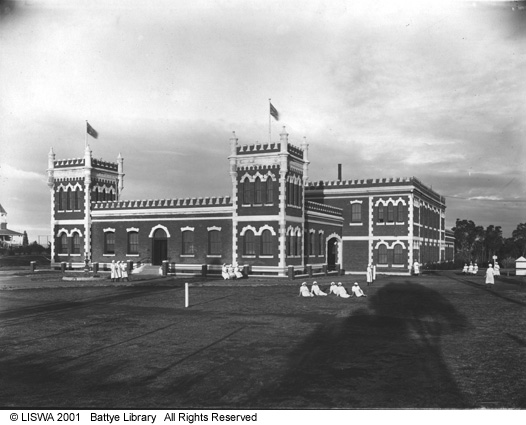 There is a tendency in Western Australia to assume that if someone is famous, they must have done something good in their lives. So whatever else Alan Bond may have done, no matter who he screwed over, at least he painted a red dingo sign.
Only he didn’t. Just another part of the Bond self-myth-making process.
So look at the building above, which is on Guildford Road. You probably know it as the Albany Bell Castle, and might know its links with the chain of Albany Bell Tea Rooms.
And here is Mr Albany Bell (1871-1957):
 If you read the Australian Dictionary of Biography entry on him, you will find that he was an upstanding Christian gentleman ruined by misused power of the evil unions.
Even the normally ever-reliable Richard Offen tells how Bell was wonderful philanthropist to his employees, who must all have loved him.
What a saintly man.
Bollocks, was he!
Albany Bell was a crook who tried to rip off each and every employee he ever had, and when he was finally brought to book dumped his café chain in a fit of pique.
He illegally refused sick pay to waitresses working in his tea rooms who were forced to take a day off due to illness. He also declined to pay the overtime for the staff he forced to work extra hours to fill in for their absent colleagues.
 It was only after the waitresses had finally had enough and became militant (not to mention the intervention of a union and the threat of court action), that he finally promised to make good a fraction of the money he had cheated out of them.
And this is before we get into the fact that he adulterated the milk he sold, just to increase his profits.
Just the kind of gentleman who deserves celebrating then. Especially by the Style Council, who wax lyrical in their history of the Castle about Albany Bell’s spiritual values and his “Christianising the natives”.
Thank goodness Dodgy Perth is here to put the record straight on this hypocritical cheat.

In the 1910s and ’20s, the bus service between Perth and Fremantle was like going to the Colosseum to watch gladiators in action.
A number of bus companies were competing for the available passengers. Besides being able to steer a bus, drivers had to be tacticians with nerves of steel. There was no timetable, just cutthroat competition.
Buses would race like mad, sometimes two abreast, in order to arrive first at a bus stop. It was not unknown for two drivers disputing who was where first to leave their seats and swing wild punches at each other.
At the start of the run—Short Street, Fremantle—drivers fought to get a good position from the off. Often they would take the bus down at 3 a.m. and get a few hours’ sleep on one of the benches. If a driver were not awake on time, however, he would find himself out of position before he had started.
But one thing could bring the bus companies together: the threat of an independent driver trying muscle in on their turf. The companies, while despising each other, were always willing to gang up on an outsider.
One entrepreneur took up a position on the Short Street rank, and was unsurprised to find it quite busy. The bus in front was practically touching his engine, while the one behind him, from a different company, was even closer.
However, this wouldn’t matter since all he had to do was wait until the vehicle in front filled up and left the rank, and then it would be his turn.
However, things did not turn out that way. He remained jammed for hours, until he agreed to leave and never return.
The two companies had agreed to tie up one bus each for the day, simply to eliminate a potential rival.
How lucky we are to live in Perth in 2015 where it is unimaginable that a duopoly could to conspire to price groceries and petrol to squeeze out rivals. Unimaginable, I say.
Back from Bali. Missing the poolside Bintangs already.
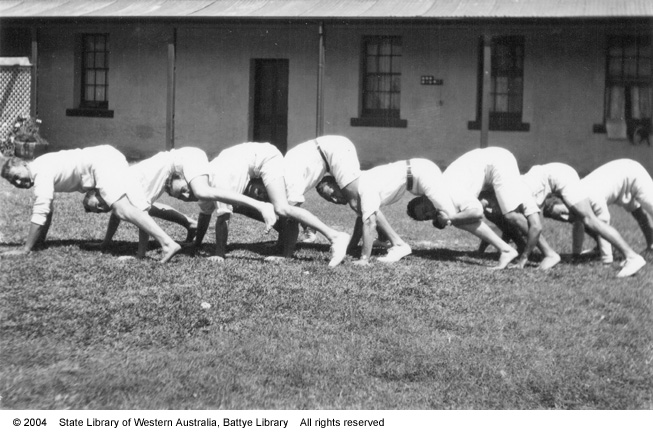
To compensate, Dodgy Perth offers happy images of holiday makers on Rotto in 1924.
If this was 1920s charades, I’m thinking ‘Human Centipede’. No?
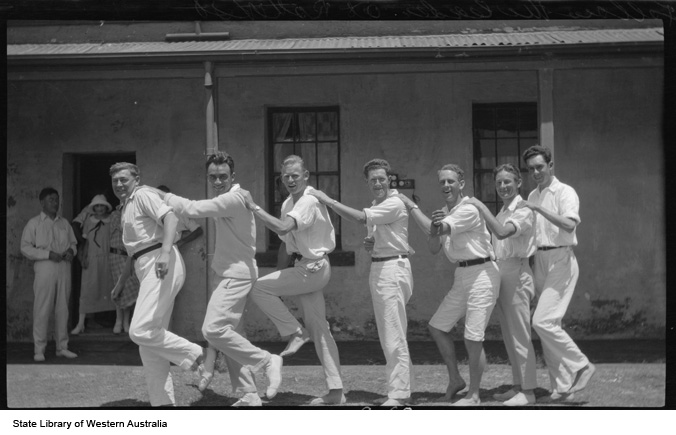

 As Dodgy Perth prepares to leave for Bali this afternoon, and enjoy continuous Bintangs by the pool, it seems appropriate to abandon you for a week with this cheery alcohol-related story.
In the early 1950s, a chicken by the improbable name of Georgina Thigwell Johnston was living at the Ship Hotel in Busselton.
(If you want to be accurate, it wasn’t just a chicken. It was a white leghorn. But, anyway, back to the story.)
Each night Georgina Thigwell Johnston sat on the bar counter and had a glass of draught beer. Hopefully Emu Bitter, but I cannot be sure of this.
The cook of the hotel had a £5 bet that she could raise Georgina Thigwell Johnston exclusively on a diet of beer. Which is, to be honest, my kind of diet.
If the reports are to be believed, the boozed-up chicken was demonstrating the benefits of her unusual meals and was the largest of all the hens in the hotel yard.
Mind you, Georgina Thigwell Johnston kept aloof from the other fowls and slept alone in a special box. So either she felt she was better than the other chickens. Or the other hens didn’t like the boring stories she would tell when under the influence.

Forget the fact that World War was imminent. In August 1939 only one subject preoccupied the good people of Perth: stray dogs.
It all kicked off with a short letter from a Subiaco truckie who signed himself ‘Anti-Pest’:
Is there no authority to control dogs on roads? As a truck driver I am continuously harassed by the pests which infest suburban streets, and I never miss an opportunity of running over and destroying a stray. What about other drivers joining me in a clean-up?
You can image the howls of outrage from the canine fans. And boy, did they howl.
Anti-Pest was described as a ‘cruel devil’ and a ‘dirty brute’. A Mt Lawley correspondent threatened to simply put him in Karrakatta. While a Perth writer was more specific, offering to attach the truckie’s neck to a tree with a stout rope.
Another dog lover was a little more forgiving, simply promising to “playfully” run over Anti-Pest with his own truck a few times.
Although one truckie meekly tried to offer some support to his colleague, the message came through loud and clear: don’t mess with the crazy dog ladies.

One member of the redheaded league
Gentlemen prefer blondes, but they marry brunettes. Quite what they do with redheads is unclear. But in a world exclusive, Dodgy Perth can reveal the upside to dating a bluey. They won’t leave you. Ever.
In keeping with the high standards of journalism of the day, in 1938 The Mirror posed questions of world importance:
Is the colour of a man’s hair any guide to his faithfulness as a husband? Would Perth girls prefer to marry red-headed men rather than dark or fair men? And are red-headed women as faithful as red-haired men?
For answers, they turned to a well-known city divorce lawyer:
I suppose I can say that during the 30-odd years I have been in and out of the divorce court, I only remember one redheaded man being sued for divorce. His trouble was not unfaithfulness, but drink. I can’t recall any others.
And what about the fair sex?
I can’t say the same for them. I’ve seen quite a number of red-haired women in the divorce court. Strangely enough, too, they’re usually fine lookers. But, for the number there are, a good percentage of them seem to find it hard to stick to their husbands.
Oh dear. But please go on, Mr lawyer.
In Kalgoorlie was a barmaid at one of the hotels who was everyone’s sweetheart and nobody’s bride. She was co-re in more divorce cases than anyone else I know.
So there you are. So, before you go out on a second date, make sure his hair is red. And before you marry, make sure her’s isn’t.

Beautiful, but unfaithful. Allegedly.
 Dodgy Perth