I’ll be in the biergarten if you need me

So I was listening to 6PR this morning. (Don’t judge. They had me on the other day to talk about what a brilliant historian I am, so some quality listening time was owing.)

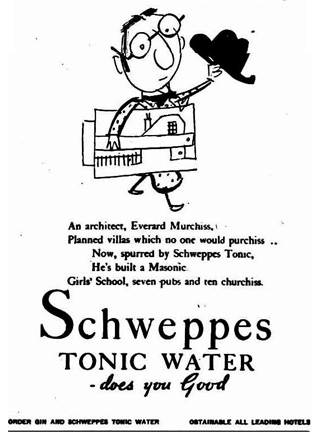
Anyway, speaking this morning was some head honcho of whatever company now owns the Raffles. He was claiming that it had the first beer garden in Australia.

Whenever anyone claims that they have the ‘first’ something, my historian spider-sense tingles and tells me that it almost certainly marketing BS.

And I was right. However, in this case it was 1937 marketing BS, to promote the Hotel Raffles’ new biergarten. But it was a lie then, and it remains a lie now. Even the Style Council’s heritage assessment of the Raffles only makes that claim it was the first beer garden in Perth.

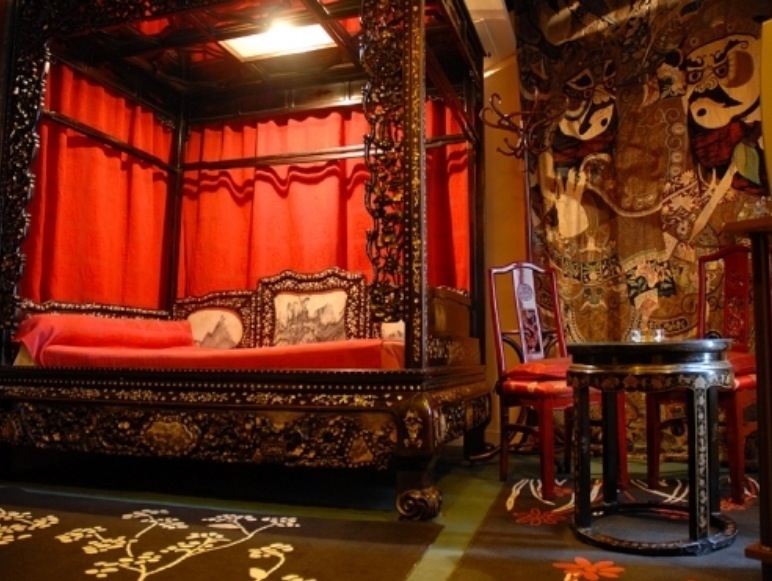
And, for once, the Style Council is right. The first beer garden in WA, and perhaps Australia, was in Wiluna, in the attractive Weeloona Hotel pictured above, as well as another pub in the town, the Commercial Hotel. Both predate the one at Canning Bridge by a couple of years.

The two pubs had their grounds grassed, and planted creepers, shrubs and flowers. Both allowed an area for an orchestra to perform.

But who would be able to resist the Weeloona’s star attraction? A kurrajong tree transported more than 50km to its new garden home.

Bottoms up everyone!

Barracking for the wrong building

The Barrack Arch revealed in all its glory

The Barracks Arch revealed in all its wonderful glory

You probably like Barracks Arch. You may even have seen pictures of the old barracks and mourned their almost total demolition. Well Dodgy Perth is here to cheer you up by showing that not everything old is always great.

We’ll start by noting that their erection was a complete cock-up, from start to finish. Like all government projects, it was totally mismanaged. Work started in 1862, but took many, many years to finish. This was typical of state projects at the time, and was the same for the Town Hall and Government House.

It also ruined the builder, William Halliday. He had put in the lowest tender, but the architect, Richard Roach Jewell, and the clerk of work, James Manning, were concerned he had underquoted. Halliday told them not to worry, he had made no errors. But he had. Somehow he was out on the number of bricks by several million. Although he completed the contract, the mistake forced his company into bankruptcy.

During the building process, one worker died after falling into a deep well being dug. And the local residents complained that the powder store was erected far too close to their homes for comfort.

Anyway, the Barracks were finally finished, and so we come to the heritage part of the story. When Parliament was built, the old building stood in the way of a decent view from the approach along the Terrace.

The Barracks had not aged well. and in 1902 a civil engineer really dissed them:

The main approach to the site is at present masked by that grim-looking structure known as the Barracks, and this will ultimately have to be dismantled to display the full front view of the new Parliament Building.

However, for one reason or another the grim structure stayed where it was. So a generation later, when more additions were made to Parliament, the subject came up again. Alfred Wright, president of the Institute of Architects, had this to say in 1933:

The Barracks has no pretensions to architectural merit. Although their venerable appearance imbues them with a certain appeal, they would have to disappear when the completion of Parliament House was proceeded with.

Wright was no ultra-modernist, he was in love with the Town Hall, the Museum, and St George’s Cathedral. Hardly, then, someone who hated heritage. Just an architect prepared to give his honest opinion on an aging building with little merit.

In the end of course, the arch stayed while the rest was demolished. This kind of half-arsed conservation has no place at all. Either admit the whole building had to go, or defend the entire structure. Leaving small bits (see the awful St George’s Hall façade) is tokenism without offering anything for the community.

So, should we finish the job?

Bodgies and widgies, leatheries and teddy boys

Helena has kindly lent me The Gap: A Book to Bridge the Dangerous Years.

A terrifying account of how in 1962, Perth’s parents had caused teenage delinquency to spiral out of control, and how the world would probably end because mothers were working and fathers were enjoying a pint in the pub.

Firstly, just admire Paul Rigby’s fine portrayal of the Narrows and Perth skyline.

Then, to whet your appetite for a short series of how people born in the 1940s were never going to grow up to be responsible adults (are you listening mum?), a quick taster:

In the office of Inspector C. E. Lamb at CIB headquarters, Perth, is a big box which could well be labelled “Remember.”

For in a mute, concentrated form it represents the highwater mark of juvenile delinquency as it loomed in this city three years ago.

That box and its contents are kept as a constant reminder of what was, and what could be again.

It is packed with a firm collection of in-fighting weapons.

Zip guns, flick knives, knuckle dusters, slashing dress rings, honed bicycle chains, timing chains, coshes… they are all there.

They were taken from bodgies and widgies, from leatheries and teddy boys, from plain larrikins.

I think of you as a dear little thing

Mo

If you need a refresher on Mr Venn, it is here.

Henry Whittall Venn spent most of the rest of the evening on the back verandah praying that Eve would return. She did not.

They met on a few subsequent occasions, but each time Eve was surrounded by friends and Venn was unable to get her alone. How he hated those other women. If only she would consent to walk with him, he could kiss her and show her the real man behind the cold, sneering façade. She did not consent.

Yet, almost amazingly, his relentless (if gauche) pursuit of Eve finally brought success. Of a sort.

Eve and Mr Eve—for so it will be useful to call him—were due to set sail from Albany to Melbourne, before heading off to Europe for a long vacation.

From Albany, Eve sent a note to Venn which he took as a sign of her affection. We don’t have a copy of this letter, so it is unclear if it was merely polite, or she had genuinely fallen in love with him.

What we do know is that she invited him to write down his feelings for her.

It is telling, however, that she failed to include any contact details for her trip, and he had to plead for addresses. Could this have been a sign that she wasn’t that in to him?

Continue reading →

A dangerous habit

Bronx_(cocktail)

In 1938, a savage drug was menacing Perth. The side effects were terrifying:

Within a minute or two after taking on an empty stomach, sensations of the most pronounced kind occurred. The partaker became exhilarated, light-headed, bright and talkative, their face was flushed, their pupils dilated, heart and respiration both quickened.

Under the influence, you would become giddy and ungainly with wild involuntary movements. Finally, the drug could so excite the central nervous system it would produce epileptic convulsions.

With dangers like that, it was difficult to understand why Perth’s fashionable set kept drinking cocktails.

Yes, that’s right. The scourge sweeping Western Australia in 1938 was a cocktail on a weekday after work.

Continue reading →

Free and easy on the buses

So, taxi drivers are complaining about Uber. A century ago, they were complaining about these new-fangled motor buses. Nothing ever changes, does it?

On the first Saturday that a motor bus tried to take passengers to the races from the rank in St. George’s Terrace there was almost a riot. Angry cab drivers gathered round and shouted threats and curses. Anybody who attempted to enter the bus was vigorously hooted. Nevertheless the bus got a load and made a successful trip to the races and back.

On the Belmont run, ‘when knighthood was in flower,’ it was the custom when the bus was overcrowded for a lady to rise and let a gentleman occupy her seat; she would then sit on his knee. Free and easy were the conditions of those days.

Continue reading →

Missionary position?

So how do you imagine the inside of a 1920s brothel on Roe Street?

Like the above, perhaps? Not even close.

Fortunately, we don’t have to guess, because Paul Hasluck once accompanied the police on their rounds and described the interiors:

Beyond the door we walked down a passageway to a sitting-room—very like the sitting-room of a Methodist parsonage with a green baize tablecloth on a dining-table with a lace doily in the centre and a vase of listless leaves and china ornaments of shepherdesses and dogs on the mantelpiece. In one of the smaller places, obviously not a Methodist, there was a cheap coloured print of the Madonna with uplifted face.

One empty bedroom shown to us was very much like the sort of bedroom the spinster sister of the Methodist minister might have slept in by herself, with a bass bedstead, a white quilt with tassels, and a china toilet set in the willow pattern.

Apparently Josie Villa was a little livelier, with brighter lights, bolder pictures and a piano. The girls there were more animated with thinner dresses, and tidier hair and makeup compared to the other brothels on the Rue de Roe.

The above quotation comes from the incomparable Selling Sex by Raelene Frances. The complete guide to everything you ever wanted to know about the history of prostitution in Australia but were afraid to ask.

What cold hands you have, my dear

A quick refresher.

Henry Whittall Venn was a pompous, portly windbag with a huge moustache. After being sacked by Forrest, he passed his final years at Dardanup where he died of heart disease on 8 March 1908.

End of refresher.

Venn is remembered for two things: trebling the mileage of the government railways, and having been an aging lothario.

Guess which one Dodgy Perth is going to celebrate?

At some point, probably early 1901, Venn was at a party when he met a young, but married, actress. We don’t know her name, which is a pity, so I’m going to call her Eve. She needs to be called something.

Since he was 56 summers old, you would think that Venn would know better than to act like a giddy teenager and believe in love at first sight. But that’s precisely what he did.

However, it had been a long, long time since he had been courting young ladies—in fact, he had been married for nearly three decades.

Continue reading →