The first decent coffee in Perth

Site of the Devonshire Arms Hotel

Site of the Devonshire Arms Hotel

Here in the Dodgy Perth office we have blood type Coffee+. So it’s no surprise we’re excited to hear about the impending launch of a café dedicated to Perth’s first ever bean roaster, Mr Henry Saw.

But in 1852, Henry only sold the roasted beans. He didn’t actually make any coffee. Which for the lazy types in our office is no use at all.

So, the question we asked ourselves was: where was the first decent coffee shop in Perth?

Surprisingly, there wasn’t one until October 1883, when Mrs Woods became manager of the ‘Burnett Coffee Rooms’ in the former Devonshire Arms Hotel. This was on the corner of Hay and Barrack, where the Connor-Quinlan building now stands, currently best known as the home of pen retailer, T. Sharp.

It was no coincidence that a former pub was converted to a coffee palace. This was one of the heights of the temperance movement, and anything that could stop working men drinking was considered a good thing.

Matthew Burnett was a controversial temperance enthusiast. His critics said he was a con man, who got other people to build coffee shops for him in the name of religion, without him having to pay a cent. His followers thought him the man to save Australia from the demon drink.

In either case, Mattie has the honour of opening the first decent coffee shop in Perth.

Mmmm… coffee.

(Racially) pure football

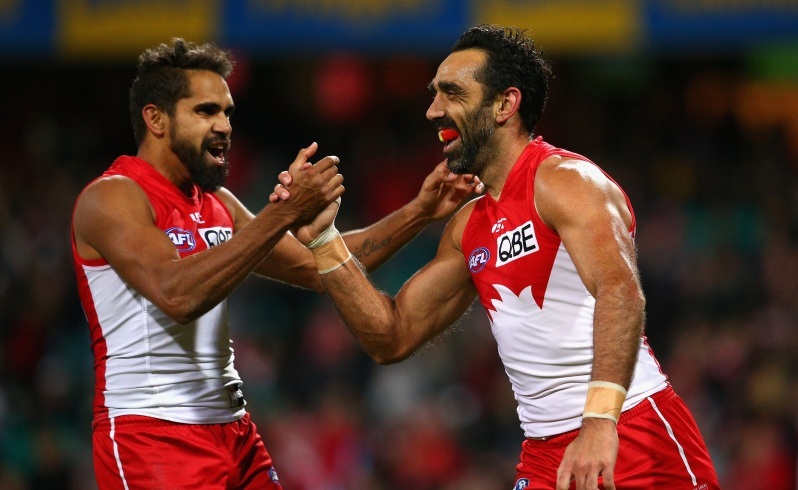
AFL Rd 14 - Sydney v Port Adelaide

Why is there a controversy over West Coast fans booing an Aboriginal player at Subiaco Oval? We know it wasn’t racist, because that kind of thing doesn’t go on anymore in Western Australia.

So let’s look back to a time when football was an even kinder, gentler, more tolerant sport. In this case, in the South West in 1910.

Jack Johnson had just defeated Jim Jefferies in one of the most important boxing matches in history, making Johnson the first black heavyweight champion of the world. The victor, by the way, was vilified in his native America from coast to coast for the impudence of beating a white man.

When news of this momentous triumph reached Western Australia, every pub was alive with debates about which was really the best sporting race: black or white.

Footballers living around Busselton did not wish to experiment with this debate on the field, so as a consequence announced that no local teams could include Aborigines, nor would they play a team which did.

A handful of brave footballers, probably mindful that some of the Aborigines were among their best players, refused to play until the race bar was lifted. As it happens, one of the best players in the area was Coolbung, who also worked alongside the white players in the bush.

And so it was that the Busselton team took to the field in August 1910 minus two or three of their best men, determined that racial purity should triumph over merely winning a game.

It’s easy to see we have moved on from then. Except, it seems, at Subiaco Oval.

When blacking up was controversial

Young Australia League under construction, 1924

Young Australia League under construction, 1924

Above is the Young Australia League building on Murray Street. The Dodgy Perth team remembers it as a place to drinking absinthe cocktails during Goth nights there some years back. Not that we remember much after the fourth such beverage.

Founded in 1905 by ‘Boss’ Simons, the YAL was intended to promote patriotism, health and education among young Western Australians. So far, so good.

Before we continue, Dodgy Perth warns readers that the following contains racially charged language. Still here? Then we’ll continue.

For several decades, to raise money for the League, the boys would tour WA with a ‘nigger minstrel show’. In other words, they would do blackface and perform humorous sketches and songs. In other words, they mocked African Americans. To use their words, they did ‘clever coon impersonations’.

In the 1910s, these tours were immensely popular on the Goldfields and, for some strange reason, in Bunbury. They formed a major source of income for the League.

Unsurprisingly, they were also extremely controversial. But not for the reason you think.

Mr C. James of Cottesloe was outraged about such blackface. He noted the YAL’s motto was ‘Australia First’ and that they preached White Australia to their members.

So why were they doing an American form of entertainment? Why were good white Australian boys using burnt cork to pretending to be Negroes, complete with plantation songs and ‘nigger jabber’? Surely representing African Americans as a source of fun was contrary to the nationalistic ideals of the YAL.

But Mr James’ criticism was mild compared to that of Mr N. F. G. Wilson of South Fremantle.

He was sickened by seeing forty or fifty youngsters imitating a class of humanity that should be erased from the face of the Earth, if we were to remain true to our White Australia principals.

How can young Aussie lads, with their impressionable minds, honour their race when they are encouraged to dress up as “sons of Ham”? Boss Simons should realise that kids can never grow up to love their country and everything Australian if they are blacking up for fun.

And that, dear reader, is why the Young Australia League was controversial. Un-freaking-believable.

The true cost of Kennedy’s Folly

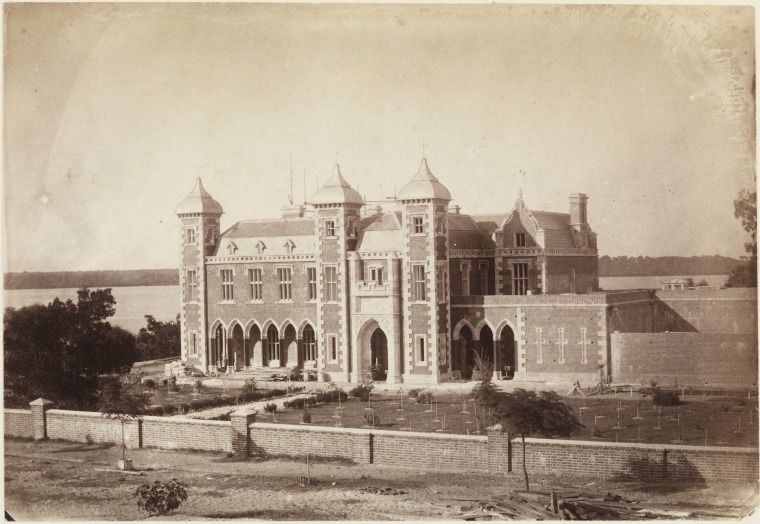
Original Government House, 1861

Original Government House, 1861

The first Governor had a nice place to live, which was built in 1834 for James ‘young brides’ Stirling. But by the 1850s, the new Governor, Arthur Kennedy, whined it was unsuitable and a bit cold in winter. Declining to have it repaired, he demanded a new Government House, more in keeping with the lifestyle to which Arthur wished to become accustomed.

The Government tried to get England to pay for it, but they told us to bugger off. Originally estimated at a massive £5,000, by September 1858 this had risen to £7,000.

Designed by an army major with no training in architecture, a foundation stone was laid in March 1859 with lots of Masonic pomp. The project was then handed over to the Royal Engineers to mismanage. Remarkably the same amateur architect was later tasked with designing an asylum in Fremantle. To no one’s surprise, this was also a disaster.

Costs kept spiralling due to constant indecision and daily changes to the design. No sooner had a wall been erected than it was torn down again for a new idea. After three years labour, the convicts working on the place had made very little progress. People complained there were better things for them to do. Like fix the awful roads.

When a roof was finally put on the building it was nearly a miracle. However, it was far from finished, needing several more towers and an interior.

GovHs_1862

Kennedy’s Folly

In January 1863 it was sufficiently finished to allow for a party in the upstairs ballroom. A ballroom that should not have been there. When the building was nearly complete, the new Governor demanded six rooms be converted into somewhere he and his wife could entertain their cronies.

Completely redesigning the structure of the upper floor was, of course, very expensive and time consuming. And no one remembered that the six rooms were guest bedrooms, so Government House was unable to put up visitors.

In March 1863, it was realised the red brick pillars on the colonnades did not match the stone arches above them. So they started painting the pillars a marble colour.

When the furniture arrived not only was it hideously expensive it was also hideous. And badly made. So yet more money was spent replacing it.

Finally, in mid-1864 the Governor moved into his new residence. By this time more than £18,000 in cash had been spent, along with the wages of the Royal Engineers on the project, so the total cost was nearer £50,000.

When opened for inspection, while the outside was pretty enough, the interior was a disaster. A better building could have been knocked up for under £10,000. It was given the name ‘Kennedy’s Folly’, which is a little unfair. It was so long in construction, Arthur Kennedy had moved on and never even got to look inside.

Dancing, fighting and knickers

Unity Theatre, 1930

Unity Theatre, 1930

In the words of the most influential musicians of the last century, the Spice Girls, “make it last forever, friendship never ends”. Today Dodgy Perth tells the heart-warming story of a friendship that knew no boundaries.

Although once again known as Trades Hall, the Beaufort Street building operated as the Unity Theatre in the 1930s. It was at a dance held there in 1933 that our tale begins.

It should be obvious that two men are not allowed to dance together when partners of the fair sex are available. Not a rule enforced at Connections Nightclub last time Dodgy Perth was there!

But because two young fellows showed scant regard for feminine charms, they decided to dance with each other that Wednesday night.

It must be said that Robert Sleeth and Norman Tindale—aged 20 and 22—had consumed more than a couple of drinks. Perhaps that was the reason for their unorthodox dancefloor moves. Or maybe they just liked grooving with each other.

Whichever, the MC, George Greenway, was having none of it. He told them to dance with the ladies or get off the floor. They resisted, and George told them to sit down and shut up, and began to escort them over to the chairs.

At this point the inebriated Robert took a swing at the MC, knocking him down, breaking his glasses, and causing his nose and face to bleed.

Dances being full of testosterone-fuelled young men, this was all the invitation that a bystander, Norman Mitchell, needed to weigh in. For trying to be a hero, Norm was also punched to the floor, losing blood in the process.

As he got to his feet, other onlookers held him back as he tried to retaliate.

At this point all hell broke loose and the cops were summoned.

PC Trekardo was first on the scene where he found Sleeth and Tindale outside, with their coats off shouting through the door challenging someone to come out and “fight it out like a man”. Boys, eh?

At this point Mitchell, still profusely bleeding, charged through the exit screaming “You punched me” and bravely tried to attack our BFFs. Trekardo arrested all three of them.

Mitchell got off with a caution, while Sleeth and Tindale got two months hard labour in exchange for their Unity Theatre antics.

The next time our besties come to our attention is seven years later. This time they broke into a house at 226 Roe Street, stealing cash, a pair of lady’s pyjamas, a set of lady’s underclothing and a pair of lady’s scanties. All belonging to Gladys Foley.

In case you don’t know, the kind of ladies who worked at that end of Roe Street would probably have owned very attractive scanties and been earning good money for taking them off.

This time our BFFs avoided jail and ended up with a simple fine.

Dancing together, fighting together, and stealing panties together. The kind of things great friendships are made from.

The Prince and The Don

The Nawab of Pataudi

The 8th Nawab of Pataudi

It was a horror movie, right there on my TV. We refer, of course, to the so-called English cricket team.

Dodgy Perth has already told the story of the time the English side pretended to be the crew of a meat ship in order to win a game against Wyndham Cricket Club.

So today we look back to 1932 when England played Australia at the WACA and The Don was simply awful. The tour is now remembered as the Bodyline series, but this three-day game took place before the first test in Sydney, so was the first chance to see the visitors in action.

The West Australian Cricket Association brought over five players from the Eastern States, and made up the rest of the team from locals. But what a five: Donald Bradman, Victor Richardson, Stan McCabe, Albert Lonergan and Jack Fingleton.

Trouble was, other than McCabe, none of these batsman could bowl. And, as it turned out, nor could any of the Western Australians. And they were up against Douglas Jardine’s bodyline side.

Our local bowling hero, Richard Bryant, managed to strain his leg early on the first day and had to leave the field. As a consequence, The Don was asked to take his position. Great batsman he might have been, he proved completely unsuited to this new role.

The English played the weak bowling without trouble, getting to 7/583 before becoming bored and offering the Aussies a go on the Saturday morning.

Trouble was, overnight rain made the wicket treacherous and this was where Hedley Verity was lethal. His left handed slow style made the ball fizz and kick off the pitch, and he was practically unplayable.

You want proof? Donald Bradman (c. Hammond b. Verity) scored three in the first innings. We’d like to repeat that. Three.

The huge crowd was completely unimpressed with the Australian batting display and made their feelings known. By the time the side was all out for 159, the follow on was inevitable.

The Australians responded defensively with slow, unattractive batting, and stretched out a tedious draw with 4/139. This time The Don outdid himself and got 10 (c. Pataudi b. Allen).

But some things never change. When the star player was caught in the second innings, large numbers decided they’d had enough and left the WACA. Some latecomers decided not to even bother buying a ticket when they heard Bradman was out.

And who was this Pataudi who caught Bradman, and scored 129 in the first innings?

Iftikhar Ali Khan (1910–1952) was the 8th Nawab of Pataudi and later captain of India. Known as ‘Pat’ to his English friends, Nawab is a title given to Muslim princes.

He had scoring strokes, a strong defence, quick footwork, and, above all, patience (a test match essential). Perhaps what England now needs is another empire from which they can grab great cricketers. And they need it bloody quick.

Here pussy, pussy

kitten

Fireman Smith and his wet… kitten, 1941

Back in 1941 the RSPCA thought it was a good idea to shoot kittens in trees. Seriously. At the time, the Esplanade Kiosk (later renamed after Florence Hummerston, as some kind of compliment we assume) was run by William Webb.

One day a parcel arrived at the kiosk, so William opened it. Inside were two kittens in a box. Because people used to mail kittens in 1941. Apparently. As he opened the box, one of the terrified kittens leapt out. Unfortunately William’s dog thought this was great fun and gave chase.

The cat flew out of the Kiosk and up to the top of the 15 metre palm outside on the Esplanade. Worried about the poor beast, William went to look for help. The Esplanade’s gardeners said there was nothing they could do. However, the Electricity and Gas Department sent some men. With a 12 metre ladder. For a 15 metre tree.

Over and over again, they very nearly caught the petrified kitty, but each time it scampered back to the top of the palm. One man climbed the ladder with some meat to try and lure pussy down. But with no success.

The next sequence of events seems a little odd.

The RSPCA, who were now on the scene (along with gardeners and the electricity and gas people) decided the rescue was a total failure. So the only humanitarian thing left to do was to shoot the trembling animal dead. An RSPCA inspector slung a rifle over his back and climbed the ladder.

Yes. The RSPCA. A rifle. To shoot a kitten. In a tree.

However, the animal-loving inspector couldn’t find pussy, so he decided it had escaped by itself and his job was over and he could go home and have a cup of tea.

Ten days later a passer-by noticed the poor starving animal was still at the top of the palm. So the RSPCA was called again. This time the inspector charitably decided not to shoot, but to call the fire brigade instead. Who, unsurprisingly, had a long ladder. And the skills to get kittens out of trees.

After ninety minutes of Fireman Smith failing to grab the poor mite, they had the bright idea of turning the fire hose on the tree top. Which so frightened the soaking wet kitty, he fled into Fireman Smith’s waiting arms. [Those of you who are old enough can insert your own Mrs Slocombe joke here. It’s all set up for you.]

The large crowd which had assembled gave a loud cheer as William Webb took the starving pussy into his kitchen in the Kiosk to give it some milk.

Then William’s dog charged in and the kitten fled up the palm tree.

You can’t make this stuff up.

Reclaiming our multicultural history

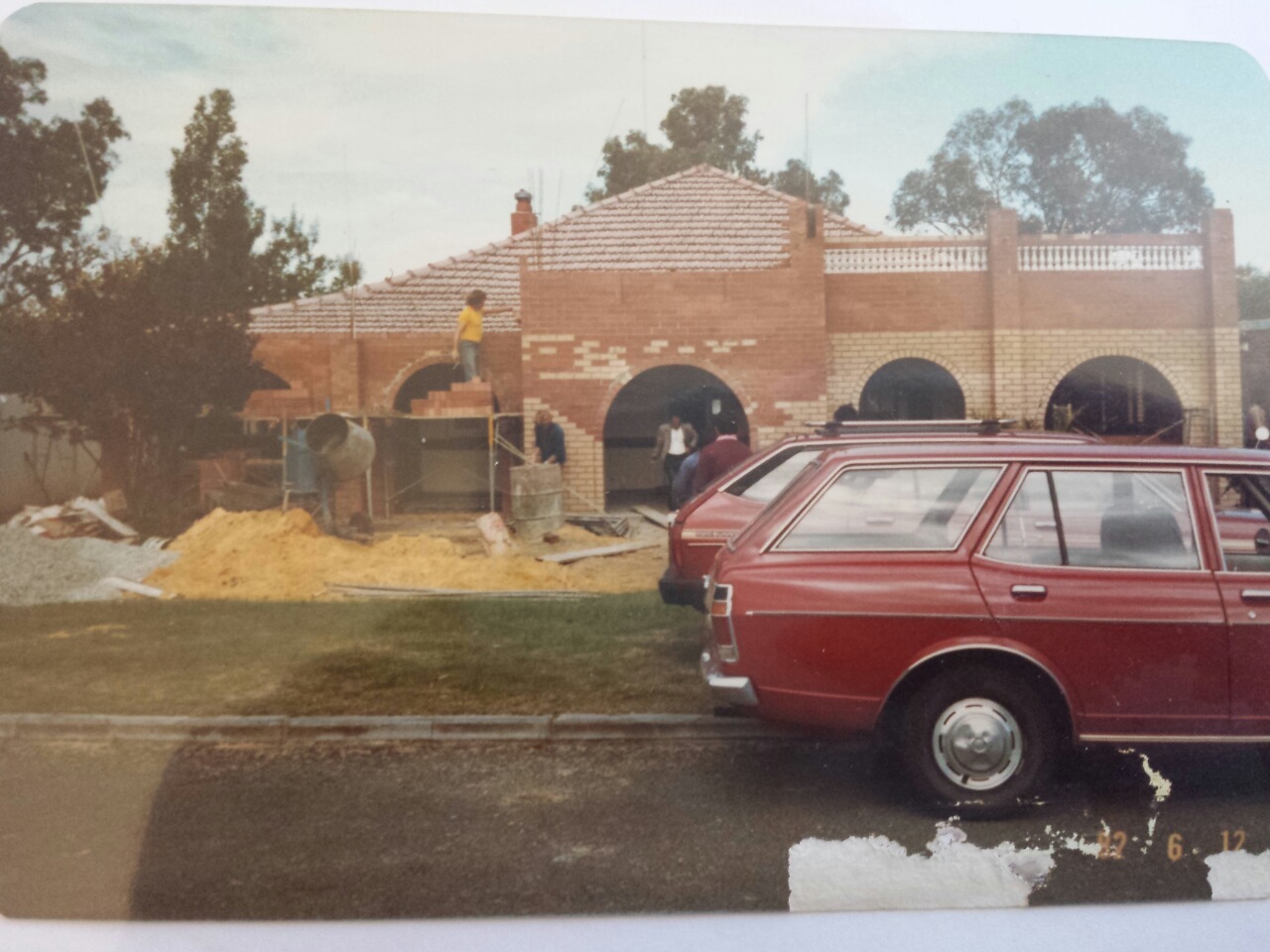
Construction of Rivervale Mosque, 1973 (courtesy of ICWA)

Construction of Rivervale Mosque, 1973 (courtesy of ICWA)

A Blessed Eid al-Fitr to all Dodgy Perth Muslim readers.

To acknowledge the long-standing role of the Muslim community in Western Australia we present four articles from our back catalogue:

Halal, is it meat you’re looking for?

Peace, love and barbies

White Australia, I could be one of your kids

Islamophobia, 1832 style

After two centuries, you’d think we’d have made some progress by now. Wouldn’t you?

We want the real museum back

Dutch sailor, 1935

Dutch sailor, 1935

Earlier this year archaeologists got all excited about discovering skeletons resulting from the slaughter after the Batavia shipwreck.

These were the most major discoveries, they said, since the first bones were unearthed in the area in 1960.

Perhaps they should have asked the Western Australian Museum which has had a collection of Dutch skulls wrecked on the Abrolhos Islands since the museum opened in the 19th century. Although, it must be said, they’ve kept them somewhat under wraps recently.

In the good old days, anyone could visit the museum and experience the thrill of looking at the skulls of the Dutch mariners, the pipes they smoked, and the flagons from which they quaffed their wine.

Not to mention a collection of associated rosaries, cannon balls and other ship’s gear.

We the public have a right to know why the museum is keeping all the interesting stuff from us.

Where are our four-legged chickens? And where are our shipwrecked sailors’ skulls?

Why would we want to look at anything else?

The course of true love

Winnie Beattie

Winnie Beattie

“Wilt thou take this man to be thy lawful wedded husband, to love, honour and cherish in sickness or in health, for richer or poorer, for better or for worse till death do you part?”

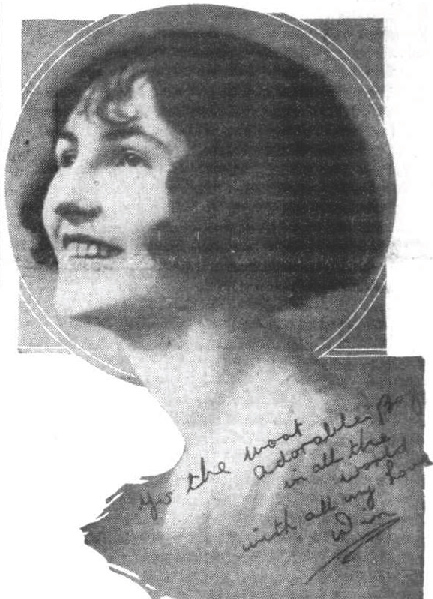
“I will,” said Winnie Beattie to the minister one Saturday afternoon in June 1931. Trouble was, her mum was not of the same mind. And this was just one event in the strangest romance Perth has ever seen.

Four years earlier young Jack Garrigan (then seventeen) fell in love with pretty, vivacious Winnie, then just fourteen. They spent all their spare time together, and during the day the stayed close since both were employed at Boan’s Department Store.

But when the Depression came, Jack lost his job. Winnie’s parents vowed they would not consent to any marriage while the lad was out of work.

However the couple were still wonderfully in love. Winnie gave Jack a photograph of herself inscribed, ‘To the most adorable boy in the world.’
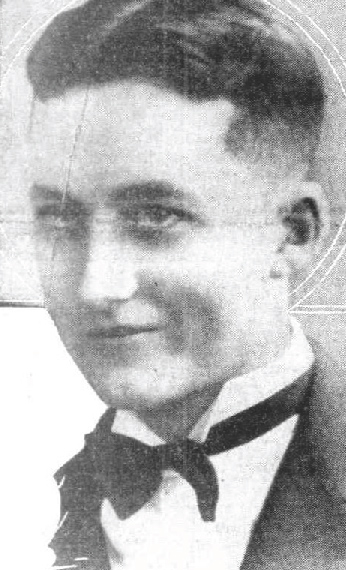
Jack Garrigan

Jack Garrigan

One day they were walking by St George’s Cathedral when they saw the notices of forthcoming marriage. In a rush of pure love they agreed to marry and only tell their parents afterwards.

But whispers soon spread, and friends became excited. Wedding presents were purchased and what was going to be a quiet at the registrar’s office became a full ceremony in the cathedral with organ accompaniment.

On the night before the wedding, Winnie broke the news to her mother. There were, of course, tears and recriminations. Jack’s parents, though, still knew nothing.

On the Saturday the bride went off to dress at a friend’s house. One hour before the ceremony Jack went home—to break the news to mum and dad. Although in shock, Mr and Mrs Garrigran hid their feelings, and went to St George’s Cathedral to attend a wedding of which they were totally ignorant an hour before.

The little crowd of guests were not kept waiting. At 4 o’clock the young bridegroom took his seat in the front, attended by his close male friends. Unnoticed, a lady in a fawn coat stepped quietly inside, choosing a seat in the centre of the church.

As the organ started, the bride walked up the aisle on the arm of a friend, with two bridesmaids in attendance. The dignified figure of Dean Moore stood in front of the altar and the little party grouped round him.

The Dean read the words of the marriage service, until he came to the famous phrase. “If anyone knows just cause or impediment …”

Then out of the still Cathedral came a slow, distinct voice: “I object!”

The Dean looked down the aisle and the lady in the fawn coat approached the altar. “I am her mother,” she said, “and she is not 21!”

The guests whispered in little groups while the bride wept in the vestry. The minister spoke with the parents, but to no avail. The ceremony could not proceed.

The boy and girl drove away together, the guests drifted off, and soon the cathedral was empty. For the first time in the history of St. George’s Cathedral a parent had spoken and forbidden the marriage.

But love will find a way! The couple still had a license to marry in their possession, and within a couple of hours, a Methodist clergyman was uniting them in the sitting room of a home just off Beaufort Street.

That night a car slipped quietly away to the Kalamunda Hotel. None of the guests knew that the shy couple at breakfast on Sunday were the principals in a sensational events of the night before.

But shortly before lunch a car drew up at the hotel and with determined step a man and a woman entered. Mother and father stood before the bride and her husband. Within minutes, Jack was left alone in the bridal chamber. His wife was gone with her parents back to Perth, his honeymoon lasting just twelve hours.

The bride’s mother sought to have the marriage annulled on the grounds that both had married without their parents’ consent. The court ordered the bride be returned to her parents’ control until she reached the age of 21.

Within a week Winnie had gone to Melbourne, supposedly for a long holiday, but she paid for Jack to join her. And they both slipped back to Perth and took up new jobs.

In 1932, a notice appeared in the newspapers: ‘On June 22, at Malvern Private Hospital, 222 Eighth Avenue, Inglewood, to Mr and Mrs Garrigan, 29 Museum Street—a daughter (June Dawn). Both well. Visitors after 27th.’

Sometimes great stories do have happy endings.