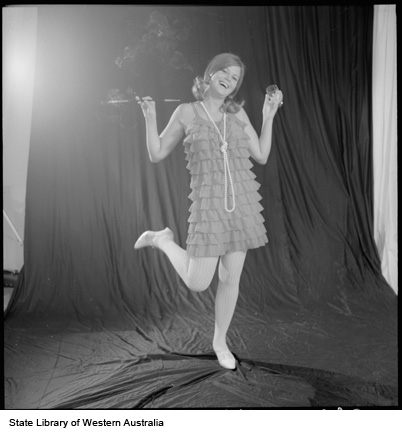
Are flappers always slappers?

Photographic Negative - AcetateToday Dodgy Perth covers one of the most controversial questions in history: Is every Perth girl a slapper, or only some of them?

The evidence for the prosecution comes from an anonymous Katanning lady, who had just returned home after a six week holiday in Perth in 1929.

She had had hated every minute of it. Only back in the countryside could she once again breathe freely, away from an atmosphere contaminated by hypocrisy and senseless frivolity.

You see, a typical Perth girl is an empty headed, pleasure-seeking and selfish young miss with no thought for the future. All she thinks about is herself, her clothes and how to get men to adore her.

For hobbies, the young city woman likes only to dance, drink cocktails and smoke. Her greatest pleasure is to see how many parties she can get to into one evening.

And—we shudder to say it—the Perth lasses are using paint, powder and lipstick to make themselves appear more attractive to the menfolk. No country girl finds it necessary to “do up” every five minutes. They have deeper thoughts than whether or not their noses are shining.

Worst of all, these brazen hussies are openly speaking about topics which should never be spoken about. In public.

Thank god that the average country girl remains unsullied by modern ideas. For they are the last of their sex who can uphold the honour and dignity of true Australian womanhood.

The case for the prosecution rests, M’Lord.

The fair maids of Perth, though, were not going to hear such slander in 1929 without a response. Oh no.

For a start, the gay dresses worn to the dances are usually made by the girls themselves. And most have to make their own underwear as well.

Our country lass forgets that Perth women have real jobs, mostly in offices, and it is only natural they would seek entertainment in the evening.

Yes, they use make up. But also go to the gym, and attend night classes in business studies, English, French, dressmaking, millinery, and cookery classes. Unbelievable, isn’t it, how versatile the city girl is compared to her country counterpart?

In any case, do you really think that Katanning is that dull? When Perth lasses visit the country they find the parties there very far from tame, even thrilling. It’s not necessary to leave a small town to find something to shock a rural prude.

The case for the defence rests.

On the buses

013137d

The bus to Belmont, 1912

Every few days you can pick up a copy of The West and read about how much taxi drivers hate Uber. If you’d picked up the paper a century ago, they were grumpy about these damned novel buses that were taking their business.

On St George’s Terrace in the first few years of the 20th century, one motor bus was brave enough to try and take people to Ascot Racecourse. There was almost a riot.

Angry cab drivers surrounded the bus and shouted threats and curses. Anybody who attempted to board was vigorously abused. Nevertheless, the bus managed to gather enough brave passengers to make a successful trip to the races and back.

And customs on buses were different in those days.

On the Belmont route, when the bus was overcrowded, it was expected that a lady would stand and let a gentleman have her seat.

Then she would then sit on his knee. Seriously.

Dodgy Perth believes that TransPerth should bring back this etiquette today.

Bus drivers could be a little, let’s say, less professional from time to time a century ago.

One driver, who was a little ‘under the influence,’ had an argument with a passenger as to whether he had paid the correct fare.

To settle the argument the pair left the bus at Barrack Street, and the fight was only interrupted by a policeman, who arrested them both.

When this news reached the waiting passengers, they went straight to the police station to demand the driver’s release.

When the sergeant in charge pointed out that the bus company employee was obviously drunk, one lady passenger explained: “Oh, he is all right. I’ve sat beside him before when he was like this, and I always pull the bus back if it goes off the road.”

Satisfied that the bus was in good hands, the sergeant released him.

Ah, public transport. How disappointingly boring you are today.

Subiaco’s tuba war

Tuba-makeover1-e1326489031931

Q: What is the range of a tuba? A: Twenty metres if you’ve got a good arm.

Ever had a neighbour play loud music? That one song they currently adore, over and over again. Then you will sympathise with William Cooke, a Subi resident in 1902.

His neighbour was Edward Jewell, house painter and enthusiastic musician. Unfortunately, every time Edward came back from band practice, he would pass William’s house playing his instrument. And what an instrument. A ‘Monster Double B Flat’ tuba, the largest and loudest member of the brass family.

Hearing the same song each evening, ‘Johnny, Get Your Hair Cut’, drove William insane.

After a number of heated arguments, William wrote to the army for help. Although military assistance was not forthcoming, this didn’t stop him painting on the side of his house, in letters large enough to be seen 100 metres away:

Loony Jewell is going to lose his trumpet. Major Campbell is going to take it from him.

This did not calm matters in Subiaco. Edward retaliated by putting up an enormous wooden hand with a finger pointing straight at his neighbour’s property with the words ‘Lunatic at large’ on it.

Surprisingly, things settled down for a while until Edward spent one summer’s evening in his backyard practising the recent No. 1 hit, ‘Goodbye Dolly Gray’ (Collingwood fans may recognise this ditty):

William suddenly appeared, brandishing a large and heavy axe, shouting, “Where is that bastard Jewell? I’ll kill him!” He swung blow after blow at Edward’s head, forcing the terrified musician to use his instrument as a shield.

“You bastard! I’m going to murder you!” shouted William as he pursued Edward across the garden.

The victim scrambled through the fence and fled to the police station. William turned to the astonished Charlotte Jewell and said: “If I catch your ––––– ––––– of a husband, I will murder him.” The police intervened long before this threat was carried out.

The jury, sympathetic to someone with a noisy neighbour, found William guilty only of assault, dismissing a charge of attempted murder. The judge was also compassionate, refusing to jail the axe-wielder.

So, next time you hear Taylor Swift coming through your walls at one in the morning, you know what to do.

From bluff to buff

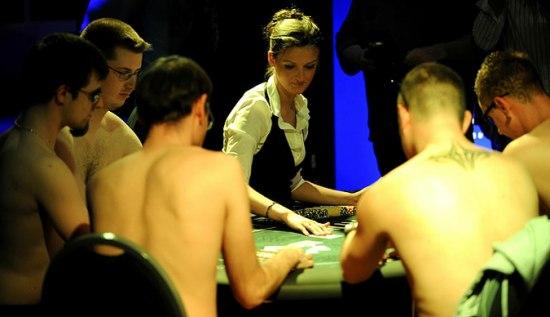
strip-poker-tornament8

She appears to be winning

The past is a foreign country, they do things differently there. But there is one thing that never changes. When young people find a new entertainment, older people will be outraged. Followed by the media demanding the government ban whatever it is young people are doing.

In the mid-1920s, the smart young set discovered Strip Poker, and their elders were livid. An American import (what evil doesn’t originate from those shores?), Strip Poker was judged indecent. Which it was. Which is what made it fun. Which is why the young folk liked to play it.

And so the game was taken up by the young society folk in West Perth homes. And one particularly drunken New Year’s Eve, on Cottesloe Beach in full view of passers-by.

Six to eight boys and girls would assemble at a home and “primed up with sundry cocktails”, they sat round a table and left the rest to chance. The rules were simple. Counters were issued and each article of clothing had a certain value on the counters. Somebody had to lose in every hand, and the unlucky would usually go on losing all night. Until they had lost all of their clothing.

What made it all the more outrageous was that the players were the offspring of respectable, high-class families. Yet they were baring their bodies like the disreputable castes who lived downtown. The morals of nice Perth girls were worth protecting, said the media. While you might expect this sort of thing in Sydney and Melbourne, it should not be happening in classy Western Australia.

Quite right too.

The secret to a happy marriage

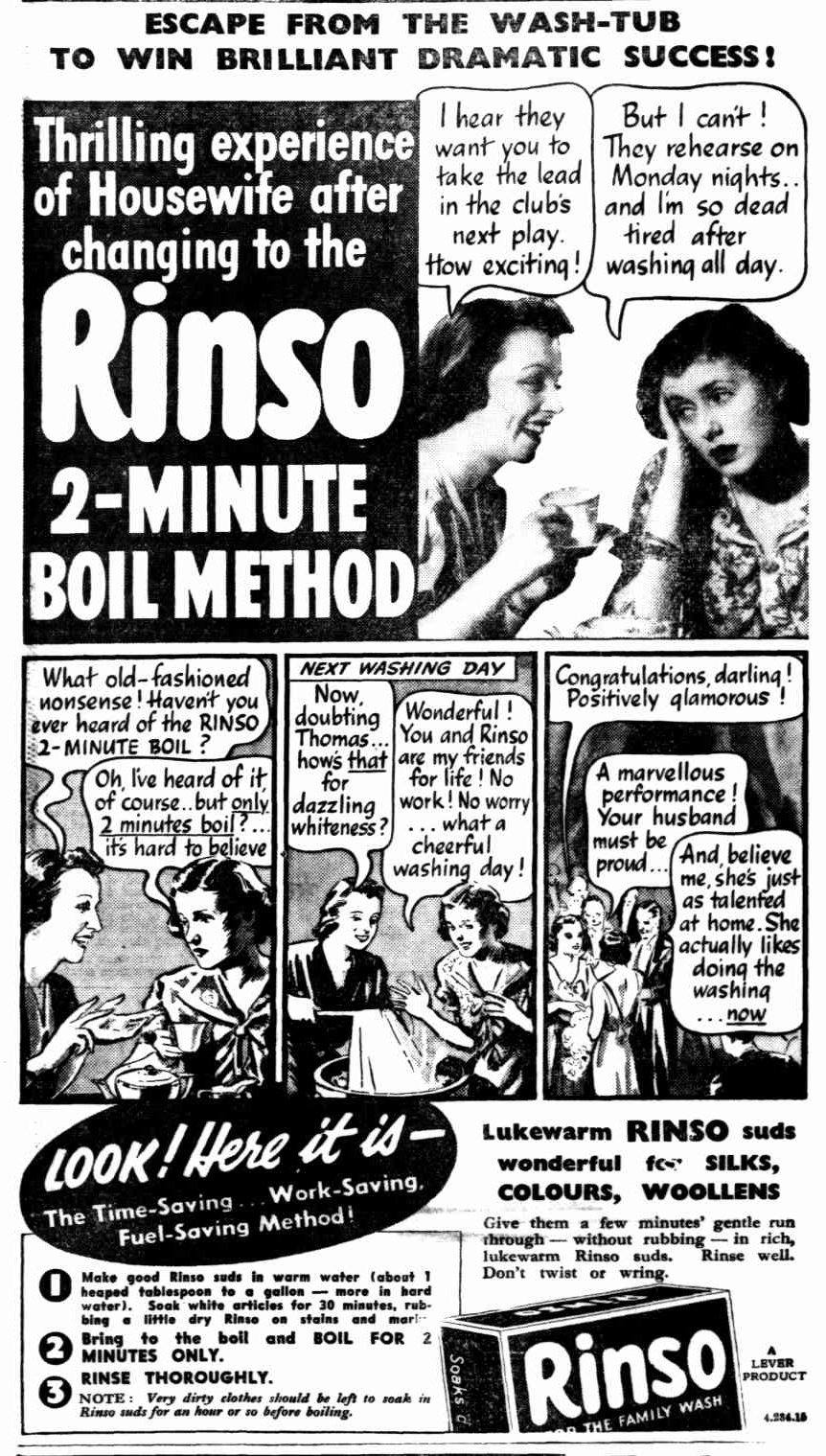
darn_socks

Darn it!

In the Dodgy Perth household we sometimes wonder if Mrs Dodgy Perth is actually a good housewife. We suspect her claims to be tired after a long day in the office is a way of avoiding knitting blankets for the children, or darning socks.

So it was with delight we found a 1931 Sunday Times article with advice for a happy marriage. For fair sex readers, we present the following for your improvement.

Firstly, a man’s appearance is entirely the responsibility of his missus. If he looks middle-aged before his time, it is the little woman’s fault.

Perhaps he is—shudder!—thinning on top. Avoid this tragedy by purchasing quality hair tonic and massaging his scalp every night.

Is he getting love handles? Instead of nagging him, tactfully suggest a few weight loss remedies.

We know what you’re thinking. If a man wanted his head massaged or attention drawn to his girth, he would ask for it. But no. Men are proud creatures, so the obligation is entirely on ‘er indoors.

Here in the Dodgy Perth offices we shamefully look at our hands and wish we could ask for a way to make them look “less like raw beef”. Of course she knows a solution. But we are never going to ask.

So the trouble and strife must prove her love by manicuring our nails, tending our hands as if they were her own.

An extra burden on top of her fifty-hour week, you say? Nonsense. The conscientious wife will be rewarded a thousand times over by the look of loving gratitude in his eyes. That is all the reward she needs. (Are you listening Mrs Dodgy Perth?)

Marriage is a partnership it turns out. Thanks to the Sunday Times, our suits are sponged, our hair brushes washed, our socks darned, and the cuffs of our shirts turned.

If she has to act as personal valet, it’s only because we men are far too tired in the evening, and women have natural boundless energy.

Child soldiers

Private Leslie Shaw, 1940

Private Leslie Shaw, 1940

To the media,

Please stop assuming that all young Australians who run away to join ISIS have been brainwashed. Teenagers (in particular boys) have always sought adventure overseas, and have rarely understood the full implications of what they were getting themselves into.

Also, dear journalists, stop with the overuse of the word ‘radicalised’. It’s not a thing.

So, today Dodgy Perth presents the story of Captain Leslie Shaw, who signed up to be an Anzac at the age of just thirteen.

Born a Kiwi, Leslie served as a sapper in the First Field Company, New Zealand Engineers. He was present at the landing on Gallipoli and also at the Suvla attack.

After Gallipoli he went to the trenches in France, taking part in the Battle of Messines and the Third Battle of Ypres, in 1917.

Then, at the ripe age of 17 years, tiring of a foot-slogger’s existence, and anxious to join the Air Force, he disclosed his real age and was discharged from the Amy. This after some years on active service.

After the war Leslie served with the Air Force in India, before retiring to take up a tea plantation.

Bored of tea, he joined the flying service in New Guinea, being one of the first to fly in that service.

Finally ‘retiring’ to Perth, he became a broadcaster with radio station 6AM, and his talks on aviation became one of its most popular shows.

But even then, Leslie wasn’t finished. When WWII broke out, he was still young enough to enlist as a private, again in the Army, and undertook his basic training at Claremont.

Do you really believe that at the age of thirteen Leslie could have fully understood what he was getting himself into at Gallipoli and in the French trenches? Of course not. He wanted adventure, and he wanted to serve his country.

Dodgy Perth does not mean to equate joining ISIS with being an Anzac. One of these organisations is evidently not a good thing.

However, sometimes boys will be boys, and it doesn’t always require them to be ‘radicalised’ before they seek thrills and escapades in foreign lands.

Our hidden heritage of hookers

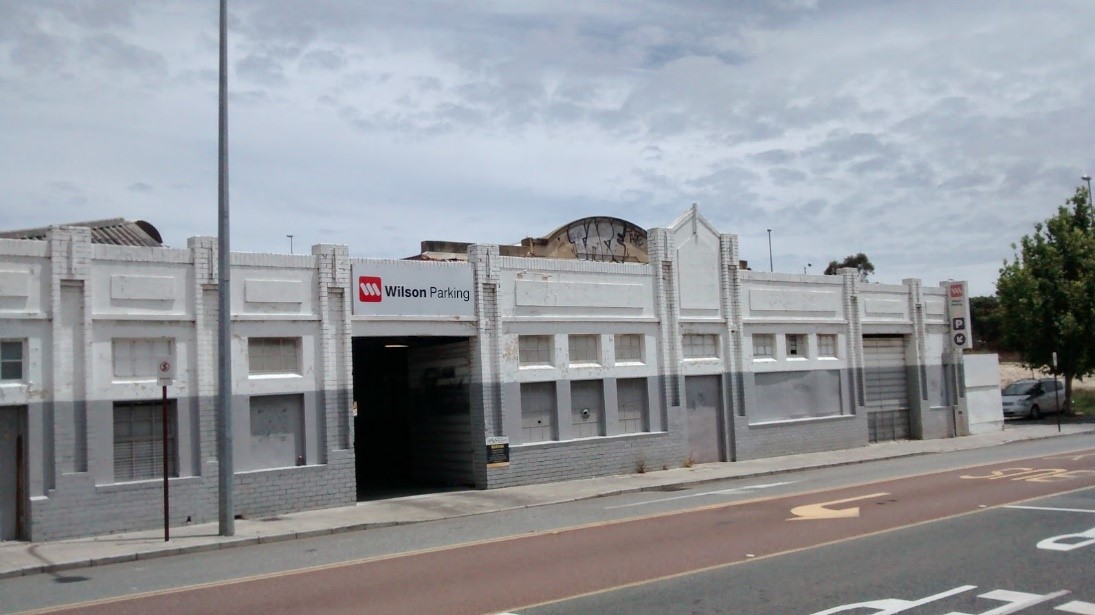
Car park 1

A place to find escorts?

Dodgy Perth recommends taking a stroll to the west end of James Street. The frontage of the Wilson Car Park conceals a secret. A secret about courtesans. Which are the best kind of secrets.

If you look carefully above the car park, there is an Art Deco building hidden behind the modern façade. Coming through the entrance, much of the older erection can still be seen. The signage proudly proclaims that it belonged to Martin Nixon, manufacturer of bodies.

Dodgy Perth is not interested in Martin right now. Although this particular body builder will appeal to the kind of bearded man interested in old buses and trucks, and a few of his vehicles still exist here and there, mostly in museums.

But Martin only purchased the ‘Modern Service Station’. The original had been erected to serve the rather different needs of Princess Josie de Bray in 1930. Which still involved bodies, however.

82x108mm

Service was definitely what you got

Josie was Perth’s most prominent madam in the 1920s and ’30s. This James Street garage would not only offer your car a full service, it also provided a secret entrance into Josie’s back passage. That is, to her fabulous purpose-built brothel on Roe Street.

“Just going to fill her up,” would have been an expression on the lips of more than one Perth bloke.

So, next time you’re in James Street, have a look at the last remaining evidence of Perth’s famous red light district. And don’t forget to get a full service while you’re at it.

Down, down, prices are down

SWM

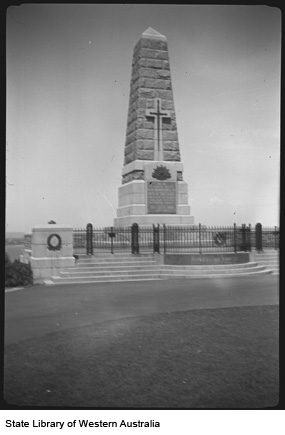
Yesterday Dodgy Perth delved into the less-than-grown-up way our politicians planned the State War Memorial. Now the story continues.

Location, location, location. There’s no denying that the Memorial has all three. What it lacks is scale, dignity and style. Transplant it from its sublime location to a local park and it would look like your council put it up on the cheap.

How cheap?

Victoria’s Shrine of Remembrance? A whopping £80,000. South Australia went economy class for just £25,000.

And WA?

We shelled out a whole £3,000. And look what we ended up with.

The brave men who fought, and often died, for their young nation ended up with a Red Dot bargain-basement memorial.

As mentioned yesterday, the Government refused to fund the project, and the various local authorities told him they weren’t going to pay for a memorial which was only going to serve the City of Perth. They’d have their own memorials, thank you very much.

So the City of Perth must have paid for it.

Er… no. Not one penny was forthcoming from them. They loved the idea. Just not the idea of spending anything towards it.

So the public was asked to pay for the Memorial. The target was £30,000.

And the public responded. With fifteen pounds. Yes, you read that correctly. When the appeal closed, they had raised a whole £15.

In 1925, they tried again. This time the target was £35,000. By the time the appeal closed (still nothing from Government or councils), less than a tenth had been raised.

But still, if that was all they had, that would have to do.

The ‘honorary architect’ (read: offered to do it for free) was Sir Talbot Hobbs. Even though vastly overrated as an architect, he had served with distinction during the Great War.

But for no fee, he wasn’t going to put any effort in. Hobbs had knocked up a few monuments in France and Belgium, so he simply recycled one of these, with no thought for context at all.

Even with a free architect, and a greatly scaled-down project, they still managed to run over budget. So when the monument was erected, it didn’t get a setting or lighting.

They had to scrape together another £300 to put in some steps in so it didn’t look completely ridiculous.

Just to remind you: Melbourne spent £80,000 on their memorial.

A contemporary satirist imagined Sir Christopher Wren being summoned from the dead to comment on King’s Park’s latest addition:

Well, it will be a memorial all right, but it isn’t a design—there is no design in it. A memorial of brave men and valiant sons certainly. But people a hundred years hence will wonder what it symbolises, what it commemorates, why it was perpetrated.

As people of a hundred years hence, Dodgy Perth couldn’t agree more.

This story is adapted from one published last year. If you liked it then, you’ll have loved it again.

The war over the memorial

60x85mm

As state war memorials go, WA’s is pitiful. The first meeting to kick off the project—in February 1924—was a sign it was always going to be a calamity.

The Premier, Sir James Mitchell, chaired a meeting of mayors and architects. The intention was to discuss a location for the Memorial.

Architect Michael Cavanagh proposed that the Government should subsidise any memorial, but Sir James sneered at the suggestion. It was for local government and the people to fund it, he said.

The Mayor of Subiaco, Roland Robinson, told a sad story of how the residents of Subiaco had failed to donate enough money to build their memorial, so the council had to subsidise it. He was very sceptical that anyone would give for a state monument.

Robert Bracks, Mayor of North Fremantle, agreed. No one would give to a Perth-based erection. In any case, King’s Park was an awful idea for a proposed location, since it was in danger of becoming nothing more than a “glorified cemetery.” Shouting broke out and the Premier had to repeatedly bang on the table to restore order.

The Mayor of Fremantle seconded his neighbour, and declared there could only be one realistic location for a state memorial: Monument Hill in (ahem) Fremantle. He was never going to put his money into the city of Perth. And would the Premier like to have a look at Freo’s plans for a memorial? The Premier did not care to do so.

William Berryman, a former Subiaco mayor, had no interest in monuments. We need hospitals he said, not pointless memorials. This made Michael Cavanagh cross, and he mocked the erection of “maternity hospitals” to commemorate the dead. A row then broke out between the architect and the Colonial Secretary, who apparently did like maternity hospitals.

South Perth’s William Reid also wanted to boycott a monument in Perth. Somewhat imaginatively he proposed a war museum, with an inner shrine containing the body of an unknown Australian soldier. Or perhaps the money could be used for a ‘Hall of Industry’, where the State’s products could be exhibited.

No one listened to the dissenting voices and it was decided that King’s Park would be the location, with no Government money made available.

The subsequent outcome was predictable from the start.

h/t Museum of Perth