How to get rid of your tan

tanning

Ugly tanned body

At this time of year, especially after a day like today, it is all too easy to become tanned. In 1930 this was the last thing you wanted, since it would mark you as someone who worked outdoors. And you wouldn’t want to be mistaken for a tradie would you?

According to the West Australian, the solution was easy. And we invite Dodgy Perth readers to try this and report back.

Make up a solution of peroxide and ammonia bleach. Use six drops of household ammonia to three tablespoon…s of hydrogen peroxide. Pat this solution on the skin with a pad of cotton wool and allow it to dry in.

It is advisable to massage a nourishing cream into the skin after the bleach has thoroughly dried. To be really effective it is necessary to get someone else to apply the lotion to your back.

But perhaps your problem is freckles. And no one likes freckles, do they?

They are due, apparently, to an excess of iron in the system. The cure is a mixture of pumice and peroxide. Add sufficient hydrogen peroxide to three tablespoons of powdered pumice to make a creamy paste.

Smooth this over the freckles and let it remain until dry. To remove, moisten the pumice with cold water until it wipes off easily. Follow with an application of nourishing cream which should be permitted to remain on for five or ten minutes.

From now on we don’t want to see any of our readers with tans or freckles. At least not if you’re following the advice of The West.

New Year: A time for sexy mermaids

mermaid

Substantially more dressed than our heroine. But still a mermaid.

The Dodgy Perth team loves New Year’s Eve. This one will be spent reliving the ‘90s by watching Jebediah perform at the Rosemount Hotel. But it probably won’t be as exciting as one Perth event to welcome in 1935.

An impetuous little brown-haired miss, we’ll call her ‘Brownie’, asked her boyfriend to accompany her to a NYE party. Well, it was the ‘30s, and girls could get away with being unchaperoned in those days.

Unfortunately, Brownie’s boy couldn’t make the date so she decided to go on her own, knowing her good looks would easily enable her to get a lift home in the early hours. The affair was, as they used to say, a howling success. There was singing and dancing, all fuelled by the spirits the young men had brought in their hip flasks.

Of course it isn’t a party if you don’t have games, but this crowd wasn’t up for the usual kids’ activities. But no one could think of anything interesting to do until Brownie suggested a ‘stocking race’. She explained that the girls stood at one end of the room, whipped off their stockings, raced to the other end and back, and pulled on their hosiery again. The first one finished was declared the winner. The young men loved it.

After this, someone daring suggested a lingerie race along somewhat the same lines, but few of the girls were game. However, Brownie was still in the mood for fun. She promptly suggested a game of dares. All you had to do was dare someone to do anything, and you paid a forfeit if they were up for it. Since only Brownie was accepting the dares, this led to a number of—as they said at the time—amusing and exciting incidents.

Finally, it was crowned by Brownie, wearing only her undies, doing what she called a “solo mermaid dance”.

Unfortunately for our heroine, when she was being driven home by one of the lads at four a.m., she encountered her boyfriend. In an attempt to deflect any guilt, she blasted him for having failed to make a show.

What she couldn’t know is that her boy later found out about the stocking race and the mermaid dance. For her, nights on the beach with that boyfriend were over, and she would be a lonely mermaid by the water for some time.

Let there be light

lights

Not all history is just hot air. Honest.

As we approach the hour of the anniversary of the coming of the Christ child, it seems only right to ask the most significant question about God made flesh: When did Perth’s streets first have Christmas lights?

There were, of course, Christmas lights and decorations well before this time. Individual shops and malls had their own displays, and government buildings were beautified. But we are asking when the streets themselves were decorated.

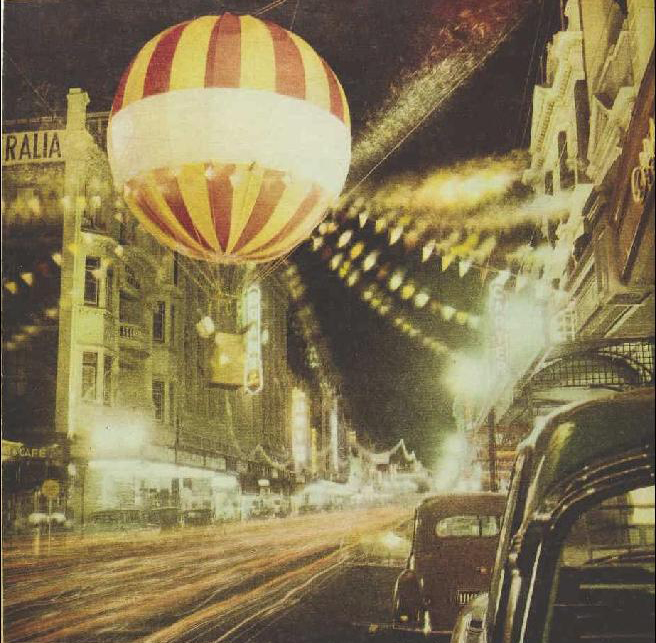
The answer is, for once, easy to come by. Following the lead of overseas cities and the other Australian capitals, Perth finally put up illuminations in 1961, at a cost of more than £4,000. The above scene shows Murray Street at the Forrest Place intersection. A giant balloon, themed on Around the World in 80 Days, dominated the area. Six metres in diameter, it was made by local Olympic yachtsman and sailmaker Rolly Tasker.

And why the ‘around the world’ theme? Because these decorations were to be dug out of the cupboard, dusted down, and reused for the Commonwealth Games (then known as the Empire Games) hosted by Perth in late 1962.

So, dear readers, next time someone asks you about Perth’s Christmas lights, you’ll know how to answer them.

It’s Christmas time

Xmas3

Just don’t ask. Don’t.

Here at Dodgy Perth, we are often asked about Christmas shopping at the turn of the twentieth century. Often, we tell you. So, for the first time 114 years, we present our glorious CBD in December 1901.

Mummified frogs. Mummified. Frogs. One grocer, H. H. Porter, had a window display of the Western Australian parliament recreated in mummified frogs. Which makes us feel all seasonal deep down inside thinking about it right now.

Want to feel the spirit of Xmas even more? Children who stopped too long to peer into the windows of the city’s shops were firmly moved on by the police. No cluttering up the pavements when there are real people with money to spend, thank you very much.

As the twentieth century started, Perth was feeling the full effects of the gold boom. Which meant there was real cash flowing around the city. Which meant shops could jack up their prices and justify it with nice window displays. Doesn’t sound at all like the city we know does it?

There being no holly or ivy locally, decorative greenery was supplied by the “health giving and invigorating” eucalyptus. Every lamp post and verandah post was covered with the stuff giving Perth the scent of the bush. Public buildings were draped with flags of every nation and shops had started to employ professional window dressers.

Take Sandover & Co, whose Hay Street window had a harvesting scene, in which a rosy-cheeked country lassie was reposing amongst sheaves of locally grown wheat. In the background a windmill—driven by an electric fan—turned itself around. How very Christmas. Although Sandover was the place to go for the novelty present everyone wanted that year: table tennis.

Of course, if you had a little more money, you could go to E. J. Bickford & Co, whose premises extended from Hay Street to Murray street. Normally a furniture dealer, in 1901 all sorts of Christmas novelties could be found there, including a display of Armenian glassware. But not needing Armenian glassware, we’ll just pick up one of their luxury ping pong tables.

J. Weidenbach & Co. had a splendid Christmas show that year. The windows were full of beautiful Chinese lanterns and umbrellas, Japanese art drapings and Chinese silk drapings. Beautiful, until you realise that 1901 was the year they passed the Immigration Restriction Act specifically to stop Chinese and Japanese people coming to Australia. Hypocritical bastards our ancestors.

Hughes & Doheny had snowstorms in their window, but much better they had Kinross whisky and Santa Ross wines inside.

And we in the Dodgy Perth office would have loved to have looked in the window of Carter & Co., to check out their “unique” display of ladies’ lingerie. Not for ourselves, you understand. Well, unless it fits nicely.

Inglewood presents…

civic_theatre

Civic Theatre looking all theatrical

As the Dodgy Perth team were due some well-earned R&R yesterday, we all headed to the exclusive Civic Hotel in Inglewood to sample their wine list. First of all, naturally, we ensured we were compliant with the dress code: singlet (check), sleeve tattoo (check), making Tarquin call himself Davo all night for his own safety (check).

Out in the courtyard, listening to the acoustic guitarist covering Aussie classics for the sole benefit of his two bored mates, we wondered if Inglewood had once had more thrilling entertainment. Rummaging through some fading Xpress Magazines in the corner of the room, we discovered the Clock Tower had once been the Civic Theatre.

When it opened in 1936, the press went a little overboard, describing it as “one of the most modern and beautiful of suburban theatres” and praising its interior as having “walls of texture finish in bronze and gold”.

60x60mm

Mr Kay at the Civic Theatre Restaurant, 1969

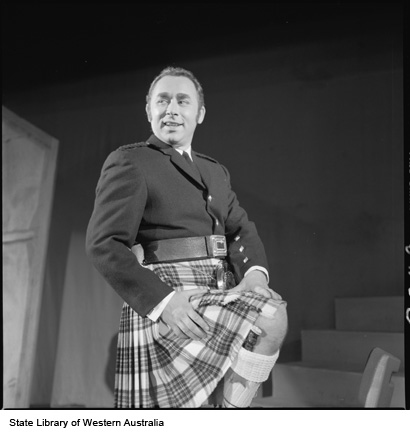
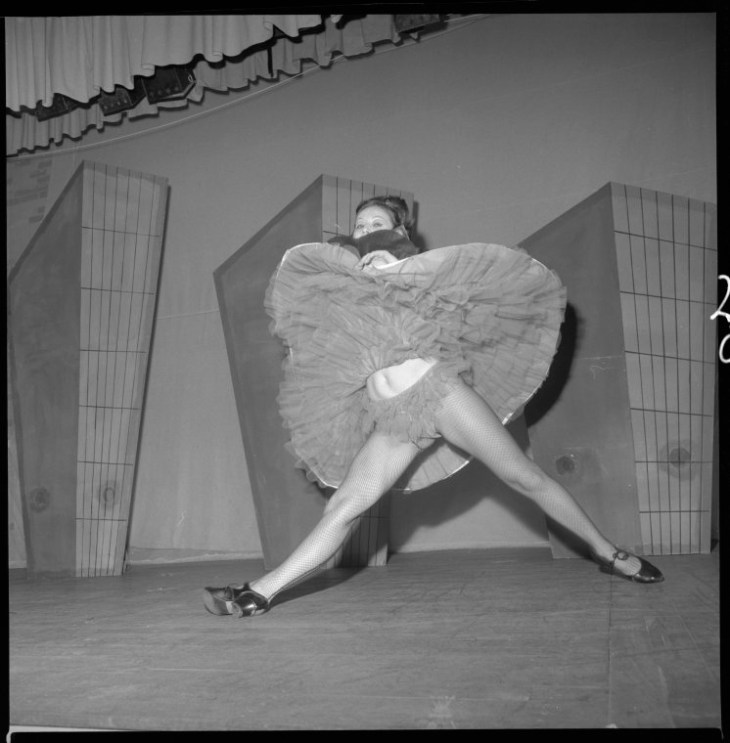
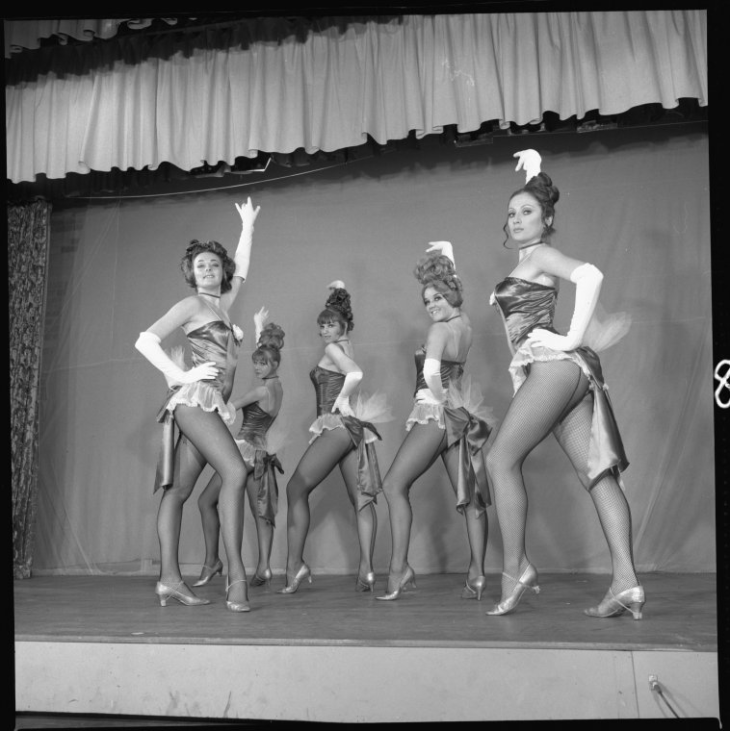
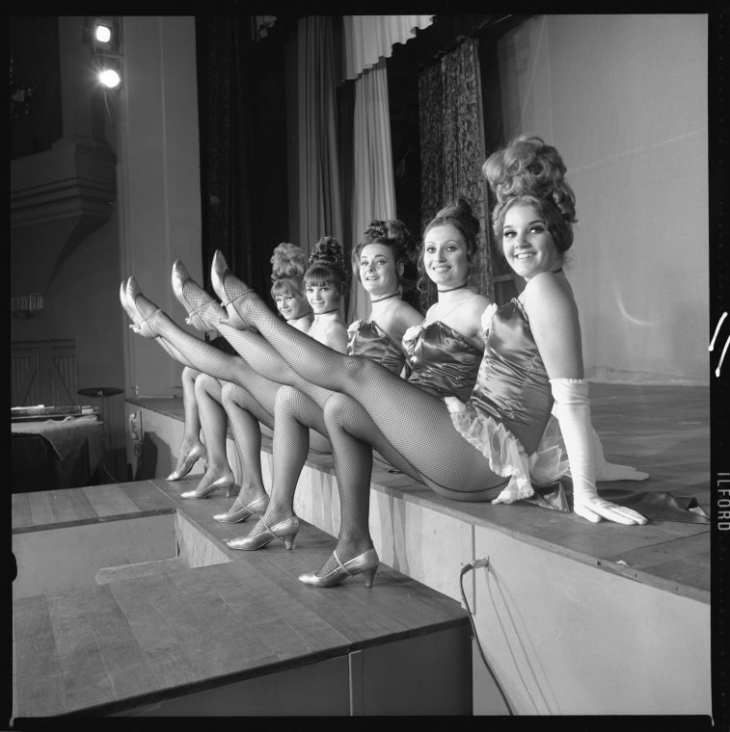
But we were not interested in 1936. No sir. We wished for a modern-day Doctor Who to transport us to the greatest year in history (1969), when the building was known as the Civic Theatre Restaurant and people of that year (lucky, lucky people) would have been entertained by Max Kay himself, and a variety of scantily-clad dancers.

We are setting up an on-line petition to demand the Civic Hotel give us less Chase the Ace and more dancers and Max Kay. You’ll sign, won’t you?

civic_theatre_3

I think I can see her knickers. Civic, 1969

civic_theatre_2

Aren’t you cold in that? Civic, 1969

civic_theatre_4

She’s got legs… Civic, 1969

The Inglewood Nazis

blue_shirts

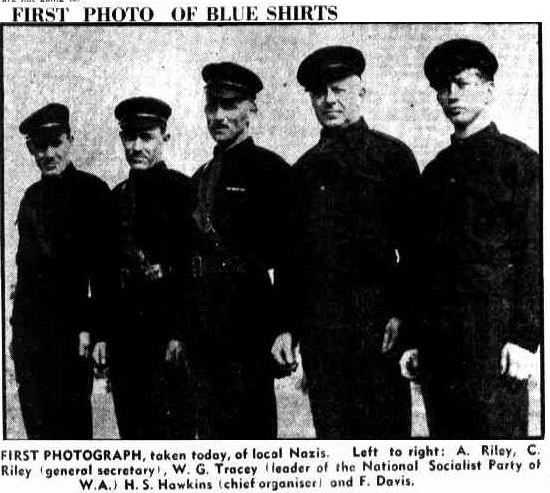
Looking so, so sexy in their fascist outfits

Some people have mixed emotions about Reclaim Australia and the United Patriots Front who are protesting the ‘Islamification’ of WA. But Dodgy Perth salutes them. It takes a special kind of bravery to stand up in public and let everyone see what kind of knob end you really are.

So to celebrate the rise of Neo Nazis in Perth, we present a time when there was no ‘Neo’: the 1930s. Welcome to the Nazi Party of Western Australia. Yep. Actual, honest-to-god Nazis.

80x105mm

Busselton was not as nice to Uncle Adolph as Inglewood

Being a stylish bunch of fascists they did not want the brown or black shirts associated with tasteless European evil, so they went for an attractive shade of blue. When matched with a peaked cap it made them both quite fascistic and, to be perfectly honest, a little like a 1970s gay clone.

The local branch of Nazis was headed by W. G. Tracey, a man so awful The Racial Purity Guild of Australia was embarrassed to be connected with him.

And Tracey must have been humiliated when his main opponents, the Communist Party, decided they couldn’t be bothered protesting his miniature Nuremberg Rally at Riley’s Hall in Inglewood, on Beaufort Street.

“After careful investigation of the so-called National Socialist Party,” said a Commie spokesman, “we have come to the conclusion that the organisation and its leader can be ignored.”

Ouch.

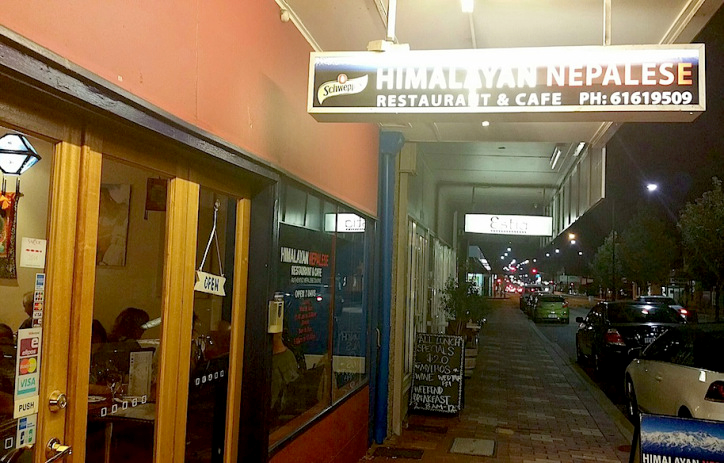
If you want to make a pilgrimage to the site of WA’s first Nazi rally, the building is now an excellent Himalayan-Nepalese restaurant, which Dodgy Perth can recommend from personal experience.

nepal

TelCo contracts, 1887 style

"You charge how much per megabyte?"

“You charge how much per megabyte?”

As is well known, the only thing that separates us from the animals is the tiny amount of data mobile phone companies provide us on a monthly allowance. Before tipping us upside down to shake out a few more pennies. We’re looking at you Telstra.

But this did make us wonder what the first telephone contracts in Perth looked like. As it happens, we have a copy in front of us. If you’d signed up in 1887 to be one of the first subscribers to this exciting new technology, you first had to agree to the following.

Calls were not charged individually, but there was a subscription of fee of £15 a year if you lived within 800m of the Perth or Fremantle exchange, and an extra 25 shillings for each additional 400m you needed further away. For your money, you would be provided with one telephone and a connection to the exchange. A bell cost extra.

It’s not easy to say how much money £15 a year would be today, but you could rent a cottage in Bunbury for the same amount. If you wanted to live in Bunbury, of course. If.

Whether you lived in Perth or Fremantle, you were allowed to talk to someone in the other city. Which is nice. Except under the fair use policy, no call between Perth and Fremantle could exceed five minutes.

Oh, and you could only call between 9am and 6pm on weekdays, 9am to 1pm on Saturday, and not at all on Sundays or public holidays.

A subscriber could not allow their telephone to be used by anyone else except their own personal servants. That is, unless the borrower had a telephone at their own residence.

Finally, there was the usual legalise you would expect:

No responsibility is assumed by the Government for any errors, omissions, or delay in the transmission or non-transmission, delivery or non-delivery, of any message, arising from any cause whatsoever.

No mention of a data allowance anywhere, or what happens if you want to upgrade to the latest iPhone. Probably in the small print somewhere.

When wowsers wuled the woost

Emu Bitter, for the hipster in you

Emu Bitter, for the hipster in you

We at Dodgy Perth don’t believe in moderate consumption of anything. If you’re going to do it, go hard and go often is always our advice.

Speaking of totalitarian health fascists, what is it about Curtin University which seems to churn them out like a production line? One wowser from that place—sorry, ‘alcohol researcher’—Tanya Chikritzhs has now announced we should stop encouraging people to drink small amounts of red wine. Because everything that is fun is bad for you. Everything.

Professor Tanya Wowser would have found a number of friends to be miserable with in Western Australia in 1921, 1925 and 1951. For in both those years we had referendums on introducing prohibition. The first two were in the middle of the American failure of an experiment, but the last is just bewildering.

Just shows how strong the dark forces of wowserism have been in WA politics, if not among the population.

In 1921, the referendum managed to confuse everyone by offering four options: were you in favour of increasing licenses, keeping the same number of licenses, reducing licenses, or having no licences? It should be noted that in Claremont they voted overwhelmingly for prohibition.

But the entire State didn’t want it, so the Government set up a ‘Licensing Reduction Board’ to force every pub and hotel to justify their existence. Massive numbers of attractive drinking venues were closed simply because the licensing board decided not enough people were boozing at the time they visited.

Since this didn’t satisfy the killjoys, so in 1925 the question on the ballot paper was much simpler: “’Are you in favour of prohibiting the sale of intoxicants in Western Australia?”

Turned out around a third of people wanted prohibition, and two-thirds didn’t.

That should have put an end to it, especially as it was easy to see how prohibition had been a disaster in the USA. But nothing stops a health fascist with a righteous cause.

So in 1951 we were asked again if prohibition should be brought in. 72% of voters told the wowsers to get stuffed.

But here we are in 2015, and they’re still at it. Perhaps it’s time for a referendum on whether all prohibitionists should be sent to Manus Island. Or at the very least forced to go on a bender so they can see what the rest of us get out of it.

When religious terrorists terrified Perth

Photographs were only in pen and ink in 1868. Evidently.

Photographs were only in pen and ink in 1868. Evidently.

After an immigrant committed an act of terrorism in New South Wales, there was the expected panic across the country. In Perth, demands were made for moderate members of the terrorist’s religion to distance themselves from the act, or risk all of them being tainted with the accusation of sympathiser.

Regular Dodgy Perth readers will not be surprised to discover the religion was Roman Catholicism. And the year was 1868.

The Duke of Edinburgh, second son of Queen Vic, was on an overseas jolly when he attended a picnic at Clontarf, now an upmarket Sydney suburb, but then a popular picnicking spot. While the Duke was enjoying the picnic, an Irishman with a history of mental illness, Henry O’Farrell, fired his pistol at close range. The bullet struck the Prince’s back, glanced off his ribs, finally inflicting only a slight wound. O’Farrell was nearly lynched by the crowd, and only saved by being arrested. He didn’t have long for this world, though, and despite his evident mental illness, he was hanged at Darlinghurst Gaol.

Even before this event, the 1860s had not been a good time for Catholic-Protestant relationships in the various Australian colonies. From newspapers, every non-Catholic knew all Irishmen were Fenians, thus making every Irishman a potential terrorist. Anti-Irish sentiment became rampant. New South Wales passed a law making it an offence to refuse to drink to the Queen’s health.

Following the failed assassination, large public meetings were held around the country including at the Court House in Perth. The fear was palpable. A number of convicts in Western Australia had been transported for being Fenians, and everyone was terrified at the terrorists we were now harbouring.

The British Government promised two military companies from Tasmania in the event of terrorism happening in Perth, and the State Government promised to use violent force to stamp out any local signs of Fenian activism.

Martin Griver, the Catholic bishop of Perth, had to stand up on behalf of ‘moderate’ Catholics to pledge loyalty to Queen Vic and plead that local residents would not see all Catholics as Irish, and not all Irish as Fenians.

The meeting ended with approving a letter to be sent to the Monarch expressing how very very British all Australians were really. And being good Brits they did not like shooting members of her family.

What is good, though, is that it would be impossible for the citizens of Perth in 2015 to treat one violent person in Sydney as a representative of his religion and call for immigration restrictions. This could never happen today.

Where’s me gargoyle then?

The Chrysler Building looking all retro-futuristic. But gargoyles.

The Chrysler Building looking all retro-futuristic. But with gargoyles.

Perth is missing something. And it’s quite an odd thing to be lacking. Gargoyles. Think of the gothic building in Ghostbusters. Yes, it was fictional, but compare the very real Chrysler Building.

Perth has a number of buildings of a similar age—if not quite the scale—but we never got gargoyles. Instead there were relief figures of historical significance, from zoology and mythology, symbolic and emblematic figures, but no gargoyles.

One of the most notable figures surmounted the façade of the Atlas Building: a life-size figure of Atlas himself supporting a globe.  This was also modelled in terracotta and finished in an ivory colour, with the globe made of sheet copper. Although the building still exists, Atlas was removed in the late 1960s when the roof was renovated.

Atlas looks over some Royal visit or other

Atlas looks over some Royal visit or other

On William Street you could have seen the fierce features of a Viking chief and just below a parapet which crowned with the prows of three Viking galleys. Unimaginatively, this was called Viking House.

The Vikings are coming. The Vikings are coming.

The Vikings are coming. The Vikings are coming.

In Hay Street there was a butchers which had a row of heads representing the bullock, sheep and pig. Another building had St. George in the midst of his heroic battle with the dragon. Three more dragons looked on from the façade of an adjacent building.

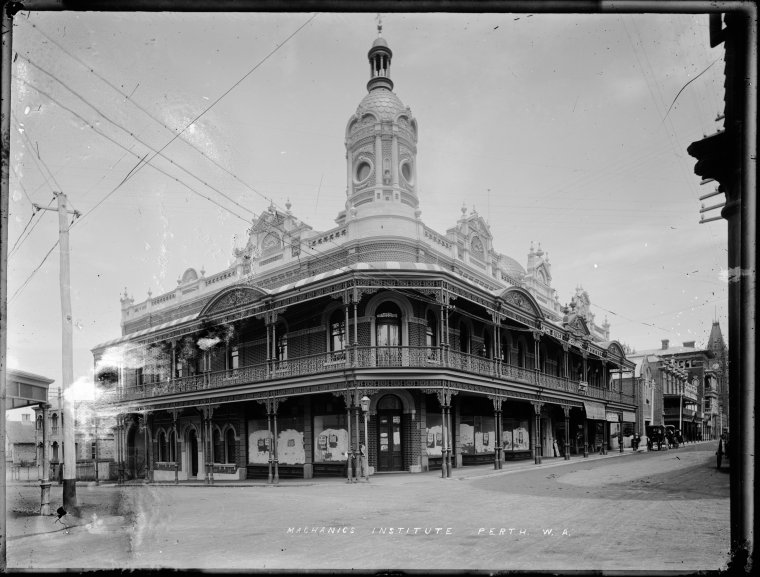
A large number of the buildings of Perth used to be crowned with black swans, for obvious reasons. One of the best adorned the Mechanic’s Institute, floating serenely amongst carved reeds and rushes.

mechanics

Something about the tower on the corner of the Mechanics’ Institute doesn’t look right. But that could just be us.

His Majesty’s Theatre is still capped by five huge lions contentedly resting upon the parapet. There are also several dragons woven into the design.

Lions relaxing after a hard day at the theatre

Lions relaxing after a hard day at the theatre

In Barrack Street one panel contained the visor and lances of a knight. While on the opposite side of the road, ten identical moustached faces gazed serenely over the traffic.

Although the majority of significant buildings on St. George’s Terrace were constructed when decoration was out of fashion, a couple of banks had faces above their entrances, one being that of a Maori.

But still, no gargoyles. Why did we miss out?