Misreading a Child: Phrenological Fantasy and John Gavin

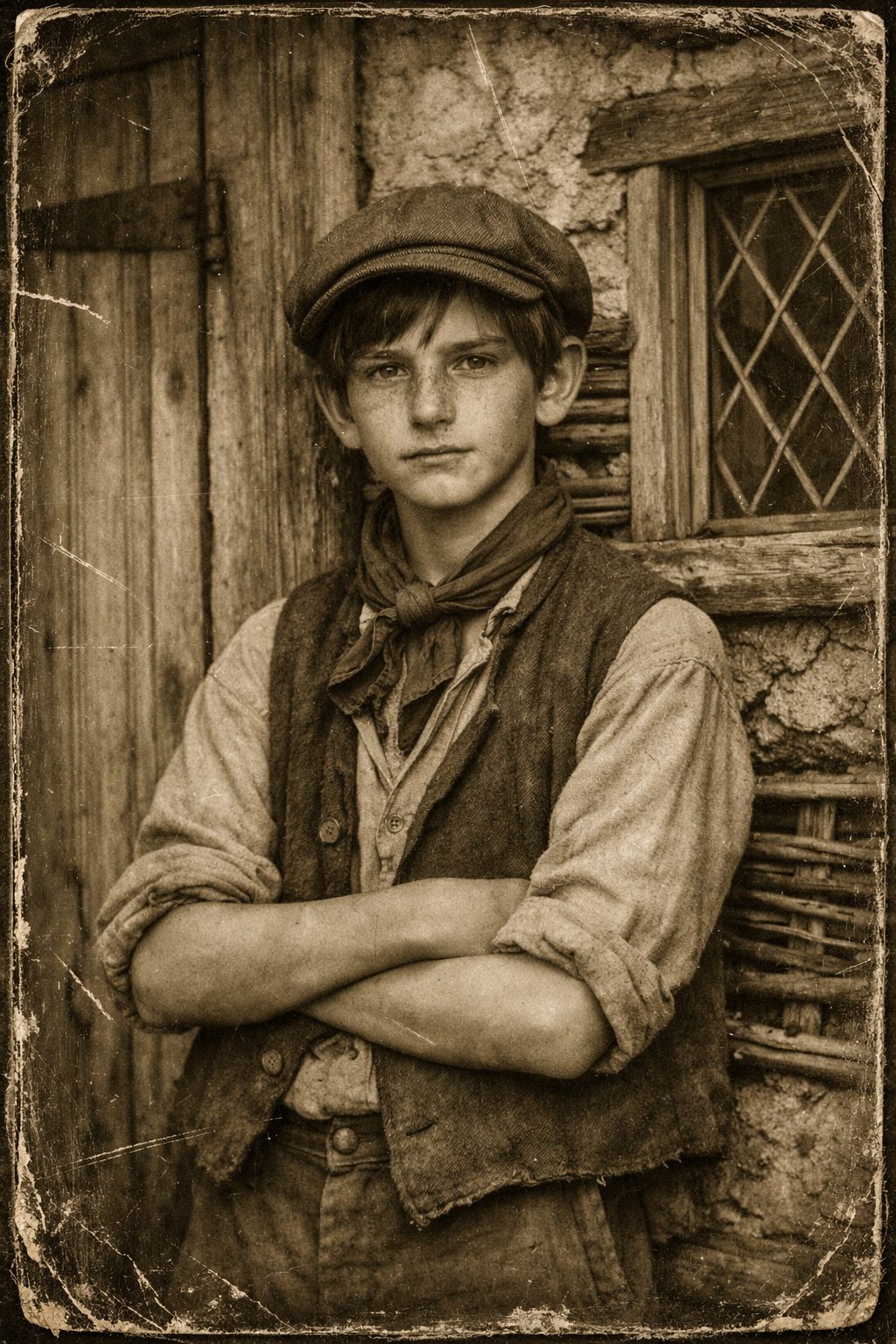
When fifteen-year-old John Gavin was hanged for murder at the Fremantle Roundhouse in 1844, the newspapers mentioned that a death mask and cast had been taken ‘for the purpose of furthering the ends of science.’ That brief remark hints at the intellectual world into which Gavin’s body was delivered, a world in which the human head was believed to reveal the secrets of the soul. Gavin’s skull showed ‘extraordinary formation.’ The front of the head, they said, was strangely narrow, the back bulged with ominous force. To modern eyes this sounds like the language of pathology, and some recent historians have mistakenly treated it as such. To the colonists of the 1840s, it was something more potent: a moral diagnosis.

Phrenology, that curious nineteenth‑century blend of measurement, speculation and prejudice, divided the skull into four regions: the anterior (intellect), the coronal (moral sentiments), the lateral (aggression), and the basilar (animal impulses). A well‑balanced character, phrenologists insisted, required harmony between these compartments. Too little intellect, too much passion, and a person was destined for trouble.

A decade after Gavin’s death, the colony would see this logic displayed in its most dramatic form. In 1853, after the bushrangers Patrick O’Connor and Henry Bradley were hanged outside Melbourne Gaol before a vast crowd, their heads were immediately measured and compared to the supposed ‘average British skull.’ The results were printed with breathless authority. O’Connor’s lateral region, the seat of destructiveness and combativeness, was said to bulge to ‘perfect deformity.’ Bradley’s anterior region, the home of intellect, was declared so small that he possessed the ‘passions of a full‑grown man and the intellect of a child.’

The conclusion was irresistible to colonial readers. Bradley, at least, was not so much wicked as incapable, a man whose malformed brain made crime irresistible. In the colonial imagination, he was not bad, just mad. And the implication was clear: if skulls could reveal such dangerous deficiencies, then the system ought to be identifying these people before they committed crimes, incarcerating them not as offenders but as biological risks. Phrenology promised a future in which criminality could be detected in advance, written on the body like a warning label.

This was the intellectual climate in which Gavin’s skull was interpreted. He was only fifteen, an apprentice in a household a world away from his home, but phrenology had no category for adolescence. Nor did it recognise the brutal shaping forces of the Parkhurst system through which he had already passed: a regime of silence, drill, and moral correction designed to break and remake juvenile offenders. Gavin had endured that discipline, stripped of identity and choice, before being transported without consent to Western Australia. There, he was assigned as an apprentice to a remote farm, isolated from anyone he knew, expected to reform through labour and obedience. In such a setting, far from the world he knew, his youth and vulnerability were invisible to those who later examined his skull. They saw only the contours of supposed criminality, not the marks of a harsh short life and an institutional cruelty that had already shaped him.

The claim that his ‘anterior organs’ were ‘very deficiently developed’ was not read as the ordinary physiology of a boy whose frontal lobes were still maturing. It was taken as evidence of weak intellect. The ‘enormous’ posterior region was read as proof of overpowering animal impulses. In the phrenological worldview, Gavin’s head did not belong to a frightened teenager, it belonged to a type, a body whose shape foretold his fate.

And this typology was already deeply entangled with the racial thinking of the colony. Phrenology was not only a theory of criminality; it was a tool of scientific racism, used to rank peoples and justify colonial rule. In Western Australia, settlers and officials routinely applied the same four‑region framework to Aboriginal people. Writers like Henry Landor claimed that the ‘narrowness’ of the Aboriginal forehead showed a lack of intellect, while the breadth of the base revealed an excess of passion. Missionaries, protectors and amateur scientists repeated these ideas, using phrenological charts to argue that Aboriginal people were naturally impulsive, childlike or incapable of civilisation.

These ideas were not confined to drawing rooms or lecture halls. They shaped policing, punishment and policy. Aboriginal suffering was dismissed as the inevitable outcome of ‘inferior’ cerebral development. Phrenology provided a scientific‑sounding justification for dispossession, surveillance and violence. The same measurements that condemned Bradley and O’Connor as ‘criminal idiots’ were used to deny Aboriginal people full humanity.

In this context, the reading of Gavin’s skull becomes more revealing than the skull itself. It shows how colonists understood crime, race and youth through the same distorting lens. It shows how easily a boy could be stripped of individuality and folded into a hierarchy of ‘types’ (the criminal, the Aboriginal) all imagined as governed by passion rather than reason. It shows how the colony naturalised guilt by locating it in the body, making execution or displacement from land seem not only just but inevitable.

Gavin’s skull was probably not abnormal. The framework used to interpret it was. But that framework mattered. It helped erase his youth. It made his conviction appear the product of biology rather than circumstance. It allowed colonists to imagine that the boy on the gallows had been destined for this end from birth. To understand Gavin’s world, we must look not at the cast of his head but at the cast of mind that surrounded him. A world in which pseudo‑science and racial hierarchy combined to turn a fifteen‑year‑old into a specimen, and a tragedy into a lesson about the supposed shape of criminality.
When an Agony Aunt Tried to Fix Racism (Sort Of)

I came across the following Agony Aunt letter thanks to the brilliant Boorloo Boodja Facebook page, an invaluable resource for WA Aboriginal history. What makes the page so compelling is its focus on personal, grounded stories that cut through the generic narratives often served up (by white folk like me) about Aboriginal people in this state. It’s a space for truth-telling, nuance, and lived experience.

Their post about a 1945 letter and an Agony Aunt’s response was thoughtful and well-framed. But I couldn’t help feeling that one key point had slipped through the cracks. In being rightly sensitive to the needs of their readership, the editor chose to edit the original letter for publication, removing the scientific-racist terminology used to describe mixed-race people. That’s absolutely their call, and in most cases, it’s the right one. But in this instance, it slightly muddied the waters.

Those uncomfortable terms (“quadroon”, “octoroon”, “near-white”) aren’t just offensive relics. They’re central to understanding how race was constructed, policed, and lived in 1940s Perth. Sanitising them, even with good intentions, risks losing sight of the racial logic the Agony Aunt was both using and very slightly challenging. So I went back to the original letter on Trove, and what follows is my take on what it reveals. This is not intended as a criticism of Boorloo Boodja, but as an addition to their retelling of this event.

Agony‑aunt letters have always lived in a curious space between truth and storytelling. Editors often shaped or combined multiple experiences into a single “letter” so they could address a real social problem without exposing any one individual.

With that in mind, the 1945 exchange between “Mary Ferber” (the pen name of Perth journalist Bonnie Giles) and a woman seemingly self-described as a “quadroon” is still an extraordinary snapshot of Australian racial attitudes at the end of the war.

“M.I.” describes herself using the racial categories of the time, explaining that she and her children are mixed‑race and facing constant discrimination in Perth’s housing market. Agents refuse to rent to her, country towns turn her away, and she feels trapped by prejudice she can’t escape. She writes with frustration, dignity, and a clear sense that the system is stacked against her. Her question to the Agony Aunt is essentially: What can someone like me do when society won’t give us a fair chance?

Ferber acknowledges the discrimination and treats the letter seriously. She insists the writer is “not Aboriginal” but “Australian with a handicap”, revealing the racial hierarchy she carried in her thinking. Ferber encourages mixed‑race people to form an association for mutual support and refuses to pity the writer, instead affirming her worth.

What stands out is how mixed the tone is: sympathetic, paternalistic, a tiny bit radical, and deeply constrained by the racial thinking of the time.

Ferber tries to distance Australia from the harsher racism of the United States, claiming that white Australians are guilty of “stupidity” rather than “active intolerance”. But this is an easy cop‑out. By pointing to the U.S. as worse, she gives white Perth a pass. Local racism isn’t worth worrying about because someone else is having it worse. It’s a classic deflection, and one that lets systemic discrimination off the hook.

But she does acknowledge discrimination as real, especially in housing, and treats the correspondent’s complaint as legitimate rather than inconvenient. Publishing the letter at all, giving a platform to a non‑white woman’s experience in a mainstream Perth newspaper, was not the norm for the era.

At the same time, her language reveals the limits of white liberalism in 1945. She draws a sharp line between “coloured Australians” (those of mixed race) and what she sees as Aboriginal people, implying that the latter sit outside her category of “Australian”. She uses blood‑quantum labels like “quadroon” and “octoroon” without question. She assumes assimilation into whiteness is the natural goal for those mixed-race Aborigines she sees as more civilised.

Yet she also encourages collective organisation among mixed‑race Australians, suggesting they form an association to advocate for themselves. That idea, in 1945, sits surprisingly close to civil‑rights thinking. And she refuses pity, insisting instead on dignity and capability.

So was her response progressive? By today’s standards, no. It’s steeped in racial hierarchy and paternalism. But for a white newspaper columnist in 1945, it sits on the more sympathetic and reform‑minded end of the spectrum. It recognises discrimination, rejects contempt, and treats the correspondent as someone whose voice deserves to be heard.

In other words: it’s a window into a society beginning to see its own prejudices, but not yet ready to dismantle them. In the end, it’s worth remembering that “Mary Ferber” was remarkably consistent in her own version of anti‑racism. She wasn’t just talk. A few years after this letter, she publicly campaigned for an Aboriginal women’s hostel in Mt Lawley at a time when local residents were loudly, angrily opposed to the idea. She took heat for it, and she didn’t back down.

But she also never escaped the racial logic of her era. Her worldview divided Aboriginal people into two imagined categories: the “good”, mixed‑race individuals who could be welcomed as fellow Australians, and the “full‑blood” people she assumed were destined to remain outside mainstream society. It’s a framework that feels deeply uncomfortable now, and rightly so. Yet it was a common mid‑century belief among white progressives who saw themselves as allies.

Like most things in the past, it’s messy. It doesn’t sit neatly with us today. And it’s exactly why Aboriginal voices from this era must be the priority: voices that speak from lived experience rather than from the well‑meaning distance of white commentary.

That’s precisely what Boorloo Boodja excels at: bringing forward those personal, grounded stories that shift the centre of gravity back to where it belongs. We can acknowledge Ferber’s efforts, and her limits, without turning her into a white saviour, and without losing sight of the people whose stories matter most.

The naughty racist elephant

Jumboroo in 1922

Jumboroo in 1922

Hello children. Are you sitting comfortably? Today we will tell the story of Jumboroo the racist elephant.

Mr Le Souef was sad. He owned a zoo. But he did not own an elephant. “What use was a zoo without an elephant?” thought Mr Le Souef.

Mr Le Souef had a Government friend called Happy Jack Scaddan. In 1922 Happy Jack was visiting Kuala Lumpur. He saw they had lots of elephants. So he asked if Perth Zoo could have one.

The nice people in Kuala Lumpur said yes. They promised to send an elephant to Happy Jack as soon as possible. So little Jumboroo was caught and placed on-board a ship bound for Fremantle.

On they way, Jumboroo fell through a hatch on the deck and tumbled six metres into the cargo below. What a naughty elephant. After that he was held in tight chains for the rest of the journey. Don’t you think he deserved it, children?

When he arrived at Robb’s Jetty, Jumboroo was scared of the big crowd there. He tried to get away. The people said he was a very naughty elephant indeed.

Jumboroo was even more frightened when they used a crane to lift him onto a small ferry to take him to South Perth. He made lots of noise. The people said the elephant must be very wicked to be so noisy.

When they finally dragged Jumboroo into the zoo, he did not want to go. The naughty little elephant was terrified of the roaring tigers. So Mr Le Souef said he would keep the mischievous elephant in chains since he was not behaving himself.

All the children came to see Jumboroo at Mr Le Souef’s lovely zoo. But the naughty elephant did not like it at the zoo, and he would not play with the lovely children.

The zoo people decided Jumboroo was racist, and only liked black people from his home country.* And you can’t have a racist animal in Perth Zoo. Can you, children?

So Mr Le Souef sold Jumboroo to Perry’s Circus for fifty pounds.

And the naughty racist elephant went off to start his new life in the Eastern States as part of the circus entertainment. We are sure he must have been very happy in the circus. Everyone loves circuses, don’t they?

Goodbye, Jumboroo the racist elephant.

* Actually they did not say “black people”. They said another word Dodgy Perth cannot use, even if Kanye West can.

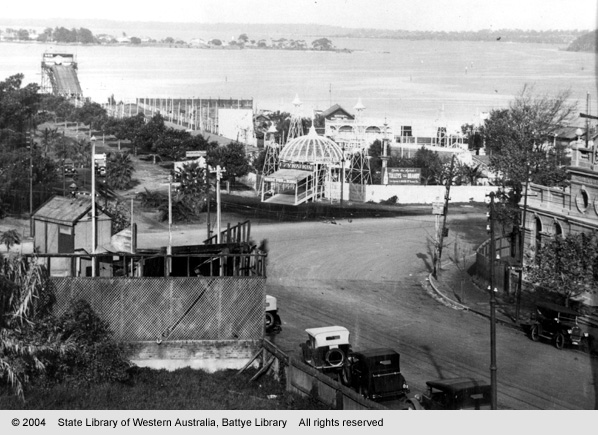
Farewell to White City

Farewell to White City,
 Which was always black;
Farewell to the ‘angels,’
 Who will get the sack.
Farewell to housey-housey
 And the dreary jazz.
And the spinning jennies
 And the razzle-dazz.
Farewell to the rotten
 Desire to win
By hooky or crooky
 The other chap’s tin.
Farewell to the cancer
 On the fair face of Perth.
Farewell to the pervert
 Who gave it birth.
Now for disinfectants
 To sweeten the spot,
And clean up the microbes
 On the blighted blot.