Fancy a nude at the beach?

nude bathing

The Dodgy Perth team takes a break from reseach

One day Dodgy Perth will tell the story of the building of Naval Base. It was basically one terrible government decision after another, wasting thousands and thousands of tax payers’ hard-earned money.

Wait. That is the story. So let’s move on to how a much better use for the disaster was found in the early 1930s.

By 1933, it had become the most fashionable spot on the coast for nude bathing parties.

Nude parties had long been popular along the Swan and at beaches closer to town, but the police started taking a more proactive line and few people wanted to spend the night in the slammer.

So those who sought to shed civilisation along with their clothes and frolic free with only the waves to envelop them had to find new locations.

So Coogee it was, and particularly around the Naval Base. There nude parties became nightly events. Regular readers of Dodgy Perth will not be surprised to find the media shocked to discover that it was not just the working-classes attending these parties, but perfectly respectable types too.

And more than one party of girls—and fairly high-class girls at that—have taken the opportunity to bathe in the moonlight at Naval Base.

If these were only single-sex parties, it seems hard to find anything wicked in them. But some young types had—we shudder—gone to Naval Base with the intention of having mixed events.

Take for example, the tragic case of five Fremantle girls, all from quite well-to-do families. They drove out to Naval Base for a “quick nude” at the beach one night.

They stripped off in the car park, and walked down to the sand. But imagine their consternation when they saw several young couples already playing on the water’s edge, every one in their birthday suits.

And as they turned to retrace their steps to seek a quieter spot two more car loads of nude bathers raced down the beach, and plunged in.

Having blushed their way back to the car they donned their clothes and made off for home. But on the way they were noted many other nude parties—mostly mixed—at Coogee and the Smelters.

This may not be the ideal time of year for a quick nude by Kwinana Power Station. But if you are going, do drop the Dodgy Perth team an invite.
We want the real museum back

Dutch sailor, 1935

Dutch sailor, 1935

Earlier this year archaeologists got all excited about discovering skeletons resulting from the slaughter after the Batavia shipwreck.

These were the most major discoveries, they said, since the first bones were unearthed in the area in 1960.

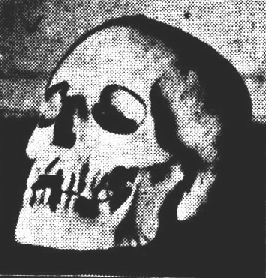
Perhaps they should have asked the Western Australian Museum which has had a collection of Dutch skulls wrecked on the Abrolhos Islands since the museum opened in the 19th century. Although, it must be said, they’ve kept them somewhat under wraps recently.

In the good old days, anyone could visit the museum and experience the thrill of looking at the skulls of the Dutch mariners, the pipes they smoked, and the flagons from which they quaffed their wine.

Not to mention a collection of associated rosaries, cannon balls and other ship’s gear.

We the public have a right to know why the museum is keeping all the interesting stuff from us.

Where are our four-legged chickens? And where are our shipwrecked sailors’ skulls?

Why would we want to look at anything else?

The course of true love

Winnie Beattie

Winnie Beattie

“Wilt thou take this man to be thy lawful wedded husband, to love, honour and cherish in sickness or in health, for richer or poorer, for better or for worse till death do you part?”

“I will,” said Winnie Beattie to the minister one Saturday afternoon in June 1931. Trouble was, her mum was not of the same mind. And this was just one event in the strangest romance Perth has ever seen.

Four years earlier young Jack Garrigan (then seventeen) fell in love with pretty, vivacious Winnie, then just fourteen. They spent all their spare time together, and during the day the stayed close since both were employed at Boan’s Department Store.

But when the Depression came, Jack lost his job. Winnie’s parents vowed they would not consent to any marriage while the lad was out of work.

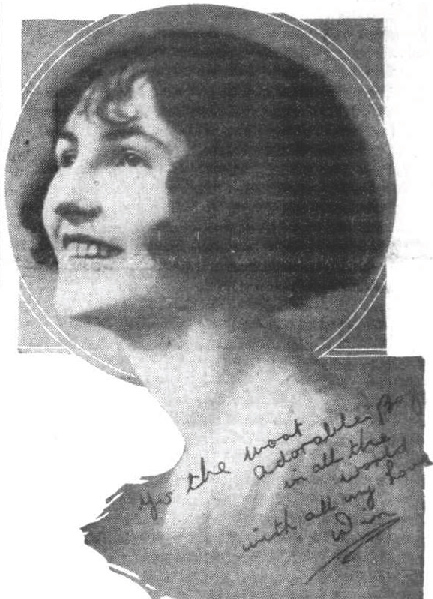
However the couple were still wonderfully in love. Winnie gave Jack a photograph of herself inscribed, ‘To the most adorable boy in the world.’

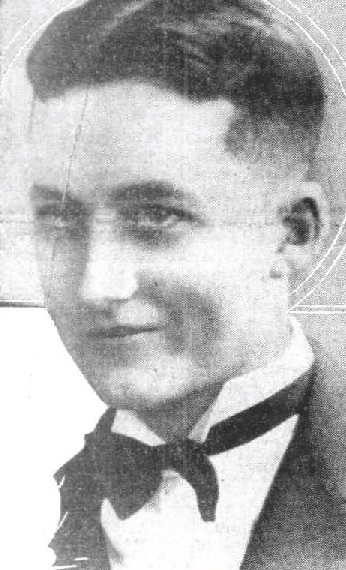
Jack Garrigan

Jack Garrigan

One day they were walking by St George’s Cathedral when they saw the notices of forthcoming marriage. In a rush of pure love they agreed to marry and only tell their parents afterwards.

But whispers soon spread, and friends became excited. Wedding presents were purchased and what was going to be a quiet at the registrar’s office became a full ceremony in the cathedral with organ accompaniment.

On the night before the wedding, Winnie broke the news to her mother. There were, of course, tears and recriminations. Jack’s parents, though, still knew nothing.

On the Saturday the bride went off to dress at a friend’s house. One hour before the ceremony Jack went home—to break the news to mum and dad. Although in shock, Mr and Mrs Garrigran hid their feelings, and went to St George’s Cathedral to attend a wedding of which they were totally ignorant an hour before.

The little crowd of guests were not kept waiting. At 4 o’clock the young bridegroom took his seat in the front, attended by his close male friends. Unnoticed, a lady in a fawn coat stepped quietly inside, choosing a seat in the centre of the church.

As the organ started, the bride walked up the aisle on the arm of a friend, with two bridesmaids in attendance. The dignified figure of Dean Moore stood in front of the altar and the little party grouped round him.

The Dean read the words of the marriage service, until he came to the famous phrase. “If anyone knows just cause or impediment …”

Then out of the still Cathedral came a slow, distinct voice: “I object!”

The Dean looked down the aisle and the lady in the fawn coat approached the altar. “I am her mother,” she said, “and she is not 21!”

The guests whispered in little groups while the bride wept in the vestry. The minister spoke with the parents, but to no avail. The ceremony could not proceed.

The boy and girl drove away together, the guests drifted off, and soon the cathedral was empty. For the first time in the history of St. George’s Cathedral a parent had spoken and forbidden the marriage.

But love will find a way! The couple still had a license to marry in their possession, and within a couple of hours, a Methodist clergyman was uniting them in the sitting room of a home just off Beaufort Street.

That night a car slipped quietly away to the Kalamunda Hotel. None of the guests knew that the shy couple at breakfast on Sunday were the principals in a sensational events of the night before.

But shortly before lunch a car drew up at the hotel and with determined step a man and a woman entered. Mother and father stood before the bride and her husband. Within minutes, Jack was left alone in the bridal chamber. His wife was gone with her parents back to Perth, his honeymoon lasting just twelve hours.

The bride’s mother sought to have the marriage annulled on the grounds that both had married without their parents’ consent. The court ordered the bride be returned to her parents’ control until she reached the age of 21.

Within a week Winnie had gone to Melbourne, supposedly for a long holiday, but she paid for Jack to join her. And they both slipped back to Perth and took up new jobs.

In 1932, a notice appeared in the newspapers: ‘On June 22, at Malvern Private Hospital, 222 Eighth Avenue, Inglewood, to Mr and Mrs Garrigan, 29 Museum Street—a daughter (June Dawn). Both well. Visitors after 27th.’

Sometimes great stories do have happy endings.

They’re heeeere!

Pinjarra_bridge

Just don’t ask what lies below

If you’ve ever gone on holiday via the South Western Highway, you have driven over the last resting place of Pinjarra’s earliest settlers.

According to Tobe Hooper’s 1982 documentary, Poltergeist, it is very dangerous to build on top of graveyards without moving the bodies first. And yet this is exactly what Main Roads did in 1954.

There have been a number of bridges crossing the Murray at Pinjarra, of which the 1897 one was falling down some fifty years later. It had been designed for the horse and buggy era and couldn’t cope with modern transport.

Many of the piles had rotted and engineers were amazed the whole thing had not collapsed. Although when it swayed alarmingly as stringers were removed, the workmen had to scurry to safety.

The new bridge (which is still there) was also timber, and overshadows the tiny church of St John next door.

Here many of Pinjarra’s white pioneers lay buried. But to make way for the new bridge, Main Roads needed a portion of the churchyard.

Presumably to save money, they simply dug up the gravestones, rested them against the church and built a new road over the top of the graves.

Is that really how we treat the deceased in Western Australia?

There were certainly local signs this was not a good idea. An earlier bridge over the Murray had been haunted in the 1870s by the spirit of a local lady, known to us only as Aunt C.

We warn Main Roads what happens in history once—in Poltergeist—could easily happen again.

For the sake of our flaxen-haired little girls, please Main Roads do something before They’re Heeeere for good.

Slumming it

Pages from poverty

Poverty Point, Fremantle, March 1953

A couple of years ago a YouTube video Postcard from Perth was much circulated round these parts. Filmed in 1954, it showed an idealised vision of a utopian city.

How idealised? Just look below the line. Comment after comment from people wishing they lived in the 1950s rather than now.

So, how accurately did this film portray the reality of everyday life? On a scale of 0 to 10, we would have to say minus six.

Imagine being old, or disabled, or Aboriginal, or a war veteran. What was Perth like in 1954 for these people?

The answer is they were to be found living in dwellings constructed of rusting corrugated iron and old bags. These ‘homes’ afforded little protection from the weather. Floors were just sand with chaff bags as mats.

Without water or power, none of the houses had bathrooms or sanitation. Improvised wells provided washing and drinking water.

These slum conditions were not in remote communities. One was in Fremantle between South Beach and the Power Station. Known as Poverty Point, the colony of more than fifty was adjacent to a smouldering rubbish tip, a fertiliser factory using fish offal, and an old abattoir. It was strewn throughout with filth and rubbish.

Many of the buildings were constructed from flotsam and jetsam, second-hand galvanised-iron, broken bricks, fruit cases, and chaff bags. Fences were bedsteads and curtains were improvised from sugar bags.

One pensioner, A. A. Bottomly, said he wasn’t proud to be found living in those conditions. But with rents so high in the city, “I have my choice of starving in a slum in town or eking out a frugal existence rent free here. I choose this.”

Another pensioner, Mrs M. Westicott, had lived in the slum for seven years. She and her husband, a war pensioner with a lung complaint, had to make ends meet by salvaging objects washed up the beach. Mrs Westicott had once been known as the ‘Queen of Coogee’, but was now reduced to third-world conditions.

Andy Nebro, one of the Aboriginal residents at Poverty Point, was just 22. He was hoping to take his wife out of the shanty town to somewhere more liveable. We hope they made it.

So when you look at Postcard from Perth, just remember that there could have been other postcards in 1954. But the government didn’t want you to see those ones.

When museums were fun

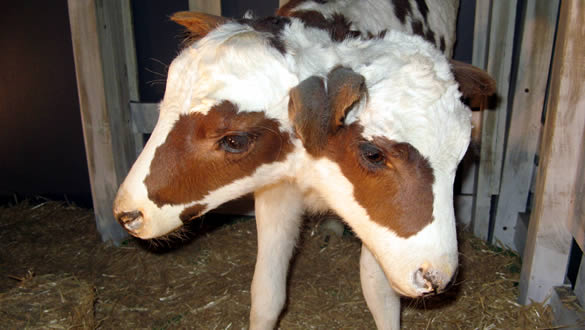
two_headed_calfThe Western Australian Museum used to be interesting.

No. Wait. Hear us out. We’re serious.

In 1888 they displayed a (dead) chicken with three legs.

The following year they outdid themselves and had a four-legged chicken on display. 1890 appears to have passed without the number of legs on chickens increasing.

Not until 1903 did the museum collect a small dead wallaby with four hind legs and two pouches, which was shot somewhere near Bunbury.

1906. Two headed calf from Australind.

1910. A Bunbury lamb that looked like a rat.

The following year another four-legged chicken (yawn). This one pickled in a bottle of spirits.

In the middle of World War I, the museum obtained a fish with the body of a snake but the head and tail of a fish. They think of naming it the Anzac Frost Fish.

1920. Two headed lamb (haven’t we had one of those already?)

In 1936 Otto Lipfert, the museum’s taxidermist, stuffed Bricky, the Bayswater freak calf, and put him on display. Bricky later went on tour to UWA.

During World War II, two-headed lizards were all the rage. (And also in Japanese horror movies in the following decades.)

After that there were a whole string of two-headed lambs, bobtails, and the like.

The WA Museum should open its archives and redisplay each and every one of these donations. Or explain why they’re hiding them.

Also, a new museum is about to open in Perth. It had better have at least one freak of nature, or it’s letting the side down.

Ashes to ashes

As the Ashes start tonight, we thought it only right to look back at one of the most important cricket matches in Western Australian history.

In October 1954 the 10,000 ton freighter Paloma was en route to Fremantle with her cargo of frozen meat to be picked up at Wyndham. While the meat was being loaded, Captain Perry offered his traditional challenge to the Wyndham Cricket Club.

The match was played in extreme heat on a bumpy ground covered with a large number of trees. Because there was no discernible boundary, every run had to be sweated out.

One Wyndham batsman was hospitalised by an over-enthusiastic fast bowler, and everyone's heads were sore following the clubhouse drinks.

The game was close, but finally won by the men of the Paloma by seven runs. The only time a meat ship eleven had ever defeated a local side.

In celebration, a screw top jar was filled with The Ashes of Wyndham and presented to Captain Perry.

Now, it might be unfair to note that the Paloma was carrying the English cricket side, which had already won the other Ashes, even before playing at the WACA. You might even use the words 'eleven ring-ins'.

But at Dodgy Perth we prefer to remember it as one of the few times an English team has won on WA soil. Just because we can.


Brutish behaviour, and that’s just the zookeepers

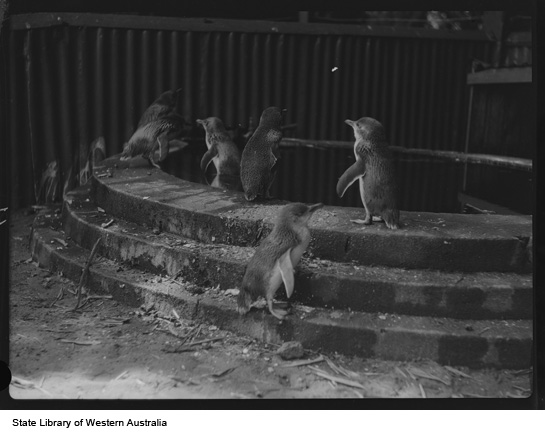
penguinsSpeaking of Perth Zoo. In 1924 they threw a Tudor dress-up day. And a record crowd sat among the palms as Queen Elizabeths and Mary Queen of Scots.

Among the crowd was a journalist who wrote under the pen-name Omar Cayenne. We’ll call him Omar.

Omar loved the botanical garden feel of the place, but the plight of animals made him feel sick.

Take, for instance, the bears. Their habitat was so disgusting that if a circus proprietor kept animals in such condition he would have been jailed. They lived in conditions so bad, Omar recommended that no one should even look at them.

The Australian dingo, an animal whose home is the wide, open spaces. This poor brute was cooped up in an enclosure that resembled a freezing chamber. With only a concrete floor, the sick animal was trying to scrape a hole for himself in the hard floor. Obviously no one at the zoo thought to have put some sand in his den.

Nor did Omar approve of putting live frogs into the snakes’ cages, so they could be devoured in the presence of horrified children.

Walking through the grounds, all you could detect was the general air of decay and neglect. The excuse was that there was no money for repairs. Something Omar dismissed as a simple lie.

During the summer the zoo was the rendezvous for tens of thousands, attracted by the beautiful gardens and pleasure attractions for the kiddies. The tennis courts were packed and expensive to book, and so profitable the zoo kept expanding the number of them. There was plenty of money available to spend if they wanted to.

Omar had once lived near the zoo and could testify that during the summer months the stench arising from the place was overwhelming. He suspected the local government would have closed the place long ago if it wasn’t paying a good portion of the local rates.

Keep the birds and the plants, said Omar, and make an ideal botanical gardens. As for the animals, if their present miserable conditions cannot be improved they should be mercifully destroyed, and thus end this tragic farce.

The Dodgy Perth team have never been in favour of zoos, and it is entirely possible that Omar’s recommendations from 1924 should stand today.

Mauled in the lions’ den

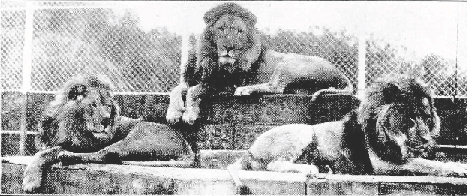
Lions at South Perth Zoo

Lions at South Perth Zoo

In June 1952 a bizarre death occurred at Perth Zoo. Alexander Lindsay Edmeades, of Snook Crescent in Hilton, had jumped into the lions’ den where he was attacked by the occupant.

His badly-clawed body was found about 8 a.m. on the following day.

Strangely, the 36-year-old clerk was not seeking to end his life but attempting to prove his faith in God. A few days before his death, Alexander had written a letter announcing his intention to fast for 51 days, which would save many thousands of souls in Australia.

Alexander was suffering from schizophrenia, which had been triggered during World War II and his last-minute escape from Singapore. Before the war, there had been no signs of mental illness at all.

And Alexander was not the first to be killed in the lions’ den. Just one year earlier Dorothy Bostock had also climbed the 18ft enclosure and jumped to her doom, only discovered the next morning.

The coroner ruled that he did not believe Alexander’s motive was suicide, but a case of someone in the grip of a religious complex. Normal mental processes had been completely swamped by this mania.

Alexander genuinely believed that, like Daniel, God would protect him and that his actions would bring people to salvation.

“I would ask members of the public to take a generous view of this man’s action—and indeed of those of all people who take their lives,” the coroner added.

Last orders at the old Olde Narry

Ye Olde Narrogin Inne

Ye Olde Narrogin Inne

When Ye Olde Narrogin Inne was bulldozed there were, of course, complaints from a few heritage-minded people. Although everyone agreed the original pub was somewhat decrepit, its romantic links back to coaching days had long made it a favourite of travellers.

To commemorate Western Australia’s centenary, a tablet was unveiled at the Inne, noting that it first opened in 1857 and the first licensee was Thomas Saw.

Yet in 1937, just eight years after this heritage recognition, the licensing authority condemned the hotel as being unfit for conducting business. Improving the old building wasn’t viable, so it had to be demolished. There’s not a lot of romantic souls working at liquor licensing.

The New Olde Narrogin Inne was very different to the unpretentious single-storey edifice it replaced. Although it is hard to imagine it today, the pub was in the latest fashionable style, Mock Tudor.

In fact the owners kept stressing how modern the Inne now was. No more grime and dust, just contemporary furniture resting on contemporary carpets. For some reason they were obsessed with how cool (and expensive) their carpets were. They also encouraged drinkers to finger the new furnishings. Which is just wrong in all the ways.

Anyway, this most modern of hotels is now heritage listed. And no one mourns the loss of the original Inne. No one

Now what makes me think of Guildford?