Fifty Shades, 1940s style

spanking

Obviously I’m not doing this for my own good

Today, we go all Dodgy Sydney on you. Why are we abandoning the pleasant sunny shores of Western Australia? Well might you ask. You did ask, didn’t you?

The answer is simple. This letter sent by a serving WWII RAAF officer to his wife back in Sydney is just too good not to share.

Put on your pyjamas. Sit up in bed with a cocoa. And prepare to have Norman Robinson go full-on Fifty Shades on Gloria Constance Robinson:

As you know, dear, married couples often finish up in the Divorce Court through spanking, and in all these cases, dear, I think it’s because the female does not understand the male. She fails to see spanking as an expression of love.

Spanking is introduced into a marriage to terminate an argument, and the husband experiences great heights of exquisite delight and finds an outlet and gives expression to his fierce love for his wife.

The wife (being her first spanking probably since she was a child) experiences only the indignity of it and the physical pain.

But the husband has now found an outlet for his fierce love for his wife, and so he makes mountains out of molehills in order to obtain an excuse to spank her, with the result that the wife finds herself being spanked for every little thing she says or does.

The husband finds he has to spank her harder and longer to get the required results. The husband has to spank his wife for probably ten or more minutes before he begins to feel any reaction.

Darling, if you or any woman could experience the exquisite delight a husband gets from spanking his wife you would submit as often as you were physically capable.

Complete harmony, dear, could be obtained, I think, by regulating the spankings to a minimum of about one per week. If love required, twice weekly.

In our case, dear, as I said in the other letter, I would be fully prepared, should you feel the inclination, to bend over your knee, or lie face downward.

Racist tables and bigoted Boans

Nice to know, isn't it?

Nice to know, isn’t it?

There was a time when every piece of furniture in Western Australia had a racist stamp on it. Every. Single. Piece. From 1900 to the 1960s all furniture had to declare whether it had been made purely by good honest white workers, or had been sullied by being touched by people from South East Asia.

Seriously. It was either stamped ‘European labour only’ or ‘Asiatic labour’.

Chinese craftsmen were well-known for producing quality pieces at lower prices than the white-only factories could. So the unions objected and—thank you, White Australia policy—the government passed laws to make sure buyers knew which race had produced them.

Some union leaders went further and demanded furniture factories should have glass fronts so customers could check the place wasn’t secretly employing people from South East Asia.

Looking just like Gestapo headquarters

Looking just like Gestapo headquarters

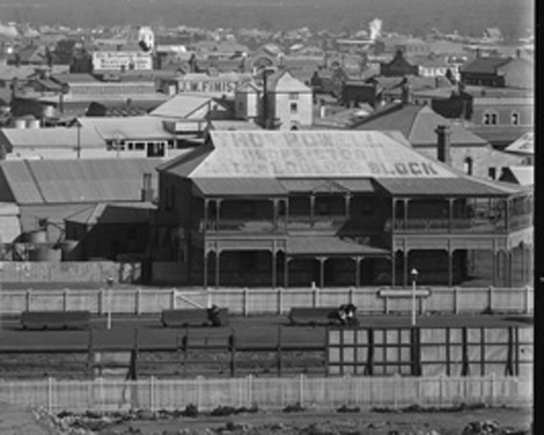
One of the worst local retailers who cashed in on the racism of their customers was Boans. They regularly advertised that they would only make and sell furniture without Asian employees. Which, in Boans’ opinion, meant their chairs and tables were superior.

It has always been the policy of Boans to employ European labour only in their factory, which means that the highest possible workmanship is put into every piece of furniture produced.

Unfortunately for bigoted retailers and manufacturers, some members of the public weirdly preferred the same items but at less cost. There’s no accounting for some people’s lack of racial pride.

If you want to see a piece of racist furniture in action, visit Belmont Museum and ask to have a look under their kitchen table. It’s shocking, but definitely worth a look.

Last night a DJ ruined my life

Mrs E. Halliday and her wireless, 1950

Mrs E. Halliday and her wireless, 1950

Everybody has one friend who “can’t bear to listen to commercial radio”, and who praises JJJ.

The same friend will also tell you all modern music is rubbish.

I. Can’t. Even.

Anyway, in Dodgy Perth HQ we are unashamed to have 94.5 FM blaring away as our crack team of researchers finds ever more stories from the past to entertain you.

Today: What did people think of commercial radio in 1949?

Not a lot, if we are to believe the Westralian Worker, who listed seven specific harms of listening to such stations.

Channels such as 94.5 and 92.9 have:

  • Destroyed silence and the ability to create our own amusements.
  • Played music only fitted to an “asylum for cultural perverts”.
  • Bombarded us with adverts which are disgusting and impudent.
  • Ruined family life by removing the need for conversation and let DJs into the family circle, a type of person who would normally never get past the front door.
  • Turned the whole country into noise hungry robots.
  • Lowered standards of music, literature and drama.
  • Hampered education by encouraging mediocrity, inaccuracy and sensation.

Okay. We get it. Back to JJJ for us then.

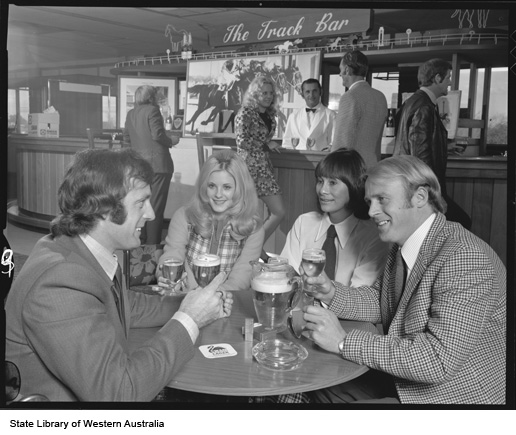
Drinking in the men’s room

Women listening as men discuss manly things

Women listening as men discuss manly things, like hair-dos

Is it acceptable for women to down a schooner in a public bar? Or should the fair sex be confined to the lounge bar? In Brisbane fifty years ago, activists Rosalie Bogner and Merle Thornton had to chain themselves to a foot rail just to get served.

We were a bit more progressive that that in the 1950s and ’60s. Unlike Brisbane, it was not illegal for a woman to have a beer in a saloon. But most publicans did not approve. Men needed their own space, somewhere men could be men.

In 1953 the Sunday Times asked if lasses should enter such a testosterone-rich environment. The journalist noted that most women did not want to prop up a bar, even though drinks were more expensive in the lounge. (When did this practice of different pricing stop?)

In the summer, one Cottesloe hotel usually had representatives of the fair sex drinking in the saloon bar. But this was the exception, rather than the rule for most hotels. Unless you lived in Armadale. Nobody had the nerve to tell Armadale women where they should drink.

For most Perth hotels, though, publicans said they would object if a lady invaded the men’s space, and she would be directed to the special place set aside for women to drink in.

We’d like to see some landlord try that one with Mrs Dodgy Perth.

When heritage kills

095,505PD

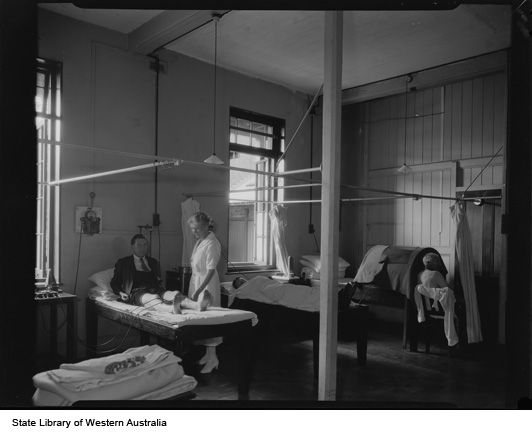
Perth Hospital, 1932

As stories continue to grow about the troubled Fiona Stanley Hospital, Dodgy Perth looks back to a time when medical things were much, much worse. We refer, of course, to what is now called Royal Perth Hospital, but was then simply Perth Hospital.

In 1937, Melbourne architect Arthur Stephenson was asked to report on the conditions at Perth Hospital. His report was damning. The place did not have one redeeming feature. It was “insanitary” and “indecent”.

This was certainly the worst hospital in Australia, and probably one of the worst in the world. Medical care had been better in the fifteenth century. Stephenson was baffled why Perth was not up in arms. The place attracted swarms of flies feasting on partially decomposed corpses piling up in the so-called mortuary.

It was only because doctors and nurses were trying to do their best, he said, that the hospital could even be called a medical establishment at all.

However, reforms were being held up because of the heritage lobby. Improvement required a decision as to whether the hospital should be developed on the present site or a new complex built elsewhere. But the old Colonial Hospital (still there in RPH to this day) and its attendant buildings were much loved. Patient care be damned when there is heritage to save.

Stephenson saw the “ingrained dislike for destroying old buildings” in Perth, but still said it was a simple choice. If the hospital was not to move, existing buildings would have to be replaced. They could have heritage or health care, but not both.

It took nearly ten years to complete the transformation from Perth Public Hospital to Royal Perth Hospital. It is still unclear whether keeping the Colonial Hospital was sentiment or cost-saving. And disputes about the location of hospitals and their heritage value have not stopped yet.

“A conspiratorial journey to mock Finland”

Jonathan Clements is a very annoying historian.

He is prolific, cool, and has an incredible range of interests, each of which he writes about brilliantly but with deceptive ease.

And he even manages to look smokingly handsome in his publicity shot.

His book on the Vikings is probably the best introduction to that subject we have ever read here at Dodgy Perth HQ.

For all of the above reasons, and probably more, we hate him.

ixarette's avatarThe Official Schoolgirl Milky Crisis Blog

41CH3PO2YYL._SY445_Edward Dutton’s much-appreciated review of my Armchair Traveller’s History of Finland appears in the Scandinavian Journal of History 40:1, and decrees it to be “lively and humorous… a good introduction to Finland…[that] successfully negotiates the various problems that bedevil producing a history book aimed at undergraduates.” He pays it an immense compliment by assuming it should be let anywhere near an academic syllabus in the first place, but perhaps is already looking forward to arguing with his students about the terrible things I say about Russian tourists and fundamentalist Lutherans.

View original post

In praise of Forrest Chase

padburys

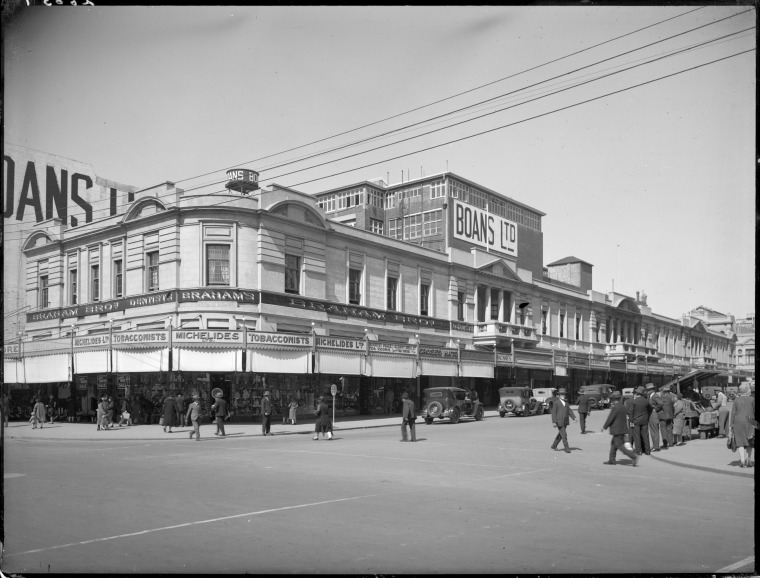
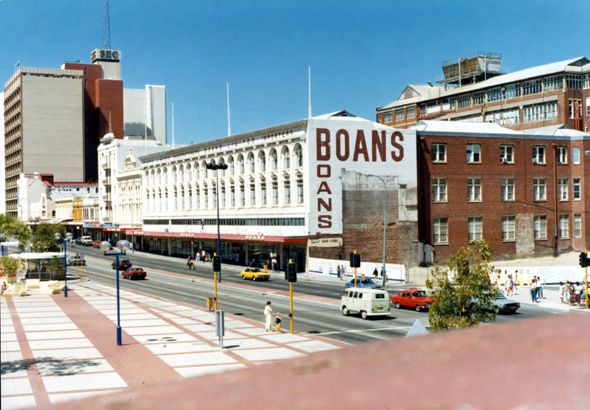
Before Forrest Chase, the ugly Boans building dominated the streetscape

Today we tell a familiar Perth story. How a potentially great space became a disaster. We’re not talking about the delightful Forrest Chase, complete with detailed precast lattice work. Good lord, no. We mean the vile Padbury and Boans buildings which were there before it.

After the General Post Office was finished in 1923, it was assumed that the Federal Government would turn Forrest Place into a park for local residents. This would link the Railway Station to Murray Street for the benefit of all. A petition went to Parliament, requesting that Forrest Place be reserved only for public purposes.

Instead, the Feds, determined to claw back as much money as they could after the GPO project, gave a fifty year lease to William Padbury to build a shopping centre opposite. Naturally, there was outrage that the “people’s heritage” was to be converted to “brick and stone” simply for the purpose of making a quick buck.

That’s right. To build Padbury’s involved a loss of our heritage. William Padbury was already a rich man, it was pointed out. Could he not work for the public interest and build his hideous shops somewhere else?

Padbury did not see it that way and commenced construction.

padbury

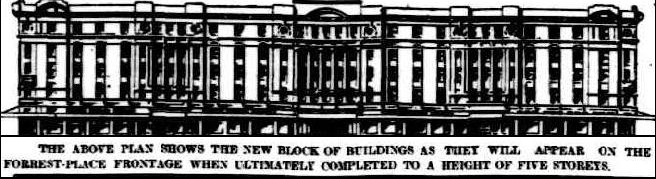
This is what William Padbury promised to build.

In a story headed ‘Beauty and the Beast, or How Not to Build a City’, it was noted that Padbury’s would make Forrest Place too narrow. In any case, there were already too many “tawdry structures”, such as the Central Hotel next to the GPO. Padbury’s would just be one more.

But there was a way of saving the situation. One problem with Forrest Place was Boan’s unsightly wall. If Padbury’s had to go ahead, a five-storey building could work in this space, and justify the loss of public space.

However, William Padbury, like any good capitalist, was not going to spend more money than necessary. Since the Feds were in control of the land, not the City of Perth, a cheap two-storey building was erected. Padbury vaguely promised to put up another three storeys in the future, but no one really believed him.

padbury3

The disaster some predicted

Any two-storey building must be in proportion to its street frontage. Padbury’s, at several hundred feet, was far too wide to have any aesthetic balance. In any case, Boan’s dominated above the low parapets, ruining both Forrest Place and any pretence to architecture Padbury’s might have claimed.

Forrest Place was a tragedy because the Feds simply wanted money. Padbury simply wanted money. And Boan’s was a hideous piece of architecture to begin.

Now tell us you still hate Forrest Chase.

Green(er) on the other side

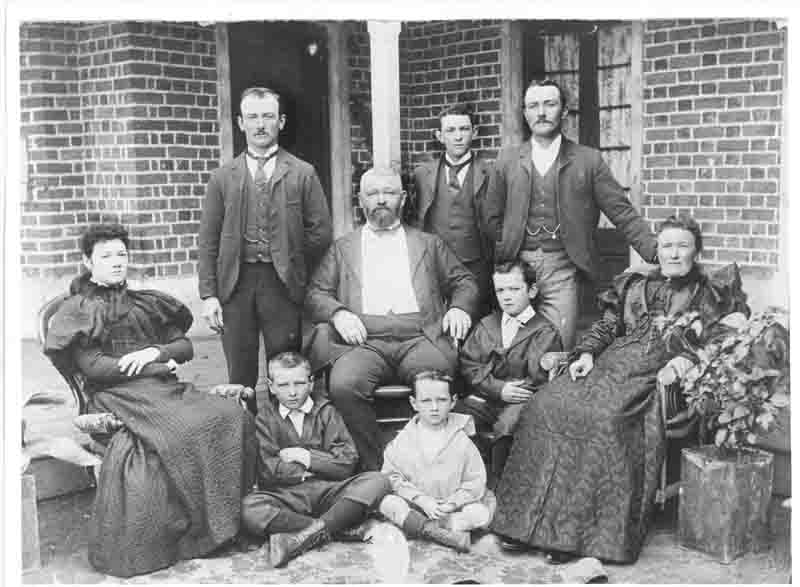
Edward McLarty and family, 1900

Edward McLarty and family at Edenvale, 1900

Are you ever too old to carry on with married women? This is the question we at Dodgy Perth will consider today.

In 1912, Reuben Green sued Edward McLarty for failing to make good on a £500 promissory note. So far, so straightforward.

Reuben was a labourer and mailman in Pinjarra, while Edward basically ruled the town like a medieval squire. He was JP and MLC, owned the biggest house (which you can still visit today), and was the father of a future Premier.

So perhaps it looks like Reuben was brave suing such a bigwig.

No, not brave. Stupid, as it turns out.

At this point, let us introduce Mrs Jessie Green, Reuben’s wife. Well, technically not wife, since Jessie wasn’t sure if her previous husband was alive or dead. But she called herself Mrs Green anyway.

Jessie was a middle aged, homely-looking matron, who was nearly as deaf as a post. But somehow she had caught the eye of the local squire, and whenever she beckoned Edward would rush to her bed.

Perhaps Edward wasn’t getting any at home from his missus, Mary Jane. Perhaps he just fancied bonking the local peasantry, like any good landholder. But since he was in his mid-sixties, he might have known better.

It should really have come as no surprise that one day Reuben should burst into the bedroom, and declare his outrage at finding the couple in flagrante delicto.

He levelled a rifle at Edward’s head, and demanded four promissory notes for £500 each or he would shoot.

Mr McLarty pleaded not to be blackmailed, but Reuben repeated his threat to fire. In the end, he received two such notes and allowed Edward to escape.

Now here comes the weird part.

Despite it being very clear that Mr and Mrs Green were in on this together, Edward kept coming round for nookie. And kept getting blackmailed.

In the end he had coughed up around £2,000 before he refused to honour one more note.

Then Reuben had the balls to sue in the Supreme Court to get a last five hundred out of his victim. Unbelievable.

The judge found for Edward, saying he had certainly been an old fool, but did not deserve to be blackmailed.

His Honour also said some very bad things about Reuben Green.

While it might have been good advice just to leave forbidden fruit alone, we at Dodgy Perth feel somewhat sorry for Edward McLarty. After all, that’s a hell of a lot of money for a little afternoon delight.

Murder and riots: just another evening in Kal

Glen Devon Hotel, Kalgoorlie, 1912

Glen Devon Hotel, Kalgoorlie, 1912

As part of Dodgy Perth’s ongoing quest to bring harmony and love between all sections of Western Australian society, we dig up a forgotten story of Italians and Australians brawling in Kalgoorlie.

It all kicked off in August 1919, with a small disturbance between a few Italians and Australians, who had a brief fight at the Majestic Café.

As the Italians left through the back door, one of them picked up a knife. Later that evening, the same group of Italians, still looking for trouble, brawled with some young men at the corner of Hannan and Porter Streets.

In the commotion a returned soldier, Thomas Northwood, was stabbed in the buttock by Jim Gotti, a 23 year old Italian.

Northwood bled profusely, and although several people tried to assist, none of them knew first aid. By the time the doctor arrived, it proved impossible to save him.

Meanwhile, another returned soldier had been stabbed, although without fatal results.

As the Italians headed towards the Glen Devon Hotel—the main watering hole for Southern European woodcutters and miners—they broke windows, and fired shots from a revolver.

As news of Northwood’s death spread, a bell ringer walked through Kal’s main streets summoning all returned soldiers to assemble the next day.

Several hundred did so at the Soldiers’ Institute, determined to get their revenge against the Italian community.

The Resident Magistrate addressed the crowd and appealed to the men not to use violence. The Italians would soon be back at their camps on the woodline, he said, and the whole thing will be over.

The crowd was having none of it. “They must leave the country,” was the chant.

The returned soldiers agreed not to take revenge if the Government deported all Italians and closed all Italian-owned hotels. And, if all Italians had not left the goldfields by Saturday night the consequences would be severe.

A couple of hundred young men still decided to make their feelings known at the Glen Devon Hotel. Despite a strong police guard, a number managed to force their way in to confront the patrons.

Perhaps unsurprisingly, the hotel was deserted.

The would-be rioters decided to help themselves to a few drinks, and tore down an Italian flag hanging behind the bar. They then moved on to another hotel where Italians were known to drink, where windows were broken and more booze stolen.

But failing to find anyone to fight, the crowd slowly dispersed.

The Italian community was not prepared to risk staying in town. Some fled to Perth, while others went to the camps on the woodline a few kilometres from Kalgoorlie.

A few Italian families remained, but it was promised that these would be left in peace.

One of the more unpleasant aftermaths of the whole affair was a general mood across the State that employment should only go to Britishers and that ‘aliens’ should be forbidden from either employment or renting houses.

Preference for our own? Foreigners taking our jobs? Sounds familiar, somehow.

Peace, love and barbies

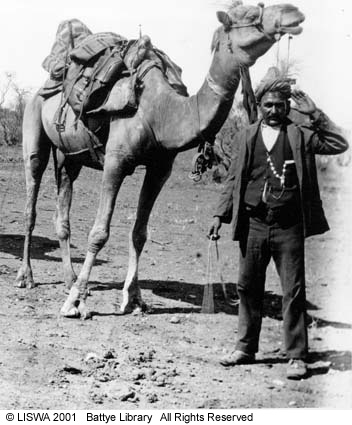
Fazal Din and camel, 1904

Smoked camel anyone?

As every Australian knows, all it takes is a barbeque to shatter cultural barriers. Usually.

For what may have been the earliest multicultural festival in Perth, in May 1897 adverts in the local rags announced the ‘Mohammedan Christmas’, Bakreed.*

A camel would be sacrificed at the home of Ahmed Khan, on Vincent Street, Highgate. A camel selected from Ahmed’s personal herd as being the very best.

To make it tempting for the non-Muslims, free camel burgers were on offer for anyone who showed up.

Some fifty members of Perth’s Muslim community arrived, together with the media and a number of interested onlookers.

At 10 o’clock in the morning, Ahmed and his comrades started to pray in Arabic. After the traditional prayers, Mr Khan exclaimed Bismillah, followed by Allahu Akbar as he drew the knife across the hapless camel’s neck. Then the knife was ritually inserted into the beast in three places.

With the formal proceedings out of the way, an experienced butcher cut up the carcase so the barbeque could get going.

Unfortunately for Mr Khan, the westerners turned up their noses at the free barbie, preferring just to watch their Muslim neighbours tuck in. Was it the lack of beer? Or the lack of tomato sauce? Either way, not one unbeliever was willing to try something new.

One journalist was repeatedly pressed to give the burgers a go, but he announced he was “sufficiently bigoted in his tastes” and would not eat anything but the traditional cow. Rudely, after the ceremony, the hack went straight to a restaurant to get a steak.

Despite this clash of tastes, multiculturalism was alive and well 120 years ago, and no one was holding government inquiries into halal labelling.

*Bakri-Id (Eid-al-Adha), to be celebrated in September this year.