Harmony Day, 1907 style

Japanese businessmen enjoying a Swan Lager, 1966

Japanese businessmen enjoying a Swan Lager, 1966

I bitterly deplore the fact that Australia is fast being overrun with impudent, insulting Japanese, foul law-breaking Chinamen, and hordes of Dagoes, Afghans, and other indescribable Eastern races, who bring no money into the country, and take every farthing out to their own country.

Letter to The Daily News, 3 April 1907

There’s trouble brewing at the coffee stand

coffee1

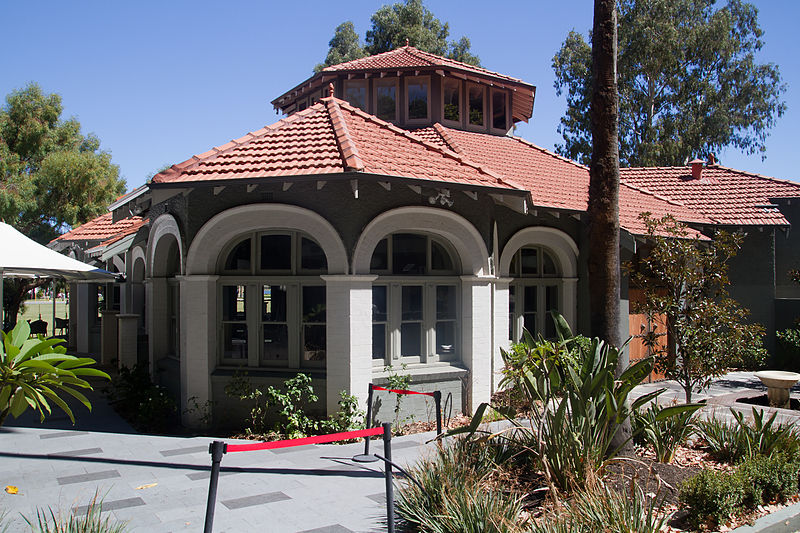
You’d be forgiven for not recognising the above building. Its face has completely changed, losing all of the detailing, into the boring blank canvas now called Grand Central Hotel on Wellington Street.

Built in 1903, the Grand Central Coffee Palace was a magnificent hotel, but a hotel without an alcohol license. Didn’t stop a succession of owners selling beer under the counter. Usually to undercover police officers. With predictable results.

Today, it is a grungy backpackers. The sort of backpackers that gets reviews like this on TripAdvisor:

This place is full of junkies. The beds and rooms, bathrooms, kitchen and common area are truly disgusting. We’ve never stayed in a place like it. Booked for a week but could only stand one night in this hovel.

A century ago, reviews would have also been negative. But back then it was not the owners’ fault.

It was only shortly after opening that the Palace was in trouble. Just like our TripAdvisor guests, visitors would book in for a week but depart in a filthy mood after only one night.

To cater for Perth’s late-night crowd, the council had allowed a café-de-kerb (coffee stand to you and me) to operate directly opposite the Palace on the other side of Wellington Street.

The council, in its wisdom, had also installed a public urinal on the site too. Which attracted even more of the inebriated class.

As soon as the pubs closed, all the drunks in town—of both sexes—would flock to the coffee stall to get some caffeine and a hot pie.

Bedlam then ensued, as brawls broke out every night, and ‘disgusting language’ was shouted until two or three in the morning.

Those guests in the front rooms of the Palace would simply pack up for a quieter hotel somewhere else.

The council said they would try to find somewhere else for the café-de-kerb. This was beyond their capabilities, though, since no new site was apparently available anywhere in Perth.

So, next time you’ve had a night out in the CBD, and feeling a bit tipsy, grab a coffee and a pie, head for Wellington Street and relive the good old days.

WA’s first jihadist

turkish troops

Turkish troops looking forward to going home for a kebab and a packet of Camels

When fighting at Gallipoli, you probably don’t expect to run into an old mate fighting for the other side. Yet that is exactly what happened to Private Henry Molloy.

Henry was a stretcher bearer and one morning he was, as usual, preparing a cup of tea. He had just boiled the water, and started to add the tea and sugar when a familiar voice called to him from behind Turkish lines.

“Hullo, Molloy,” said the voice in a heavy accent, “how vos Blossom?” Blossom was a colleague of Molloy’s at the Midland Railway Workshops, where he had worked as a fitter before the war.

Henry immediately knew who was speaking. Frederick Shack was a German also employed at the Workshops until he was dismissed for quarrelling with the foreman. After that, Fred set up a grocers in North Perth, where he was a familiar face doing the rounds with his cart. But somehow Fred had evaded the authorities, left Perth, and joined the Turkish troops.

The two chatted about the latest gossip from the Midland Workshops. Then Henry remembered the foreman’s son was also at Gallipoli, and would likely shoot Fred for insulting his father some years earlier.

Fred didn’t seem all that worried. “You hop it before you’re seen,” he replied, “or Jacko will put you in the harem.” (‘Jacko’ was digger slang for Turkish forces.)

Henry retorted with a friendly “Fuck the Kaiser!” before scooting back to the safety of the trenches.

War may be hell. But it can also be very odd.

Finding Lasseter’s Reef

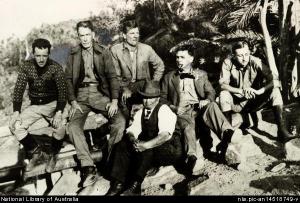
Harold Lasseter (front) seeking his 'lost' reef

Harold Lasseter (front) seeking his ‘lost’ reef

Today Dodgy Perth goes all literary on you. We’ve been inspired by reading Blood Tracks of the Bush by Simpson Newland, first published in 1900.

And we’re not the only ones who found this novel inspirational.

But first, the novel.

The improbably named aristocrat Arnold Wroithesley travels to Australia to try and make enough money to save his ancestral home.

He buys a station and has an affair with a beautiful barmaid. When Arnold says he cannot marry her, the girl weds a hawker, who finds out about her relationship with Arnold. So he chops her head off.

Drought ruins Arnold, who then goes on a wild goose chase for rich deposits of gold concealed in caves. During an awful return journey across the desert, he fights with his mate Auber over the water bag and kills him.

Later, now at Broken Hill, Arnold recognises the hawker who had killed his lover. So Arnold does the decent thing and robs and murders the hawker, who has by now become rich.

This gives Arnold enough money to return home and save his estate.

However, he is followed by Auber, who is not only not dead, but who turns out to be his cousin. Then it turns out that the hawker was Arnold’s cousin as well.

Auber and Arnold fight for real this time, and kill each other.

The End.

If that summary doesn’t make you want to read the book, we don’t know what will.

One avid reader of Blood Tracks of the Bush was Lewis Hubert Lasseter, who was such a fan of modern novelists he even changed his name to Harold Bell Lasseter in honour of his favourite writer.

By 1929, Harold Lasseter (as he was now known) had so absorbed the plot of Newland’s novel, it seems he actually thought he had lived Arnold’s experiences for himself.

When he announced the fantastic discovery of what is now known as Lasseter’s Reef, really it should be Wroithesley’s Reef. Which alliterates better, anyway.

Every detail of Lasseter’s alleged discovery was lifted straight from the novel. In any case, his contradictory and improbable stories could only have been believed by someone who desperately wanted them to be true.

Lasseter certainly spent more time living in fantasy than the real world. In 1916, he sent his own death notice to a newspaper, saying he had died from wounds suffered at Gallipoli. He had never been there.

This was the man who, amazingly, persuaded backers to finance an expedition into central Australia to ‘rediscover’ a gold reef he had read about in a novel three decades earlier. Unsurprisingly, they failed.

So if you want to find Lasseter’s Reef for yourself, you’d be better off at the State Library than prospecting in the middle of the desert.

Bacchus and the pony girls

bacchus

Probably hunkier than the hero of our story, but we love this picture

You know what it’s like. Getting back from the pub on a Friday night, you turn on SBS for one of their sexy shows like ‘Sydney Lesbian Strippers’ or ‘Ladyboys’ or ‘Inside the Dungeon’.

But what did Western Suburbs residents do before SBS gave us such intelligent programming? Turns out they used to gather outside the windows of orgies and settle in for a night’s entertainment.

In 1936 the neighbours would wait until a supply of bottles arrived. These would be followed by a number of professional young women. Then the evening of free entertainment would start.

In the middle of this Western Suburbs’ lounge room stood a well-known society gentleman dressed as Bacchus. In his hand was a bottle of wine. Round him circled half a dozen girls, each of them also armed with a bottle of wine, and each in various state of undress. As they passed, each girl sprinkled him with wine and he graciously sprinkles them in return.

Sometimes Bacchus would play leapfrog with the girls. Or have them lie side by side on the floor while he athletically leapt over them again and again.

But the best nights were when all of them were completely nude. Then Bacchus could be seen armed with a toy whip, driving his team of girls round and round the room. The fair sex on all fours, doing their best attempts to impersonate the chariot horses of ancient Rome.

Many other things were seen by the neighbours, but Dodgy Perth is a family publication. So if you weren’t there, you’ll just have to use your imagination.

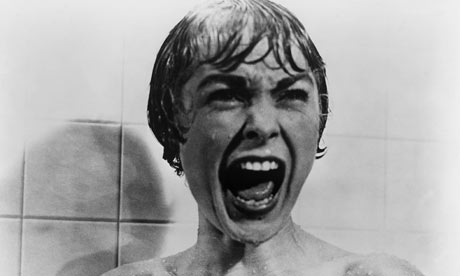
Face it, you need a cold shower

PSYCHO-001

Dodgy Perth understands that some of our readers still do not know how to take a shower.

As a service, then, we offer the following advice from a Bunbury newspaper in 1928.

If you want a beautiful complexion, you will need a daily cold shower.*

The shock of the cold water stimulates the skin over the entire body. But in particular, your face will look horrible if you do not have cold showers.

“I love showers,” some of our readers will say, “but I can’t stand the shock of the cold.”

That’s because you don’t know the right way to take a shower.

Having tucked up your hair in a bathing cap, turn on the shower full strength. Before going under it shut your eyes and place both hands so that the thumbs close the ears and the tips of the little fingers press the nostrils shut.

Fill your lungs with air, then close the mouth and hold your breath as you step under, throwing back your head so the full force of the cold water falls on your face.

No matter what the temperature is outside, you will find this a delightful sensation.

Keep this position while you count to twenty.

Then, as you open your mouth to gasp, duck forward so that the water strikes the top of your back, still keeping your hands in position.

Repeat this two or three times and you will discover a delicious glow of freshness.

Not only will your body improve (your face will certainly look better), but your mind will be cheery and you’ll be ready for whatever the day throws at you.

This has been a public service announcement from Dodgy Perth in the interests of improving people’s faces.

* It will be seen that hot water is not involved in these showers, which should please the paleo lifestyle reader. (Are there any paleo people among Dodgy Perth fans?)

No dirty dancing at Gilkison’s

001734d

Young Australia League, Murray Street, under construction in 1924

The young couple are clasping their bodies suggestively close. In typical bodgie style, a cigarette dangles from his lip, and their expressions are fashionably bored.

His right hand is on her hip and her left hand rests gently on his bicep. They bend their knees and off they go, repeating the same three dance steps over and over. The boy going backwards all the time.

Welcome to the most shocking dance craze of 1953: The Creep.

For Sam Gilkison, who operated a dance studio from the Young Australia League (above), this was the type of thing only done by “sensation-seeking drug-addicts”:

“I can’t imagine any teachers having anything to do with teaching this type of thing,” he said.

Old time ballroom dancing was as risqué as it should get. Even modern ballroom, if you have to. But never dance crazes like the Creep, he fumed.

Mr Gilkison was not a big fan, we take it.

In any case Gilkison—who should know—declared that the Creep was not a legitimate dance since it had a “suggestive nature” which risked bringing the dancing profession into disrepute.

The “sex dance menace” alarmed those who had responsibility for the moral well-being of Perth’s youngsters.

Dance hall owners feared controversy if the Creep became too popular, as it threatened to do. So these owners got together to discuss banning it altogether from their venues.

Dodgy Perth nostalgically remembers Goth nights at Gilkison’s, sipping an absinthe cocktail, and seeing dancing on the floor of which Sam Gilkison would definitely not have approved.

We remember little more after the second absinthe cocktail, but hope our own moves were not even close to being of the sex dance menace type.

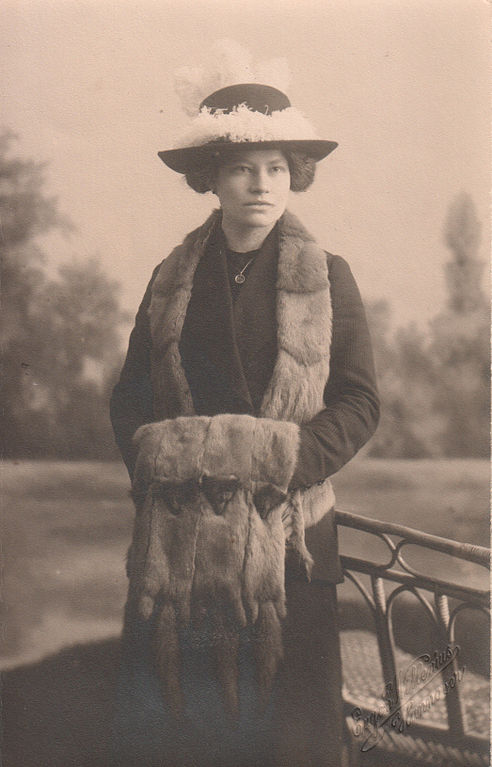
50 shades of grey squirrel

Squirrel_fur_collar_and_muff,_about_1905

This episode of Dodgy Perth is strictly for our lady readers. And those few gentlemen who happen to own a grey squirrel fur muff.

It’s really annoying, isn’t it, to buy an expensive fur muff in 1916, only to find that by the following year grey is out, and only sapphire blue velvet is acceptable.

Happens to us in the Dodgy Perth offices all the time.

But we know that our feminine readers are too wise and thrifty simply to dispose of their muffs. So what is to be done?

Fear not. It turns out that squirrels are recyclable.

You just need to muster enough courage to take a pair of scissors to your unfashionable fur items and, bingo, they become a delightful grey trim which will show up effectively on a sapphire blue muff.

Go on. Get to it.

A palm tree, a pussy and a rifle

kiosk

So, in March 1941 the lessee of the Esplanade Kiosk was William Henry Webb.

Someone had mailed William two kittens in a box, which was duly delivered to the Kiosk. Because that, apparently, was normal in 1941.

Go figure.

As he opened the box, one of the terrified kittens jumped out. It was promptly chased by William’s dog.

The cat flew out of the Kiosk and up the 15 metre palm outside. William went to look for help.

The Esplanade’s gardeners said there was nothing they could do. However, the Electricity and Gas Department sent a crew. With a 12 metre ladder.

They nearly caught the petrified kitty, but each time it scampered back to the top of the palm.

A man climbed the ladder with some meat to try and lure it down. But no success.

The next decision seems a little odd.

The RSPCA, who were now on the scene (along with the gardeners and the electricity and gas people) decided the rescue was a failure. So the only humanitarian thing left to do was to shoot the trembling animal.

An RSPCA inspector slung a rifle over his back and climbed the ladder.

Yes. The RSPCA. A rifle. To shoot a kitten. In a tree.

However, the ‘humanitarian’ inspector couldn’t find pussy, and decided it had escaped by itself.

Ten days later someone noticed that the poor starving animal was still at the top of the palm, and called the RSPCA again.

This time the inspector generously decided not to shoot, but to call the fire brigade instead. Who, unsurprisingly, had a long ladder. And who had the skills to get kittens out of trees.

After ninety minutes of Fireman Smith failing to grab the poor mite, the gardeners had the bright idea of turning the hose on the tree top. Which so frightened kitty that he fled into Fireman Smith’s waiting arms.

[Those of you who are old enough can insert your own Mrs Slocombe joke here. It’s all set up for you.]

The large crowd which had assembled by this time gave a loud cheer.

William Webb took the starving pussy into his kitchen in the Kiosk to give it some milk.

The dog charged in. The kitten fled up another palm tree.

You can’t make this stuff up.

kitten

Fireman Smith gets some wet, er…, kitten

Lesbian Amazons in Demark


feminists

Feminist utopias r us


“An Adamless Eden” ran the headline. “Mere Men to be banned from Utopia”. Clearly some lunatic PC scheme was destroying the very fabric of society. Indeed it appeared to be so in Western Australia as men-hating feminists started taking over our wonderful state.

In 1909 it was reported that the south coast of WA, near Denmark, was to see the birth of a new colony, one where no man would be be allowed to own a foot of land within the settlement, or to hold any kind of office in the new town of Emilliah. Worse still, it appeared to be an industrial town full of lesbian Amazons, and men were even forbidden to step foot in it.

Most of this, as you might have guessed, was #fakenews. But there was some truth behind it. Emily Crawford was president of the Householders’ League, a British suffragette society. Since women still did not have the vote in the UK, the League offered grants to English female entrepreneurs to emigrate to places they were enfranchised. Such as Western Australia. They believed (correctly) that only where women were respected enough to get the vote could female capitalists flourish.

The League also obtained land where their members could set up businesses. So in 1908 Emily Crawford came to WA. Emilliah was going to be a health resort just outside Denmark, at a site now called Ocean Beach. The customers were to be WA residents and families from India. Clearly, being feminist did not stop you being colonially minded.

The Government gifted Emily a beautiful reserve near the mouth of the inlet, much to the disgust of the Denmark Settlers’ Association, who just lost their favourite picnic spot. The project was steaming ahead, when Emily suddenly had some kind of nervous breakdown in Albany. The whole thing ground to a halt, and Emilliah never got off the ground.

Dodgy Perth regrets that Emilliah didn’t work, since it would have been fascinating to see how this unique group settlement turned out. The closest we ever came to it was the ‘back-to-the-land’ movement of  the 1960s and ’70s, where a few feminist communes sprang up in rural areas. Mainly an American phenomenon, there were some in Australia, but none ever approached the scale of Emily Crawford’s vision.