Stop all the clocks…

Midland Town Hall

How Midland Town Hall should have looked

This is a story about a very Australian approach to life. The one where we have a complete disregard for expertise and just adopt the ‘she’ll be right, mate’ attitude. Only, in this case, she wasn’t right at all. Welcome to Midland Town Hall.

As you can see from their design above, architects Hamilton and Upton planned a single clock face right over the main entrance. Had they had the money and completed the building, the citizens of Midland would now have one of the greatest town halls in Western Australia. But they didn’t have the cash, so the design had to be trimmed back, and one of the losses was the clock.

After WWI every local area collected money for a memorial to the fallen. Many places decided not to put up a statue, but to erect something useful for the district and call it Memorial Something-or-Other. So WA is full of Memorial Halls and Memorial Gates and the like. In Midland they decided they needed a clock, so people knew when to catch their train. And not just any clock. But a really big and heavy clock, with four faces.

(There is a local myth that the clock was a rejected one intended for Midland Post Office—even the Heritage Council repeats this story—but there is no truth to this at all.)

In early 1923, the Memorial Committee asked the council to build them a tower to hold their clock. But when the council realised how much it would cost for a good tower, they proposed simply knocking the top off the Town Hall dome and sticking the clock there. Unfortunately, the architects told the council the brickwork wouldn’t take the weight, since it was never designed to have a clock on top of it.

Like any good council should, they ignored the architects and turned to a local builder, who told them he could put the clock on top of the dome really cheaply, and he was sure the Town Hall would be fine. Plus, he didn’t even ask for any money for himself, which saved council a bit more. And so the skilled architects were ignored, and plans quickly knocked up.

And so the top of the dome was cut off and the clock placed on top, completely disfiguring the look of the Town Hall, since it doesn’t fit and to this day looks like a job done by cowboy builders. Which it was.

Clock_Midland

Who could possibly think this was a good idea?

One problem was that the clock hardly ever worked, so people kept missing their trains anyway. It required constant maintenance, for which there was no budget, so a local man agreed to look after it, for free, to the best of his ability. Which doesn’t seem to have been a great success, but at least it occasionally told the right time.

A couple of years after the clock had been installed large cracks started appearing in the Town Hall’s brickwork. Some were so large you could actually put your finger between the bits of brick. Guess what? The architects had been right all along and 5.5 tonnes of clock, casing and steel struts were ripping the building apart.

So another architect had to be called in, the great Edwin Summerhayes. His report was damning. There was no structural support for the clock, it had been badly installed anyway, and it desperately needed a framework put in to carry the weight down to the foundations. Since this would destroy the Mayoral Chambers, Summerhayes said the only solution was to remove the clock and put it in its own tower, just like the Memorial Committee had originally requested. Failing to do so, risked the whole building falling down.

Everyone agreed that the clock would have to come down, but no one was willing to pay for it to do so. Instead, the council decided to drop the matter and just hope no one was killed by falling brickwork. And that’s exactly what happened. More money was spent over the next couple of decades patching up the dome and Town Hall than it would have cost to move the clock. But that’s how councils often work (or don’t work).

Today, the clock still ruins the look of a beautiful town hall. Just to save a bit of cash.

Should we save our corner shops?

malz

Ours are all skinny flat whites

You may have seen in the media about the poor deli owners in Scarborough who have been forced into a rooftop protest to save their business. It is due to be knocked down at some point to make way for yet more high-rise apartments. Read all about it here.

The Dodgy Perth team are not usually ones for taking sides in property disputes, so we’ll restrict ourselves to the simple question: is this deli a heritage building? And like all simple questions, there is no simple answer. And there’s no simple answer right now because no one has done the leg work to find out.

Once you could find these corner shops everywhere, but in an age of late-night supermarkets and 24-hour garages they are becoming increasingly rare. This Scarborough deli was built around 1940 and was thought of as a very modern shop for its time. After World War II, the owners added an asbestos residence next door with lounge, two bedrooms, kitchen, bathroom, laundry, garage and (of course) yet more asbestos for a roof.

Looking at a historic photo, the building has remained much the same as when it was built, except for the inevitable loss of its cantilevered verandah. The shopfront windows are particularly interesting, because they seem to be identical to the original (or may even be original!).

Is this enough to make a building a heritage place? This Scarborough deli is not, by any stretch, a fascinating building. In fact, it’s quite ordinary as a corner shop. But that might be exactly what makes it have heritage value. It is typical of its era, typical of its type, and could probably tell a thousand stories of its owners and customers.

And delis were often run by New Australians and women, and New Australian women for all we know. Do we have enough heritage places where we can tell their stories? Could a real-life and still open deli not be a great place to have heritage and a coffee at the same time.

If you feel like trying to save it, give the State Heritage Office a call on 6552 4000 and say you’d like to nominate the deli on the corner of Brighton Road and Hastings Street in Scarborough. They’ll make you fill out a form (it is a government department, after all), but it’s not difficult to do. And then at least we’ll know if this place is worth saving.

Carnival corpses of walking tongues

Thrilling-Mystery-November-1937

Thrilling maybe. Prohibited, certainly.

As a good Western Australian parent, you wouldn’t want your child to read ‘The Carnival of Crawling Doom’, would you? Let alone ‘Dead Tongues of Terror’ or ‘The Little Walking Corpses’. Of course not. Because you are a good parent, and you know Perth led the way in having such stories banned.

The federal Customs Act 1901 meant anything obscene, indecent or blasphemous or seditious could (and usually was) banned. Better still, the public was rarely told what was forbidden, and almost never the reasons behind such decisions. Like in 1933, when Aldous Huxley’s obscene Brave New World was prohibited. For some reason or other.

Over the next few years, people (read: the press) began to fret about American pulp fiction being imported into Perth. Enter Special Magistrate Alwyn Schroeder, who had his finger on the pulse of 1938. When one person pleaded to him that their “downfall” had been caused by an overseas nudist magazine, Alwyn decided something had to be done.

“I am not a prude,” Alwyn said, somewhat unconvincingly. After all, he had seen action in Egypt during WWI, which was somehow relevant in his mind. But it was quite clear to him that all the current social problems of immorality and depravity were directly linked to young boys and girls reading American magazines. Especially ones with horror and crime stories.

Alwyn demanded Canberra do something and, unfortunately, they listened to him. One month later, the Daily News declared ‘Perth Gives Lead to Canberra on Magazine Ban’. The Commonwealth Government started banning any title they disliked without having the inconvenience of mentioning which ones were now prohibited. The secret list grew month by month. By August 1938, 49 magazines were illegal and that was just the start.

Perth boys and girls were now safe, thanks to ‘Weird Tales’ being on the list, from reading H. P. Lovecraft, Nathaniel Hawthorne and Robert Bloch, and their eyes were saved from seeing illustrations for Samuel Taylor Coleridge’s poetry.

We should thank Alwyn Schroeder for the great care he took in protecting us from such evils, and call upon the government to do even more to stop us reading horror, crime and Romantic poetry.

Dodgy Perth thanks Chris Nelson’s amazing zine, Mumblings from Munchkinland (August 2012) for having inspired this post. Also, Alwyn Schroeder appears as a character in Deborah Burrows’ recent Perth-based novel, Taking a Chance, which is all about crime. So you probably shouldn’t read it.

Progress is not for everyone

Town_Hall_1872

Now available in other colours

What has the opening of the Town Hall on Barrack Street got to do with feminism? Give up? Well, let Dodgy Perth mansplain it to you then.

Everyone needs to tell stories, about themselves, their family and their community. For most of the last two centuries, the (white) people of Western Australia have told their history using one word: ‘progress’. And every new building, no matter how boring or ugly, was welcomed as yet another sign of the progress of this great state.

So it should come as no surprise to find that on the official opening of the Town Hall in 1870, a huge banner was put across Barrack Street with the word PROGRESS on it, for people to march under on their way to the new building.

But there’s a problem with this word. It doesn’t just apply to new buildings, but also to society. Little things like women’s rights, for example. If the fair sex keep hearing about how we’re progressive, they might decide they would like a little of this progress too.

At the Town Hall ceremony, there wasn’t much sign of this progress. The hall itself was filled only with the important men of Perth while the womenfolk were consigned to the gallery. The men feasted and drank the booze, while their wives simply looked on without even a sandwich.

But still, this whole progress thing had to be dealt with, and it fell to the Colonial Secretary, Frederick Barlee, to spell it out. Proposing a toast to the health of the ladies, like every misogynist before and since, he announced that no one could be more devoted to women.

As a lover of ladies, Fred continued, he well knew the power and influence they had over men. (Even if this did not extend to getting anything to eat or drink.) Recently he had been reading about something called “women’s rights and female suffrage”, and worse about women entering professions and becoming scientists. Not, of course, in Perth, but elsewhere in the world.

But, said Fred, addressing the gallery, none of the good and true women here would wish to see any such nonsense brought about. After all, they already knew how much power they had without needing legal rights. Nor did women need the vote, since all men did was vote the way they were told by their wives anyway.

The Colonial Secretary then called upon all present to drink to the health of the ladies by gulping down nine large mouthfuls of booze. Well, not all could drink of course. Some were in the gallery.

And that, ladies and gentlemen, was what 1870 called progress.

What we used to believe

In this secular age it is hard to remember that Perth residents were once a very spiritual lot. A number of rituals, some last performed only recently, made up significant aspects of their lives. Although the meaning of many of these rites is now forgotten, it is important we preserve some record of this non-tangible heritage for future generations.

The Temple Visit

blockbuster

As we become less religious, our houses of worship are disappearing

Once a week, usually on a Friday, someone from each household was tasked with carrying out one of the most bewildering (to us) rituals.

They would drive to a temple known as a ‘Blockbuster’ and, for generation after generation, the same sacred exchange would take place with the high priest behind the counter:

Do you have a VHS copy of Lord of the Rings?

Sorry, we’re all out at the moment.

Okay then, I’ll borrow a Will Ferrell movie instead.

There are a number of theories as to the meaning of these words, but none are satisfactory. However, there is general agreement that the name of God was so sacred the phrase ‘Will Ferrell’ was used in its place.

Speaking with God

madonna

Ever wanted to hear the gods sing?


In a simpler age, before the advent of modern science, Perth people actually believed that a 12” piece of plastic would allow them to hear their gods singing to them, most notably the Madonna herself. Despite repeated evidence this did not work, the rite of placing the blessed circle on a potter’s wheel and lowering a blessed ‘needle’ was undertaken over and over again.

All they ever heard was a strange noise, after which the ancient words “Bloody kids have scratched it!” would be uttered in a peculiar voice.

Some radical anthropologists have speculated that in the long-distant past it was possible to hear the Madonna communicate to them. Others even suggest that if you wait three hours she will actually turn up herself.

The Role of the Priest

telephone_wired

We literally have no idea what this is


With modern communication techniques it is easy to forget it was once difficult to speak to people who were far away. Early Perth residents were fooled into believing one of their gods, Telstra, could send voices along thin pieces of copper. Some historians venture this was a pre-cursor of science, but we prefer to take a Marxist reading.

Recognising the desperation of some people to communicate with a loved one, the high priests of Telstra forced Perth people to stand in one spot with a bizarre contraption on their ear and, this always comes a surprise to those who haven’t studied religion, a wire linked to a heavy weight known as a ‘telephone’.

The similarities between this and the Medieval imprisonment technique of ‘ball and chain’ make to all-too-obvious that the purpose of the ritual was not communication but control of the worshipper. While frantic to speak with a beloved, the body was held firmly in one position, and thus was easier for the high priests to begin to control other aspects of the believer’s life.

Conclusion

We here at Dodgy Perth firmly believe that more research should be undertaken into Perth’s religious history before this knowledge is lost forever.

The WA head hunter

Frank Hann

Hero or villain?

Today we would like to introduce you to the two faces of explorer and pastoralist Frank Hann. First up is the face you get if you read the, normally reliable, Australian Dictionary of Biography. To our regret, the article was written by one of our favourite local historians.

In the ADB you will read about his amazing feats of “bushmanship and endurance” and how he traversed into one of the most difficult areas in Australia which was “peopled by unwelcoming Aboriginals”.

Un-fucking-welcoming? You’d probably not welcome someone who decided to steal 2,590 sq km of your country either. But you won’t find that in the ADB, for there is not a single criticism of this great hero in the article. To discover more you have to keep scrolling down to the ‘Additional Resources’ section.

Readers are advised that the following contains a scene which may be distressing, particularly to Aboriginal people.

In 1909 Hann boasted of his exploits in shooting at some Aborigines who were resisting the invasion of their land:

Had I shot the black with a red band I would have cut his head off and sent his skull to Mr. F. Brockman, of Perth, who asked me to send him one, as a friend of his in London wanted one. I was very sorry that I could not send him four, but later on I got him a splendid one.

WTF? Hann is proud he decapitated an Aboriginal warrior and sent his head back to Perth. And it was gratefully received by Frederick Drake-Brockman.

Such boasting might have played well with Hann’s mates in the Kimberley, but it was too much for the residents of Perth. The Aborigines Department demanded a police investigation, and the Premier announced that Hann was to no longer be paid by the Government.

The Anglican Bishop, Charles Riley, was outraged as well. He demanded a full inquiry, for which Hann vowed never to speak to the bishop again.

But then Hann tried to back down, claiming anything and everything to take the heat off. He’d been joking, he’d acted in self-defence, he loved Aborigines and would never hurt any of them.

Various friends also came to his aid, claiming he was man who really liked Aboriginal people, and it had all been just a campfire yarn really.

And what of Frederick Drake-Brockman? He rapidly wrote to the media and was forced to admit he had received a skull, which he had posted to England “for scientific purposes”. After all, it was difficult to get hold of Aboriginal body parts where the dead person’s blood hadn’t been mixed with other races.

But, he said, it didn’t look fresh to him. It was probably an “old man, dead some years.” Oh. Well that’s all okay then. And guess whether you’ll find any mention of Fred’s collecting habits in his ADB entry? Did you guess right?

From this distance it does appear probable (but not certain) that Hann did not actually murder anyone for their skull, but that is not our key point here. We want to draw attention to the whitewashing of WA ‘heroes’, whose real natures remain buried under romantic talk of bushmanship and exploration.

A little fair play

quairading

Quairading School. Image shamelessly lifted from State Heritage Office site.

Depressing news that the heritage-listed Quairading School burnt down last night. As a piece of architecture it was completely average, but this was a key battleground in ensuring Aboriginal children received the same right to education as white kids.

For those who’ve seen the movie Rabbit Proof Fence, you will know the head of the Aborigines Department, A. O. Neville, was demonised in the film. But he turns out to be the good guy here, fighting the Education Department for the admission of Aboriginal kids to Quairading School when they had been excluded on racist grounds.

If you want the full story on the school check out this link.

But the real hero was John Kickett who simply wanted his offspring educated, and kept moving his family in the 1910s, struggling to find someone who would teach them. In a heart-breaking letter he sent to his local MP, John set out the reasons why Aboriginal children deserved better.

We have left the original spelling in the small excerpt below to show that John was barely literate, and writing a lengthy letter with all the formalities required in his day must have been a real effort. But his passion for ensuring the next generation did better shines through.

I wont a little Fair Play if you will Be so Kind Enough to see on my Beharfe since reciving the Letter from the Department Dated 30th April 1918 that My Children Cannot attend school at Quairading.

I see that the Education Department as let Johnny Fitzgeralds Children enter the State School north west of Quairading. They are attending the school four months just now this is not Fair at all. They were turned out of the Quairading State School for some reason and let them enter another. What I here is that Baxter made it right for them Because one of them is at the Front Fighting.

Well Sir I have Five of my People in France Fighting. Since you were up here in your Election one as Been Killed which leave four. Cannot my Children have the same Privelige as Johnny Fitzgerald…

Would you Be so Kind Sir see if they can goe to Dangin or the same school north of Quairading if I send them their? Sir I Cannot see why my Children could not attend here at Quairading.

My People are Fighting for Our King and Country Sir. I think they should have the liberty of going to any of the State.

I had Fifteen Parents of whos Children are attending the State School have signed the Petition knows my Children well so they could goe to School here But was refused By the Department.

My Childrens Uncles are Fighting. Could you do some thing for the little ones.

Leader of the plaque

dentist

This won’t hurt a bit

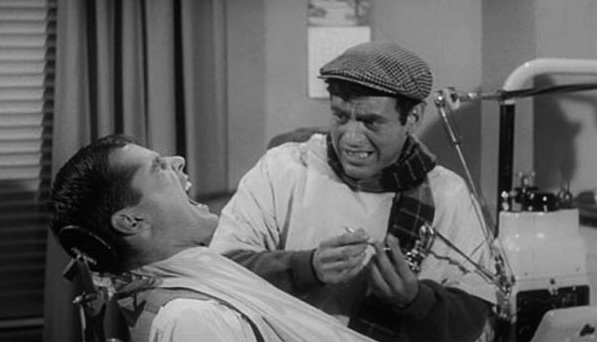
Yesterday one of the Dodgy Perth team had to undergo dental surgery. Being somewhat of a nervous disposition, they had successfully put this off for a number of weeks by inventing various unmissable meetings. But finally, the coward submitted to the chair.

Which made us wonder who Perth’s worst ever dentist was. The answer is Harry Derepas. Actually Harry wasn’t a dentist, just a dental assistant employed at Massey Crosse’s dental surgery on William Street. But small details like that weren’t going to stop him.

In November 1923 Lily Edwards, who worked at the Savoy Hotel, visited Harry for a regular check-up. He informed her she needed three gold fillings along with a scale and clean. He then proceeded to drill out a nerve and injected something into her gums.

In immense pain, Lily got back home to discover her gums had turned black and the pain was getting worse and worse. So she went back to Harry who took two swabs and told her the tooth would need to come out, which she agreed to.

This was not a success and poor Lily’s mouth became so septic a vile stench was given off.

Now the story takes a turn towards the weird. In the course of duty a policeman may sometimes be required to do more than just arrest drunks. But how many have been asked to sacrifice a tooth to an unregistered dentist in order to gather evidence?

This is precisely what an unfortunate probationary constable was ordered to do. He was given five shillings and sent to the William Street surgery to ask for a tooth out. The fee was paid and the tooth duly extracted by Harry.

Waiting outside the building was Constable Baumgarten who then entered and arrested Harry for practicing without a license.

We hope the probationer got some kind of medal for going above and beyond the call of duty.

Hot stuff

luxor

Surprisingly hot on the inside

This heat is no longer funny. We’re no climate scientists, but can’t someone install sprinklers on the surface of the sun or something? Perhaps the government could offer subsidies for those of us who wish to seek asylum in Alaska.

But WA still has some way to go to beat the severe heatwave which gripped the state in February 1933, which closed schools and caused the cancellation of a fringe show.

The performance was held at the Luxor Theatre on Beaufort Street, previously known as the Shaftsbury Theatre and later as Tivoli and Canterbury Court. Now sadly demolished. You would have seen a vaudeville show including such treats as Lily Burford in a difficult toe tapping dance, Canadian Hank Healy with a demonstration of using a whip, a ballet, and the Melody Quintette.

But not on 9 February 1933. Four women members the company collapsed through the heat and the show was abandoned. Fortunately, they all recovered unlike an unlucky 5-year-old boy who died of sunstroke the same day.

To seek refuge from the oppressive heat, 15,000 cars turned up at Cottesloe Beach that night, and every metropolitan beach was packed with people lolling on the sand, too tired to bathe or sleep. And at nearly every home, mattresses were dragged onto verandahs to escape the indoor conditions.

Which reminds us, it is the absence of verandahs on new housing which means the electric grid is so overloaded nowadays. When will architects and builders realise that houses can be kept cooler with this simple change to a design? Sure, you lose a little floor space, but you don’t have to run the air-conditioning quite so hard.

There are things we can learn from history after all.

Hot in the city

thermo

It got hot in the past too

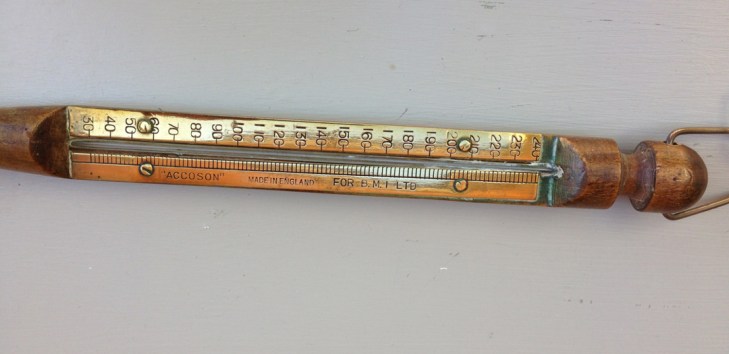
You may not have noticed, but it’s bloody hot outside. The thermometer has reached the mid-30s and it’s not even 8.30 a.m. No one in the Dodgy Perth office got much sleep last night and we’re all drinking Red Bulls and Coke Zeros like they’re going out of fashion.

This should make us sympathise with the residents of Perth 120 years ago, who had a very bad heatwave. Starting on Christmas Day 1895, the heat continued for more than two weeks, reaching up to 112F (44.5C) in the shade by early January 1896. If you were stupid enough to stand on the street without shade, solar radiation—the heat registered in the sun—was a mind-boggling 169F (76C).

Still, it had not broken Perth’s 25 January 1879 record of 117F (47.2C) in the shade. Which sounds quite hot to us, even though global warming could not yet be blamed.

Five people died of sunstroke, including Mrs Wilson who was staying with friends in Bayswater. By the time the doctor was called the unfortunate woman’s body temperature was 110F (43.3C).

Perhaps this heatwave could have been managed, but thanks to the incompetence of the Water Company, much of Perth had little or even no water to help them. A little water was available at night, and people had to fill their bath and every bucket they owned to get them through the next day.

People with wells had official types call round who ordered their only supply of water to be sealed off or face prosecution.

Naturally the City of Perth Water Supply Co. blamed low reservoir levels (don’t they always?) and then really helped matters by announcing that from now on water would be cut off between 12 p.m. and 5 a.m. No one knew what they meant. Noon to early morning? Midnight to early morning?

In any case, parents had to turn to giving children lemonade and ginger beer as the only source of fluid (there was no bottled water), and Perth suffered and suffered and suffered.