
This paper would rather see a female relative dead than married to a Chinaman. And the general sense of the community is the same.
Sunday Times editorial, 21 April 1907

Sunday Times editorial, 21 April 1907

With love, from me to you
The first posties in Western Australia were the colonists themselves, but they quickly priced themselves out of the market. So the Government decided to turn to a cheaper option.
Since Rottnest Island was a harsh prison for Aborigines, it was from here the new posties were ‘recruited’. In exchange for basic rations, sometimes just a handful of flour, Indigenous men were forced to carry the mail all over WA.
Failure to fulfill any part of the ‘bargain’ would mean an instant return to the hell that was Rotto.
So from October 1848, a new (almost free) postal service was in place. The lucky ‘employees’ had to walk with a hefty bag from Perth to Mandurah, or Mandurah to Bunbury, or Bunbury to Busselton. They could easily rack up more than 200 km a week.
Unsurprisingly, some Aboriginal posties became injured through exertion, alarming the Government who wanted no interruption to their bargain-priced mail service.
As the number of leg injuries continued to rise, one kind soul suggested the posties be given ponies to ride. Fortunately, colonists were not heartless. Letters poured into newspapers protesting this proposed scheme.
How dare we think of doing that to the poor animals? Anyone familiar with brutish natives would know they would mistreat the poor ponies! Far better to break a few Aborigines, than one four-legged friend should be put at risk.
So the posties were forced to keep up the long walks, for no pay. The only reward being to keep out of Rottnest Prison.
Eventually mail bags became so heavy, the posties couldn’t lift them any more, so good white folk once again took over.
Naturally, they used a horse and carriage. Any other way would be unthinkable.

In the 1910s and ’20s, the bus service between Perth and Fremantle was like going to the Colosseum to watch gladiators in action.
A number of bus companies were competing for the available passengers. Besides being able to steer a bus, drivers had to be tacticians with nerves of steel. There was no timetable, just cutthroat competition.
Buses would race like mad, sometimes two abreast, in order to arrive first at a bus stop. It was not unknown for two drivers disputing who was where first to leave their seats and swing wild punches at each other.
At the start of the run—Short Street, Fremantle—drivers fought to get a good position from the off. Often they would take the bus down at 3 a.m. and get a few hours’ sleep on one of the benches. If a driver were not awake on time, however, he would find himself out of position before he had started.
But one thing could bring the bus companies together: the threat of an independent driver trying muscle in on their turf. The companies, while despising each other, were always willing to gang up on an outsider.
One entrepreneur took up a position on the Short Street rank, and was unsurprised to find it quite busy. The bus in front was practically touching his engine, while the one behind him, from a different company, was even closer.
However, this wouldn’t matter since all he had to do was wait until the vehicle in front filled up and left the rank, and then it would be his turn.
However, things did not turn out that way. He remained jammed for hours, until he agreed to leave and never return.
The two companies had agreed to tie up one bus each for the day, simply to eliminate a potential rival.
How lucky we are to live in Perth in 2015 where it is unimaginable that a duopoly could to conspire to price groceries and petrol to squeeze out rivals. Unimaginable, I say.

Forget the fact that World War was imminent. In August 1939 only one subject preoccupied the good people of Perth: stray dogs.
It all kicked off with a short letter from a Subiaco truckie who signed himself ‘Anti-Pest’:
Is there no authority to control dogs on roads? As a truck driver I am continuously harassed by the pests which infest suburban streets, and I never miss an opportunity of running over and destroying a stray. What about other drivers joining me in a clean-up?
You can image the howls of outrage from the canine fans. And boy, did they howl.
Anti-Pest was described as a ‘cruel devil’ and a ‘dirty brute’. A Mt Lawley correspondent threatened to simply put him in Karrakatta. While a Perth writer was more specific, offering to attach the truckie’s neck to a tree with a stout rope.
Another dog lover was a little more forgiving, simply promising to “playfully” run over Anti-Pest with his own truck a few times.
Although one truckie meekly tried to offer some support to his colleague, the message came through loud and clear: don’t mess with the crazy dog ladies.

One member of the redheaded league
Gentlemen prefer blondes, but they marry brunettes. Quite what they do with redheads is unclear. But in a world exclusive, Dodgy Perth can reveal the upside to dating a bluey. They won’t leave you. Ever.
In keeping with the high standards of journalism of the day, in 1938 The Mirror posed questions of world importance:
Is the colour of a man’s hair any guide to his faithfulness as a husband? Would Perth girls prefer to marry red-headed men rather than dark or fair men? And are red-headed women as faithful as red-haired men?
For answers, they turned to a well-known city divorce lawyer:
I suppose I can say that during the 30-odd years I have been in and out of the divorce court, I only remember one redheaded man being sued for divorce. His trouble was not unfaithfulness, but drink. I can’t recall any others.
And what about the fair sex?
I can’t say the same for them. I’ve seen quite a number of red-haired women in the divorce court. Strangely enough, too, they’re usually fine lookers. But, for the number there are, a good percentage of them seem to find it hard to stick to their husbands.
Oh dear. But please go on, Mr lawyer.
In Kalgoorlie was a barmaid at one of the hotels who was everyone’s sweetheart and nobody’s bride. She was co-re in more divorce cases than anyone else I know.
So there you are. So, before you go out on a second date, make sure his hair is red. And before you marry, make sure her’s isn’t.

Beautiful, but unfaithful. Allegedly.
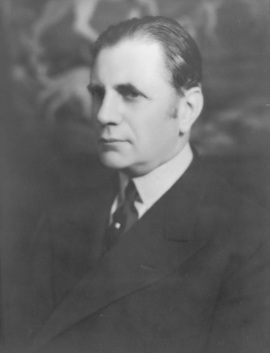
Looking well shady
If he’s remembered at all, Claude de Bernales is famous for having built the gaudy mock-Tudor shopping arcade, London Court. Described as a “mining promoter and investor”, he is also said to have been “larger than life”.
Those who lost their savings in his fraudulent schemes would have called him a con man.
Flashy and egotistical, de Bernales was the one of the biggest personalities ever to set foot in Perth. But he gambled on gold in a big way—and lost. Lost other people’s money, that is.
In his youth, de Bernales was well-known on the goldfields. Traveling the dusty fields on a push-bike, he would arrive at a mine, and put on a spotless shirt and collar before presenting himself to the manager to sell his machinery.
Before World War I he bought up as many derelict mines as he could. Some were flooded, few were workable. After the war, de Bernales created a labyrinth of interlocking companies, and floated his mines on reports of old workings.
Only one mine, Yellowdine, ever paid dividends, but even that failed to live up to its promise. In a classic Ponzi scheme, interest in his numerous companies was kept alive by dividends drawn from Yellowdine.
At his peak, de Bernales’ office was adorned with Flemish tapestries, African mahogany paneling, and a luxury bathroom lined with marble. Visitors were offered the best cigars and liquors.
However, in 1939 eight of his companies were barred on the London Stock Exchange. He faced many stormy shareholder meetings, where he indignantly denied allegations of fraud. But when Scotland Yard sent two detectives in 1946 to Australia to investigate, the whole rotten scheme came to a sudden end.
A man who built an empire entirely made of smoke and mirrors also built London Court. What a surprise.

Typical convent schoolgirls
At a well-known Perth convent school in 1944, one of the nuns noticed her spare habit was missing. She looked for it, and assumed it was accidentally mislaid and would turn up eventually.
And turn up it certainly did. But not in the way she was expecting.
That night, as the girls were preparing for bed, they were surprised to see a nun standing motionless at one end of the dormitory. It was unusual for nuns to be there at that time, so a couple of older girls approached her to find out what she wanted.
Although the light was dim, as they approached they noticed the face under the head dress sported a decent growth of stubble. Being clever students, this led them to conclude the ‘nun’ was probably not a member of staff.
As the girls started screaming, the fake nun gathered her skirts about her, and flew down the corridor at top speed. Despite a thorough search of the area, no trace of the intruder could be found.
Apart from the scare, none of the girls were harmed, and the ‘nun’ was caught too soon to have a chance to be a real Peeping Tom.
Even so, the police announced they would like a little chat with the individual concerned, should he ever show his stubbly face again.

Are you run down? If so, why remain so?
Your whole system can he revitalised by using the
VEEDEE,
the recognised “King” of Vibrators.
Massage by vibration is used throughout the world by leading medical men.
It has cured thousands of Rheumatism, Gout, Lumbago, Sciatica, Deafness, Debility, Neuritis, Neurasthenia, Catarrh, Liver and Kidney Troubles, and will cure you.
Priced at a mind-boggling 70 shillings (a family home could be rented for 16 shillings a week), the above advertisement ran in the Sunday Times in October 1915.
The Veedee adjustable mechanical vibrator did not use electricity to power the heads, but was hand cranked instead.
However, the vibrator was the fifth home appliance to be electrified. After the sewing machine paved the way in 1889, the fan, kettle, toaster, and vibrator quickly followed. The vibrator beat the vacuum cleaner and iron by about a decade.
If you want one of the hand cranked type, in 1915 the ‘Veedee Institute’ was located above the Bank of Australasia at 68 St Georges Terrace.
Hurry before they’re all gone.

In the winter of 1944, a ‘razor crank’ terrified the working women of Perth.
Over a period of weeks, a number of women fell victim to his extraordinary perversion. The attacks occurred around six o’clock in the evening when the streets were crowded with people hurrying from work.
As the chosen victim walked through the city, he would sneak up behind at slash the back of her coat with a razor.
In each case the targets had expensive clothing ruined. For two unfortunate victims, the pervert struck too hard and wounds required stitching.
In one case the slashing deviant asked the girl if he could accompany her home. When she refused, he put his arm possessively round her back. It was not until she had hurried away from him that she found to her horror that her coat had been slit at the back from top to bottom.
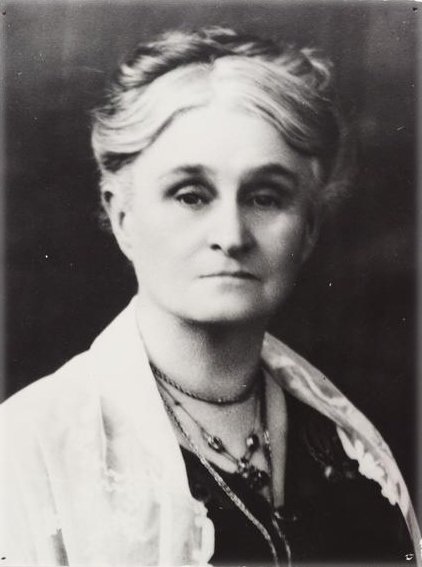
Today, as our choice at the cinema is between a three-part Hobbit and yet another Hunger Games, Dodgy Perth asks: What Would Edith Cowan Do?
For thank goodness the first woman to be elected to an Australia parliament left us her detailed thoughts on the effects of movies.
In 1927, far too many movies contained exciting and thrilling incidents. Mrs Cowan was having none of this. She knew what was good for children. Pictures should be of the “clean, humorous type, devoid of criminals and crimes,” preferably “educational films, depicting industries, sports, travel, and adventure.”
In any case, she continued, going to the movies led to the medical condition known as ‘Fatigue of Brain and Body’ and damaged your eyesight. Worse still, movies could easily “stir into action the sexual side of the child’s outlook”.
“The majority of the people do not want the smutty stuff,” said Mrs Cowan. Instead movies should be such that a “child of eighteen” finds nothing in the film that they did not already know. (Today, I imagine there is little a child of fourteen does not already know!)
Frighteningly, some pictures suggested that married life was not always happy. What if a child saw something that changed their opinion on marriage? What if they started questioning whether mummy was really happy? These things could not be allowed to happen in Perth. Not to our children. Not to our married couples.
But let us not think that Mrs Cowan wasn’t thinking of the poor among us. She certainly was. Children should not be allowed to see movies which contained scenes of wealth and luxury in case it “accentuated the bitter class consciousness already fostered among them”.
Edith Cowan, Dodgy Perth salutes you and your quest to stop Michael Bay from making another frigging film.
 Dodgy Perth