Park petters and peeping perverts

In 1950, the Mirror undertook a special investigation into the parks frequented by couples, and the perverts who spied on them. (Presumably, the reporter exempted themselves from this latter category!)

At Weld Square, a well lighted area off Beaufort Street, two men sat on nearby seats and later flitted from tree to tree to peep on courting couples.

Russell Square, at West Perth, is not so popular with couples. It is usually frequented by ‘plonk’ drinkers and the type of habitués there is such that it does not induce courting couples to make it a rendezvous.

But Hyde Park is a place where a lot of peering is done. Men wait and watch and when they see a couple engrossed in lovemaking, take up a vantage point and do their best to see, at close quarters, just what is going on.

In some cases, the ‘Peeping Toms’ have been known to creep up and steal the female’s handbag while the couple are too engrossed to be aware of what is going on. And as the couples are, in the majority of cases, too embarrassed to make a complaint, no report reaches the police.

The worst place for the ‘Peeping Toms’ at present is on the grassed area on the river front on Riverside Drive. Numerous cases of men creeping up on recumbent couples are reported from there.

One night this week a man and wife were sitting quietly there when the husband noticed a man crawling up on them. Result was a bout of fisticuffs, with the ‘Peeping Tom’ rushing madly from the locality.

The police are practically powerless to deal with this type of pervert because few couples who have had such experiences feel like facing the resultant publicity if they lay a complaint.

Bacchanalian revels in flats

slwa_b3473499_2

Perhaps it’s surprising that the first flats built in Perth were extremely controversial. As far as the press could see, nothing good was going to come of this new way of living in the 1920s.

Prepare to be shocked by the discovery that unmarried males were renting apartments:

The latest thing in Perth is flats for young single men.

The flats are used not for residential purposes but for the wild parties of these young high-livers and in more than one instance the practice has become a scandal among the neighbours.

But it would be a worse scandal if some highly respectable Perth parents knew the sort of place their sons were keeping and also the type of resorts some of their daughters were frequenting.

Most of these young fellows are sons of well-to-do families and the result is that they have more to spend than the average working boy. Hence they are not content to take their enjoyment at public dances and shows as ordinary people do. And as the parties they hold are not of the kind that would be sanctioned in their own homes they have to look elsewhere.

On three or four nights a week the bright young bloods invite their girl friends down to these places. If the parties were quite alright nothing need be said. But young men don’t go to these measures for parties that are quite alright.

The truth is that they are wild affairs in the real sense and if a girl isn’t used to drinking before she goes there she finds it very hard to avoid it once inside. To put it briefly some of these well-educated sons of wealthy families are priceless young scoundrels and they don’t scruple to get decent girls along to these flats under the belief that they are coming along to an ordinary private party.

Of course there is nothing in the law to prevent people keeping such establishments if they please. At the same time it is not a practice that is any credit to the flash youths who have started it in Perth. As it is most of them have more money than morals.

So in their own interests we advise them to leave the flat habit to the older roués and enjoy themselves normally as the average healthy-minded young man does.

Private flats for young men are sure to cause trouble in the end.

Barracking for the wrong building

The Barrack Arch revealed in all its glory

The Barracks Arch revealed in all its wonderful glory

You probably like Barracks Arch. You may even have seen pictures of the old barracks and mourned their almost total demolition. Well Dodgy Perth is here to cheer you up by showing that not everything old is always great.

We’ll start by noting that their erection was a complete cock-up, from start to finish. Like all government projects, it was totally mismanaged. Work started in 1862, but took many, many years to finish. This was typical of state projects at the time, and was the same for the Town Hall and Government House.

It also ruined the builder, William Halliday. He had put in the lowest tender, but the architect, Richard Roach Jewell, and the clerk of work, James Manning, were concerned he had underquoted. Halliday told them not to worry, he had made no errors. But he had. Somehow he was out on the number of bricks by several million. Although he completed the contract, the mistake forced his company into bankruptcy.

During the building process, one worker died after falling into a deep well being dug. And the local residents complained that the powder store was erected far too close to their homes for comfort.

Anyway, the Barracks were finally finished, and so we come to the heritage part of the story. When Parliament was built, the old building stood in the way of a decent view from the approach along the Terrace.

The Barracks had not aged well. and in 1902 a civil engineer really dissed them:

The main approach to the site is at present masked by that grim-looking structure known as the Barracks, and this will ultimately have to be dismantled to display the full front view of the new Parliament Building.

However, for one reason or another the grim structure stayed where it was. So a generation later, when more additions were made to Parliament, the subject came up again. Alfred Wright, president of the Institute of Architects, had this to say in 1933:

The Barracks has no pretensions to architectural merit. Although their venerable appearance imbues them with a certain appeal, they would have to disappear when the completion of Parliament House was proceeded with.

Wright was no ultra-modernist, he was in love with the Town Hall, the Museum, and St George’s Cathedral. Hardly, then, someone who hated heritage. Just an architect prepared to give his honest opinion on an aging building with little merit.

In the end of course, the arch stayed while the rest was demolished. This kind of half-arsed conservation has no place at all. Either admit the whole building had to go, or defend the entire structure. Leaving small bits (see the awful St George’s Hall façade) is tokenism without offering anything for the community.

So, should we finish the job?

Bodgies and widgies, leatheries and teddy boys

Helena has kindly lent me The Gap: A Book to Bridge the Dangerous Years.

A terrifying account of how in 1962, Perth’s parents had caused teenage delinquency to spiral out of control, and how the world would probably end because mothers were working and fathers were enjoying a pint in the pub.

Firstly, just admire Paul Rigby’s fine portrayal of the Narrows and Perth skyline.

Then, to whet your appetite for a short series of how people born in the 1940s were never going to grow up to be responsible adults (are you listening mum?), a quick taster:

In the office of Inspector C. E. Lamb at CIB headquarters, Perth, is a big box which could well be labelled “Remember.”

For in a mute, concentrated form it represents the highwater mark of juvenile delinquency as it loomed in this city three years ago.

That box and its contents are kept as a constant reminder of what was, and what could be again.

It is packed with a firm collection of in-fighting weapons.

Zip guns, flick knives, knuckle dusters, slashing dress rings, honed bicycle chains, timing chains, coshes… they are all there.

They were taken from bodgies and widgies, from leatheries and teddy boys, from plain larrikins.

A dangerous habit

Bronx_(cocktail)

In 1938, a savage drug was menacing Perth. The side effects were terrifying:

Within a minute or two after taking on an empty stomach, sensations of the most pronounced kind occurred. The partaker became exhilarated, light-headed, bright and talkative, their face was flushed, their pupils dilated, heart and respiration both quickened.

Under the influence, you would become giddy and ungainly with wild involuntary movements. Finally, the drug could so excite the central nervous system it would produce epileptic convulsions.

With dangers like that, it was difficult to understand why Perth’s fashionable set kept drinking cocktails.

Yes, that’s right. The scourge sweeping Western Australia in 1938 was a cocktail on a weekday after work.

Continue reading →

Free and easy on the buses

So, taxi drivers are complaining about Uber. A century ago, they were complaining about these new-fangled motor buses. Nothing ever changes, does it?

On the first Saturday that a motor bus tried to take passengers to the races from the rank in St. George’s Terrace there was almost a riot. Angry cab drivers gathered round and shouted threats and curses. Anybody who attempted to enter the bus was vigorously hooted. Nevertheless the bus got a load and made a successful trip to the races and back.

On the Belmont run, ‘when knighthood was in flower,’ it was the custom when the bus was overcrowded for a lady to rise and let a gentleman occupy her seat; she would then sit on his knee. Free and easy were the conditions of those days.

Continue reading →

What cold hands you have, my dear

A quick refresher.

Henry Whittall Venn was a pompous, portly windbag with a huge moustache. After being sacked by Forrest, he passed his final years at Dardanup where he died of heart disease on 8 March 1908.

End of refresher.

Venn is remembered for two things: trebling the mileage of the government railways, and having been an aging lothario.

Guess which one Dodgy Perth is going to celebrate?

At some point, probably early 1901, Venn was at a party when he met a young, but married, actress. We don’t know her name, which is a pity, so I’m going to call her Eve. She needs to be called something.

Since he was 56 summers old, you would think that Venn would know better than to act like a giddy teenager and believe in love at first sight. But that’s precisely what he did.

However, it had been a long, long time since he had been courting young ladies—in fact, he had been married for nearly three decades.

Continue reading →

That damnable trolley bus

trolley bus

Ugh!

It won’t surprise anyone to discover that there is a difference between nostalgia and history. Of course there is. But it is easy to blur the lines if you’re not careful, and the old trolley bus service is a case in point

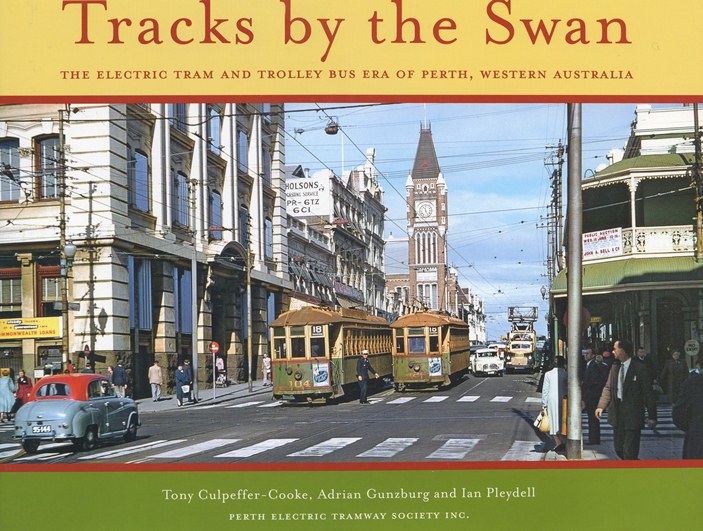
Who doesn’t love Perth’s old trolley buses? You can even purchase a book showing how delightful they were:

Tracks-by-the-Swan

So, it is reasonable to assume they were much loved in their day. They must have been. Mustn’t they?

Let’s ask legendary town planner, Harold Boas. He was responding to a 1936 proposal to extend the trolley bus service to Subiaco, which would involve the service using Mounts Bay Road or Kings Park Road. Harold’s opinion:

We have been battling to improve our highways, and now the Government comes along and is prepared to set us back a quarter of a century.

Basically, the trolley bus service, which had commenced in 1933, was seen as ruining the streetscape by disfiguring it with poles, overhead gear and wires. Oh, so many wires. Or as one grumpy writer to the newspaper put it:

I think most residents do not realise that not only more heavy overhead wires would be stretching across these otherwise beautiful thoroughfares but, worse still, an extra number of ugly poles, set at different angles, would spoil any claim to beauty.

Nor were these the only people who wanted less trolley buses. Two years after Boas’ damning statement, traders along St Georges Terrace were up in arms:

Strong protests continue to be made regarding the proposed use of St. Georges Terrace. General trend of those opinions is that the use of the Terrace as a trolley bus route would spoil one of Perth’s prized streets. On aesthetic grounds strong protests continue to be made.

So, while it’s wonderful to reflect nostalgically on trolley buses, don’t assume that everyone at the time actually liked the buggers.

“Low class individuals, gamblers, and the usual motley crew”

Gambling Hells Unmolested by Authorities

Police Look On While Game Proceeds

For a long time past people have been wondering why certain inoffensive Chinese and small-time shilling poker and nap schools have been diligently raided, submitted to the indignity of arrest and subsequent prosecution, whilst large scale gambling hells and dens of iniquity and vice have so far enjoyed virtual freedom from the attentions of the police.

It has been long a matter of common knowledge that there are certain people in the metropolis who have, to the surprise of most people, been able to conduct illegal enterprises without receiving official visits from the police. Needless to say, this fact has resulted in a large patronage from those who like to give their money ‘a fly’ in comparative safety.

Of course, the small-fry do not get a moment’s consideration. If a threepenny game of poker is being played in a secluded paddock or backyard, all the forces of the law are pressed into action to suppress such a terrific offence.

But how do the big-time places fare?

There is a glaring case supplied by the present existing fashionable resort of all the low class individuals, spielers, gamblers, confidence men and the usual motley crew of ‘hangers-on’ that are found at such places.

We refer to ‘Perth’s Monte Carlo.’

Continue reading →